
Main Courses
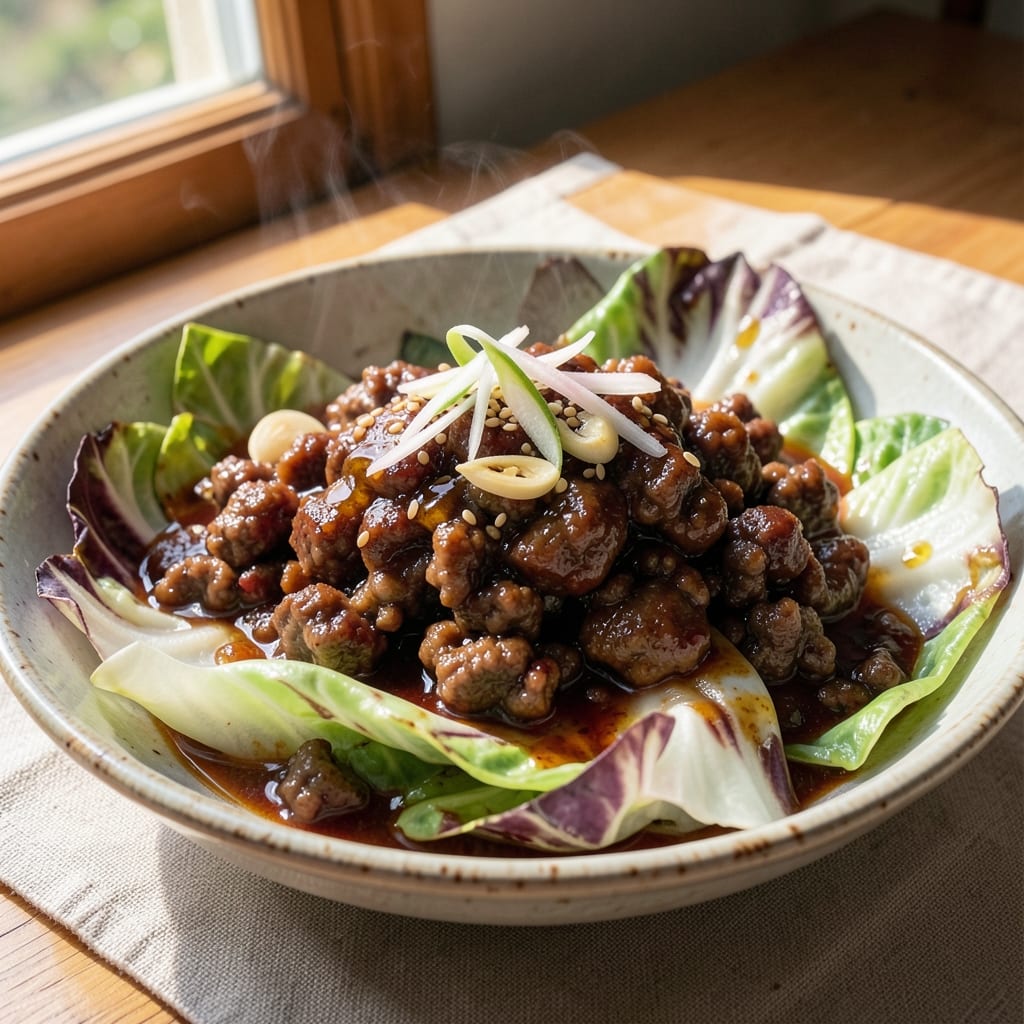
This Asian cabbage and ground beef recipe transforms simple ingredients into a vibrant, flavor-packed dish that balances crisp-tender cabbage with savory, aromatic meat. The secret lies in high-heat stir-frying—where the cabbage achieves that perfect crunch while the beef develops a caramelized crust from soy, garlic, and ginger. I perfected this technique after years of experimenting with Korean-inspired dishes, and it’s now a staple in my weeknight rotation.
The magic happens in the seasoning: a blend of soy sauce for depth, sesame oil for nuttiness, and a touch of sugar to balance the acidity. Thinly slicing the cabbage ensures even cooking, while breaking the beef into small, uniform pieces guarantees maximum surface area for flavor absorption. This method delivers restaurant-quality results in under 30 minutes, making it ideal for busy evenings.
What you’ll end up with is a dish that’s crispy on the edges, tender in the center, and packed with layers of umami and freshness. The cabbage retains its satisfying crunch, while the beef becomes tender yet flavorful, all coated in a glossy, aromatic sauce. Serve it over steamed rice for a complete meal, or pair it with a side of pickled vegetables for extra brightness.
This recipe works equally well as a quick weeknight dinner or a crowd-pleasing appetizer. The flavors are bold but adaptable—add a dash of chili flakes for heat, or a drizzle of honey for extra sweetness. Ready to elevate your stir-fry game? Let’s get cooking.
Ingredients for asian cabbage and ground beef
Pantry staples meet fresh produce for this quick, restaurant-style stir-fry that balances crisp cabbage and savory beef.
| Ingredient | Amount | Notes |
|---|---|---|
| Napa Cabbage 🥬 | 2 cups | Thinly sliced lengthwise |
| Ground Beef 🥩 | 1 lb | 85% lean or leaner |
| Soy Sauce 🍶 | ⅓ cup | Low-sodium preferred |
| Sesame Oil 🫒 | 1 tbsp | Toasted for aroma |
| Garlic Cloves 🧄 | 4 cloves | Minced fine |
| Fresh Ginger 🌿 | 1 tbsp | Finely grated |
| Granulated Sugar 🍚 | 1 tbsp | Balances acidity |
| Vegetable Oil 🫒 | 2 tbsp | High smoke point |
| Sesame Seeds 🌰 | 1 tbsp | Toasted for garnish |
| Green Onions 🧅 | ¼ cup | Sliced thin |
| Salt 🧂 | 1 tsp | Kosher preferred |
| Black Pepper 🌶️ | ½ tsp | Freshly ground |
| Red Chili Flakes 🔥 | ½ tsp | Optional for heat |
The Napa cabbage is non-negotiable here—its crisp texture holds up perfectly when stir-fried. Look for firm heads with vibrant green leaves at your local grocery store or Asian market. If you can't find Napa, substitute regular green cabbage but slice it even thinner for faster cooking. The ground beef should be 85% lean or leaner—leaner beef cooks faster and absorbs flavors better, though you can use 80% if that's all you have. Costco often has bulk packages that work well for this recipe, but any supermarket brand is fine. Always break the beef into small, uniform pieces before cooking for even browning.
No sesame oil? Toasted peanut oil or neutral vegetable oil works in a pinch, but you'll miss that nutty aroma. Fresh ginger and garlic are ideal, but powdered garlic and ginger at half the amount will do if you're short on time. The soy sauce should be low-sodium if possible—most store-bought brands are high in salt, and you don't want to overpower the dish. For extra depth, add a splash of mirin (about 1 tbsp) if you have it. The red chili flakes are optional but recommended for a little kick—skip them if you prefer mild flavors, or use Korean gochugaru for a more authentic touch.
This dish reheats beautifully—store leftovers in an airtight container for up to 3 days in the fridge. For longer storage, freeze portions for up to 3 months. The cabbage tends to soften when reheated, so eat it fresh if possible. To prep ahead, slice the cabbage and store it in a sealed container with a paper towel to keep it crisp. The cooked beef mixture can be made a day in advance and reheated with a splash of water or broth to restore moisture. Garnish with toasted sesame seeds right before serving for that restaurant-quality finish.
Why You'll Love This Recipe
- One-Pan Magic: I swear by this—just brown the beef, toss in the cabbage, and let the sesame oil work its savory spell. No dirty dishes, no stress, and that garlic-sesame aroma fills the whole kitchen before it even hits the plate.
- Crispy-Tender Bite: The cabbage gets that perfect crunch while the beef stays juicy—thanks to the soy sauce keeping it tender. Honestly, the contrast is what makes it addictive. I’ll take seconds over a fancy salad any day.
- Leftover Goldmine: This dish actually tastes better the next day. I double the batch on Sundays because it reheats like a dream—great for lunches or freezing. My kids fight over the leftovers, and that’s saying something.
- Budget Win: Ground beef and cabbage stretch so far, yet it feels special. Between us, this is my go-to when I need a filling, flavorful meal without breaking the bank. The soy and sesame oil make it feel gourmet for pennies.
Step-by-step instructions for Asian cabbage and ground beef stir-fry
This method delivers tender beef and crisp-tender cabbage with a perfect balance of savory, sweet, and umami flavors.
🍳 Step 1: Prepare the Cabbage and Aromatics
First, slice the 2 cups of Napa cabbage lengthwise into thin ribbons—about ¼-inch thick. You want even pieces that will cook quickly and maintain their crunch. Place the cabbage in a large bowl and set aside.
Next, mince the 4 cloves of garlic cloves finely and grate the 1 tablespoon of fresh ginger using a microplane or fine grater. The finer the texture, the more evenly the flavors will distribute throughout the dish. In a small bowl, combine the garlic, ginger, 1 tablespoon of granulated sugar, 1 teaspoon of salt, 0.5 teaspoon of black pepper, and 0.5 teaspoon of red chili flakes if using. This aromatic blend will infuse the beef with depth.
🍳 Step 2: Cook the Ground Beef to Perfection
Heat 2 tablespoons of vegetable oil in a large wok or skillet over medium-high heat until shimmering. Add the 1 pound of ground beef, breaking it apart with a wooden spoon or spatula. Cook for 3-4 minutes, stirring frequently, until the beef is no longer pink and has browned evenly. This ensures maximum flavor extraction from the meat.
Once the beef is fully cooked, drain any excess fat from the pan if needed, leaving about 1 tablespoon of oil behind. Add the prepared garlic-ginger mixture and stir for 30 seconds until fragrant. The aroma should fill your kitchen—this is your signal that the aromatics are ready to mingle with the beef.
🥘 Step 3: Stir-Fry the Cabbage and Combine Flavors
Add the sliced Napa cabbage to the pan in a single layer. Stir-fry for 2-3 minutes over medium-high heat, allowing the cabbage to soften slightly while retaining its texture. You want it to be tender-crisp, not mushy.
Pour in the 0.33 cup of soy sauce and 1 tablespoon of sesame oil, then toss everything together for another 1-2 minutes. The cabbage should be coated in the sauce and heated through. If the mixture seems too dry, add 1-2 tablespoons of water to help steam the cabbage slightly while keeping it vibrant.
⏰ Step 4: Finish and Garnish for Maximum Flavor
Reduce the heat to medium-low and let the stir-fry cook for an additional 1-2 minutes, allowing the flavors to meld together. Taste and adjust seasoning if needed—you may want to add a splash more soy sauce or a pinch of sugar to balance the flavors.
Remove the pan from heat and stir in the 0.25 cup of sliced green onions and 1 tablespoon of toasted sesame seeds. The sesame seeds add a nutty crunch that contrasts beautifully with the tender cabbage and beef. Serve immediately while hot, garnished with extra sesame seeds if desired.
Pro Tips For Making Asian Cabbage And Ground Beef
- Sear the Beef First: Hit that ground beef with a screaming-hot pan for 2-3 minutes before adding anything else—it develops a deep, savory crust that cuts through the cabbage’s mildness. I used to skip this, and the dish always tasted flat until I tried it. ---
- Core the Cabbage: Remove the thick core from the Napa cabbage before slicing—it’s tough and chewy, and no amount of cooking will fix it. A paring knife works, but if you’re lazy (like me), just slice around it and toss the center. ---
- Deglaze with Soy Sauce: After browning the beef, immediately pour in half the soy sauce and let it simmer for 30 seconds before adding the cabbage. This pulls up all the meaty bits stuck to the pan, giving the dish that rich, umami depth. ---
- Toast the Garlic: Mince the garlic fine (almost paste-like) and cook it in sesame oil on low heat until it’s golden, not crispy—just past the point where it smells like it’s turning. This adds a nutty aroma that plain raw garlic can’t match.
Common mistakes when making this recipe
Overcrowding the Pan
One of the biggest mistakes is adding too much cabbage or beef to the pan at once. When you overcrowd, the ingredients steam instead of sear, leading to soggy cabbage and bland beef. I learned this the hard way—my first attempt had a wok full of cabbage that turned out mushy instead of crisp-tender. Instead, cook the beef in batches if needed, and stir-fry the cabbage in a single layer. A 12-inch wok or large skillet should handle the full recipe comfortably. 🥬
Skipping the Beef Browning
Rushing through the beef cooking step is a common error that results in pale, flavorless meat. The key is to let the beef brown thoroughly for 3-4 minutes—this develops the Maillard reaction, creating deep, savory flavors. I see people flip the heat up too high and end up with undercooked beef. Use medium-high heat and keep stirring to ensure even browning. The beef should be fully cooked before adding the cabbage.
Uneven Cabbage Slicing
Thick or uneven cabbage slices won’t cook uniformly, leaving you with some pieces overcooked and others raw. I recommend slicing the cabbage into ¼-inch thick ribbons for even cooking. Use a sharp chef’s knife and work quickly to maintain crispness. If you’re short on time, a mandoline slicer can help achieve consistent thickness. Thin slices also cook faster, so you can maintain that perfect crunch.
Ignoring the Aromatics
Many cooks skip the step of cooking the garlic and ginger with the beef, missing out on layers of flavor. These aromatics should be cooked for 30 seconds until fragrant—this releases their essential oils and infuses the beef. I once forgot this step and the dish tasted flat. Always add the garlic-ginger mixture to the pan after browning the beef, and let it sizzle briefly before adding the cabbage.
Underseasoning the Sauce
Tasting as you go is crucial, but I often see people skip this step entirely. The sauce needs a balance of soy sauce, sesame oil, and a touch of sugar to harmonize the flavors. After combining everything, taste and adjust—you might need an extra ½ teaspoon of sugar or 1 teaspoon more soy sauce. Don’t be afraid to tweak it; the dish should sing with umami and brightness. 💫
Letting the Dish Sit Too Long
Stir-fries are best served immediately while the cabbage is still crisp and the beef is hot. I’ve caught myself walking away for just a few minutes, only to return to a dish where the cabbage has softened into a sad, limp pile. Serve the stir-fry right after garnishing with sesame seeds and green onions. If you need to hold it, keep it warm in a 200°F oven for no more than 10 minutes—but honestly, it’s best eaten fresh. ⏰
Nutrition facts
Frequently asked questions
Can I use regular green cabbage instead of Napa cabbage?
Yes, but you'll need to adjust the technique. Regular green cabbage has a denser core, so slice it ⅛-inch thick and cook it for 1-2 minutes less than Napa cabbage to maintain crispness. The flavor will be slightly milder, but the texture difference is minimal when stir-fried properly.
What's the best way to make this dish spicier?
Add 1-2 teaspoons of gochujang (Korean chili paste) or ½ teaspoon of cayenne pepper with the soy sauce. For authentic heat, stir in 1 tablespoon of gochugaru (Korean red pepper flakes) at the end. Balance with an extra ½ teaspoon of sugar to prevent overpowering acidity.
Can I make this recipe with ground turkey or chicken?
Use 1 lb of 93% lean ground turkey or 1 lb of ground chicken, but reduce cooking time to 2-3 minutes to prevent drying out. Chicken works best with a splash of 1 tablespoon of chicken broth added at the end to restore moisture. The flavor profile remains identical.
How do I prevent the cabbage from getting soggy?
Cook the beef completely first, then drain excess fat before adding cabbage. Use high heat and stir constantly for 2-3 minutes max. If needed, add 1 tablespoon of water to steam the cabbage slightly while keeping it crisp. Never cover the pan—steam makes cabbage limp.
Can I prepare this ahead of time?
Cook the beef and sauce ahead, then refrigerate in an airtight container for up to 3 days. Reheat gently with 1 tablespoon of water to restore moisture. Keep the raw cabbage separate until ready to cook—slice it just before stir-frying to maintain crispness. For best results, serve fresh off the pan.