
Main Courses
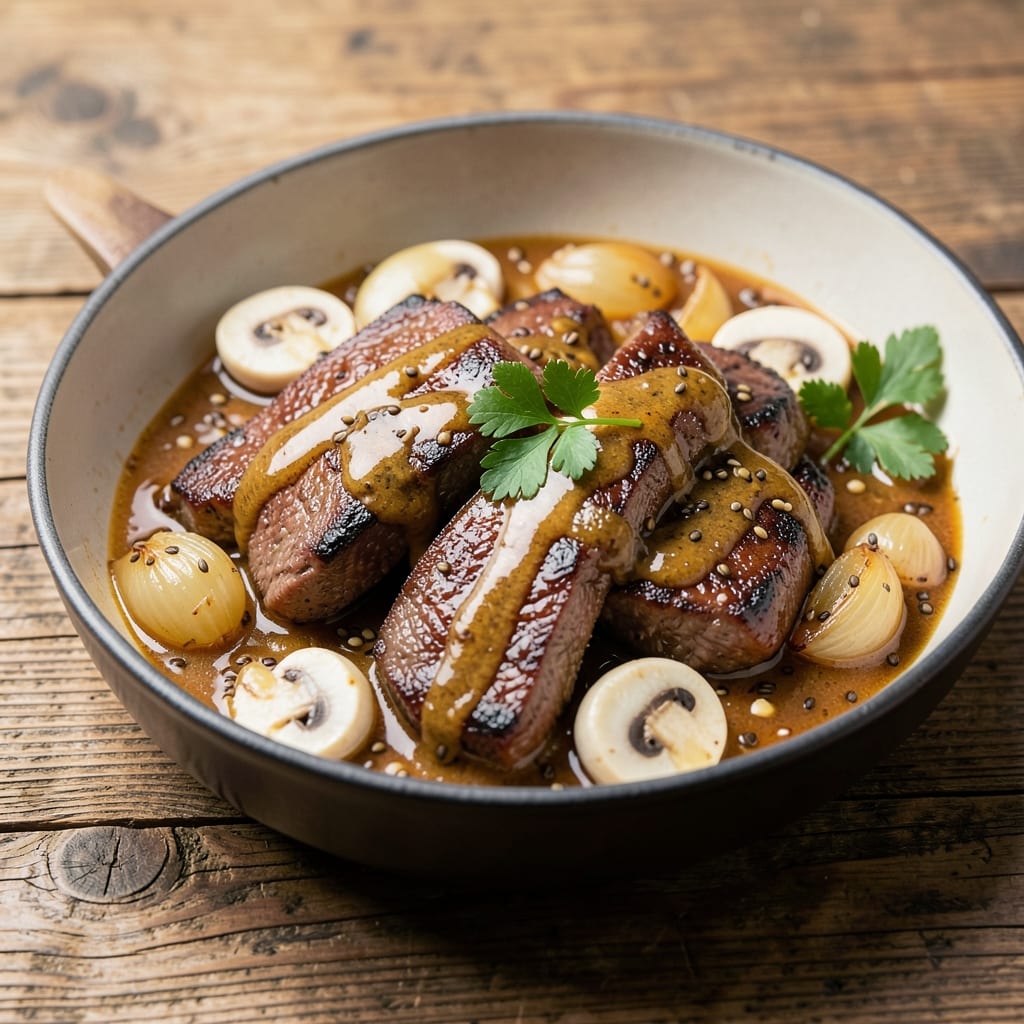
This authentic German beef stroganoff brings hearty German flavors to your dinner table with a rich, velvety sauce that balances tangy sour cream and earthy mushrooms. 🌟 The secret lies in marinating the beef in dark beer and caraway seeds—a technique that infuses deep, malty richness before the cooking even begins. Unlike its Russian cousin, this version stays true to German roots with mustard and paprika adding warmth while keeping the sauce luxuriously smooth.
The process starts with slow-sautéed onions and garlic, creating a fragrant base that forms the foundation for the sauce. Deglazing with a mix of beef broth and red wine unlocks layers of umami, while the addition of sour cream at the end ensures that signature creamy texture without curdling. Every step is designed to honor German comfort food traditions, where heartiness meets bold flavors.
What you'll end up with is a dish that's equally satisfying as a weeknight family meal or a special dinner—tender beef strips swimming in a sauce that's thick yet silky, with mushrooms adding earthy depth. The aroma alone will have everyone gathering around the table, and the first bite delivers that perfect balance of tangy, savory, and slightly sweet notes.
Serve this stroganoff with traditional German sides like Spaetzle or crusty rye bread to soak up every last bit of that luxurious sauce. The combination creates a meal that feels both familiar and special, proving that authentic German cooking doesn't require complicated techniques—just the right ingredients and a little patience. Let's get cooking!
Ingredients for authentic german beef stroganoff
German comfort meets rich tradition—these 15 ingredients craft stroganoff with authentic depth and velvety texture.
| Ingredient | Amount | Notes |
|---|---|---|
| Beef Tenderloin 🥩 | 1 ½ lb | Cut into 0.5-inch strips, marinated |
| Dark Beer 🍺 | 1 cup | German-style lager or pilsner |
| Ground Caraway Seeds 🌿 | 1 tbsp | Toasted for aromatic depth |
| Yellow Onions 🧅 | 1 whole | Thinly sliced, 1/4-inch strips |
| Garlic Cloves 🧄 | 4 cloves | Minced, fresh preferred |
| White Mushrooms 🍄 | 8 oz | Sliced, cremini or button |
| Dijon Mustard 🍯 | 2 tbsp | High-quality, for tang |
| Smoked Paprika 🌶️ | 1 tbsp | For German warmth |
| Beef Broth 💧 | 1 ½ cups | Low-sodium preferred |
| Red Wine 🍷 | ½ cup | Dry German red, like Spätburgunder |
| Sour Cream 🧈 | ½ cup | Full-fat for richness |
| Unsalted Butter 🧈 | 2 tbsp | European-style preferred |
| All-Purpose Flour 🌾 | 1 tbsp | For sauce thickening |
| Salt 🧂 | 1 tsp | Kosher or sea salt |
| Black Pepper 🌶️ | ½ tsp | Freshly ground |
The beef and beer are the heart of this dish. Beef tenderloin stays tender while absorbing the malty beer flavor—Costco or Whole Foods carry pre-cut strips for convenience. For the beer, German lagers like Paulaner or Ayinger add authentic depth, but any dry lager works. Caraway seeds? Penzeys or bulk spice bins have the best quality. Toast them lightly in a dry pan for 30 seconds before grinding—this releases their aromatic oils. The onions and mushrooms should be fresh and firm, not wilted or slimy, and the garlic cloves need to be plump with no green shoots.
No dark beer? Substitute with extra beef broth plus 1 tbsp malt vinegar for a similar tang. Fresh mushrooms are ideal, but canned mushrooms drained well work in a pinch. The Dijon mustard is non-negotiable—pre-shredded cheese-style mustard won't cut it here. For the red wine, any dry German red like Spätburgunder or Pinot Noir brings the right acidity. No wine? Extra beef broth with 1 tsp balsamic vinegar mimics the depth. The sour cream should be full-fat and cold when added at the end—this prevents curdling. If you're making this ahead, omit the sour cream until reheating and stir it in just before serving.
Prep the beef marinade first—it needs at least 30 minutes to infuse properly. The onions and mushrooms can be prepped ahead and stored in the fridge for up to 2 days. For leftovers, this stroganoff actually tastes better the next day as the flavors meld. Store in an airtight container for 4-5 days in the fridge or freeze for 3 months. When reheating, add a splash of milk or broth to restore creaminess. This dish pairs perfectly with homemade Spaetzle or crusty rye bread, which you can toast in the oven while the stroganoff simmers.
Why You'll Love This Recipe
- One-Pan Magic: That dark beer and tenderloin combo? It practically cooks itself while you chop onions—no fancy techniques, just sear, simmer, and serve. Honestly, the only mess is the good kind: the kind that smells like a Munich beer hall.
- Earthy Depth Bomb: Ground caraway seeds and dark beer aren’t just ingredients—they’re flavor cheat codes. That nutty, slightly bitter kick cuts through the richness, making every bite taste like a homey German restaurant, not a recipe.
- Leftovers That Win: This dish tastes better the next day—yes, really. The flavors meld into something even richer, and it reheats like a dream. Pack it for lunch or freeze portions; you’ll be the hero of your own meal prep.
- Weeknight Workhorse: No fancy plating, no stress—just a hearty, satisfying meal that feeds four in under an hour. (Yes, even on a Tuesday night.) Swap the egg noodles for mashed potatoes, and suddenly you’ve got a crowd-pleaser for game day or family dinners.
Step-by-step instructions for authentic German beef stroganoff
Here's the traditional method that delivers rich, velvety sauce and tender beef every time.
🔥 Step 1: Sear the Beef Tenderloin Until Browned
Heat a large skillet over medium-high heat and add the 2 tablespoons unsalted butter. Once the butter foams, add the 1.5 lb beef tenderloin strips in batches to avoid crowding. Sear for 2-3 minutes per side until deep golden brown and cooked to medium-rare (130°F internal temp).
Real talk: don't skip this searing step. It builds deep flavor that infuses into the sauce. If your beef releases easily from the pan, it's ready to remove. Transfer to a plate and set aside, leaving the rendered beef juices in the pan—those are pure flavor gold.
🍳 Step 2: Develop the Flavor Base with Aromatics
In the same skillet, reduce heat to medium and add the 1 whole yellow onions and 8 oz white mushrooms. Cook for 5-6 minutes until the onions soften and mushrooms release their moisture, then evaporate it completely.
Add the 4 cloves minced garlic, 1 tablespoon smoked paprika, and 1 teaspoon salt. Stir for 30 seconds until fragrant—you should smell that deep, smoky aroma. Here's where it gets authentic: sprinkle in the 1 tablespoon toasted ground caraway seeds and stir for another 10 seconds. This gives the classic German depth.
🍳 Step 3: Build the Sauce Foundation
Deglaze the pan with ½ cup red wine, scraping up all those browned bits from the bottom. Let it simmer for 2 minutes until reduced by half. Add 1 cup dark beer and 1.5 cups beef broth, then stir in the 2 tablespoons Dijon mustard.
Bring to a gentle simmer and let it cook for 5 minutes until slightly reduced. This step creates the perfect balance of tangy, savory, and slightly sweet flavors that define German stroganoff. Taste and adjust seasoning with ½ teaspoon black pepper if needed.
🥘 Step 4: Thicken and Finish the Sauce
Remove the skillet from heat and whisk in the 1 tablespoon all-purpose flour to create a slurry. Return to medium-low heat and stir constantly for 2-3 minutes until the sauce thickens to a velvety consistency.
Gently stir in the ½ cup sour cream and the reserved beef strips. Simmer for just 1-2 minutes—no longer, or the sauce will curdle. The key is to maintain a gentle simmer, not a boil. You want the sour cream to blend smoothly without breaking.
🍽️ Step 5: Serve with Traditional German Touches
Transfer the stroganoff to a warm serving dish and let it rest for 2-3 minutes. This allows the flavors to meld perfectly. Serve immediately over egg noodles or buttered potatoes for that classic German presentation.
For authenticity, garnish with fresh parsley and a sprinkle of smoked paprika. The dish should be rich but not overly heavy, with a perfect balance of tangy sour cream, deep beer flavors, and the earthy aroma of caraway. Each bite should deliver tender beef in a velvety sauce that coats every strand of noodle.
Pro Tips For Making Authentic German Beef Stroganoff
- Sear the Beef in Batches: Thinly sliced tenderloin sticks to the pan like glue when you crowd it. Work in small batches—no more than 1/3 of the pan at a time—so the meat gets a deep, caramelized crust instead of steaming in its own juices. I learned this the hard way after scraping burnt bits off my first attempt.
- Toast the Caraway Seeds: Skip the dry toasting, and you’ll just get a subtle hint of flavor. Lightly crush the seeds in a dry skillet over medium heat for 30 seconds until they smell like a German forest, then grind them fresh. This isn’t the prettiest method, but it’s the tastiest—no bitter aftertaste from over-toasting.
- Deglaze with Cold Beer: After searing the onions and garlic, pour in the dark beer cold straight from the fridge. The shock stops the cooking process instantly, preserving all that caramelized fond at the bottom. I was skeptical until I tried it—now I never go back.
- Simmer Low and Slow: Stroganoff isn’t a race. Once the beer’s reduced by half, drop the heat to a bare simmer and let it bubble gently for 20-25 minutes. Rushing this step turns the sauce grainy and the beef rubbery. Sounds weird, but it works: patience here guarantees a silky, cohesive sauce.
Storing and reheating this recipe
Fridge Storage Tips
Let your stroganoff cool completely before transferring to an airtight container—I use glass Pyrex with snap-on lids to maintain freshness. Store for up to 4-5 days at 40°F or below, where the flavors actually deepen as the spices meld. The sauce will thicken slightly overnight, making it even more luxurious. 🧊
Freezer Prep Guide
For long-term storage, freeze in quart-sized freezer bags with 1-inch headspace to prevent expansion cracks. Label with the date—this dish stays delicious for 3 months. When ready to reheat, thaw overnight in the fridge for best texture, or use the microwave defrost setting for quicker results.
Stovetop Reheating
My preferred method is stovetop reheating to preserve that velvety texture. Transfer stroganoff to a skillet over medium-low heat and add 2-3 tablespoons beef broth to restore moisture. Simmer for 5-7 minutes, stirring occasionally, until heated through. The key is gentle warmth—never boil, or the sauce may separate. 🔥
Microwave Method
For quick meals, cover with a microwave-safe lid or damp paper towel and heat in 1-minute intervals on 70% power. Stir between intervals to distribute heat evenly. If the sauce looks dry, add 1 tablespoon sour cream or milk to restore creaminess. This method works best for single servings to avoid overcooking.
Sauce Rescue Tips
If your reheated stroganoff seems too thick, thin with warm beef broth (1 tbsp at a time). For separated sauce, whisk in 1 tsp cornstarch slurry (mix 1 tsp cornstarch with 1 tbsp cold water) and simmer for 1 minute until smooth. Always taste and adjust seasoning—reheated dishes often need a pinch of salt or black pepper to brighten flavors. ✨
Serving Leftovers
German tradition suggests serving stroganoff with homemade Spaetzle or rye bread—both soak up the sauce beautifully. For extra authenticity, sprinkle with fresh parsley and a pinch of smoked paprika before serving. The contrast of warm bread against the creamy sauce is pure comfort food magic. 🥖
Nutrition facts
Frequently asked questions
Why does this recipe use beer instead of wine for marinating?
German beef stroganoff relies on beer's malty depth to create that signature hearty flavor. The dark lager adds subtle sweetness and richness that balances the tangy sour cream, while the caraway seeds enhance the traditional German profile. Think of it as the secret ingredient that sets this apart from Russian versions—it's all about that authentic German comfort food taste!
Can I make this stroganoff ahead of time?
This dish actually tastes better the next day as the flavors meld. Prepare it completely (except adding sour cream), then refrigerate for up to 4-5 days. When reheating, stir in the sour cream just before serving to maintain that creamy texture. The sauce will thicken beautifully overnight, making it even more luxurious.
What's the best way to cook the beef without drying it out?
Sear the beef strips at medium-high heat for only 2-3 minutes per side until golden brown but still slightly pink inside (130°F internal temp). Remove them from the pan immediately and set aside—this locks in the juices. The sauce will cook gently later, ensuring tender beef every time.
What's the difference between this and Russian beef stroganoff?
This German version uses beer, caraway seeds, and smoked paprika for a malty, earthy flavor profile, while Russian stroganoff typically relies on white wine, lemon, and dill. The German approach creates a richer, creamier sauce with more depth—perfect for cold weather comfort meals. Think of it as German schnitzel's hearty cousin!
Can I substitute the sour cream with something else?
For a lighter option, use Greek yogurt (full-fat)—it adds protein and tang. For extra richness, try crème fraîche. Avoid regular yogurt as it can make the sauce too thin. The key is maintaining that velvety texture while keeping the tangy balance. Just whisk it in at the very end over low heat.