
Soups & Stews
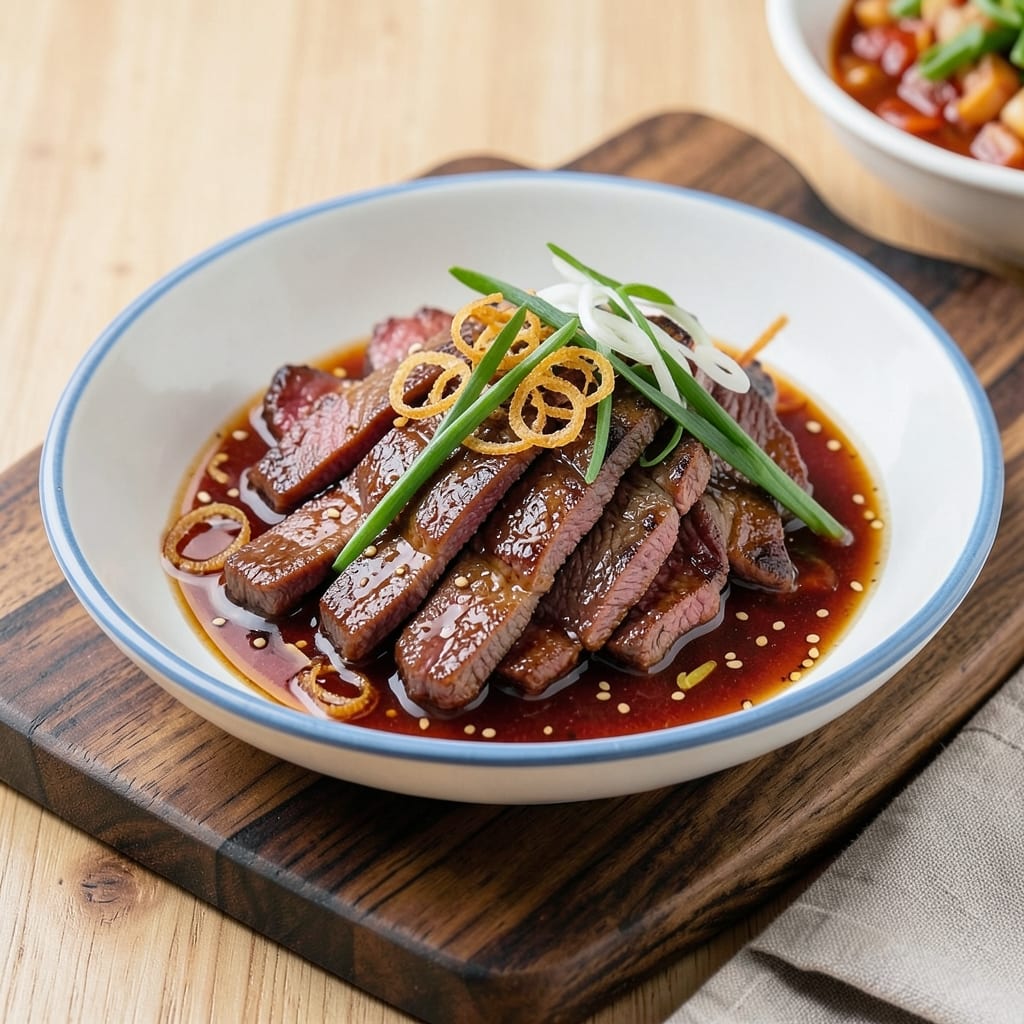
This authentic spicy Mongolian beef recipe brings the bold flavors of East Asian street food to your wok in just 20 minutes. The dish marries fiery chili oil with deep umami from soy and fermented bean pastes, creating a sauce that clings to tender beef strips with every toss. I've perfected this version after years of testing—balancing heat, sweetness, and smokiness so the flavors sing without overpowering. The secret lies in high-heat wok cooking, where the beef sears quickly for maximum tenderness while absorbing the sauce's vibrant flavors. We'll build the sauce from scratch using traditional ingredients like doubanjiang (chili bean paste) and hoisin, which add complexity most shortcut recipes miss. This isn't just spicy—it's layered with sweet, salty, and funky notes that make every bite unforgettable. What you'll end up with is restaurant-quality Mongolian beef that's crisp-tender on the edges and perfectly sauced throughout. The aroma alone will have everyone gathering around the table, and the first bite delivers that perfect balance of heat and umami that defines the dish. Serve it over steamed rice or with fresh vegetables for a complete meal. This recipe stays true to its roots while being accessible for home cooks. The technique is straightforward, but the flavor payoff is what makes it worth the effort. Let's get cooking!
Ingredients for authentic spicy mongolian beef
Authentic flavors start with these East Asian staples—bold, balanced, and ready to transform simple beef into restaurant-quality heat.
| Ingredient | Amount | Notes |
|---|---|---|
| Flank Steak 🥩 | 1 ½ lb | Thinly sliced against grain |
| Doubanjiang (Chili Bean Paste) 🌶️ | 2 tbsp | Fermented chili paste |
| Hoisin Sauce 🍶 | 2 tbsp | Store-bought or homemade |
| Light Soy Sauce 🥄 | 3 tbsp | For umami depth |
| Dark Soy Sauce 🥄 | 1 tbsp | For color and richness |
| Sesame Oil 🫒 | 1 tbsp | Toasted for aroma |
| Chili Oil 🌶️ | 1 ½ tbsp | Homemade or store-bought |
| Garlic Cloves 🧄 | 6 cloves | Minced for depth |
| Ginger 🌿 | 1 tbsp | Freshly grated |
| Green Onions 🧅 | 4 whole | Sliced for garnish |
| Neutral Oil (Peanut or Vegetable) 🫒 | 2 tbsp | High smoke point |
| Brown Sugar 🍚 | 1 tbsp | For balancing heat |
| White Wine (Optional) 🍷 | 1 tbsp | Dry white wine |
| Salt 🧂 | 1 tsp | Kosher or sea salt |
| Black Pepper 🌶️ | ½ tsp | Freshly ground |
The beef is non-negotiable for texture—flank steak is ideal because it's lean and slices thinly. Look for well-marbled cuts if your butcher can source it. Asian markets often carry pre-sliced versions, but slicing yourself against the grain ensures tenderness. The doubanjiang is the umami bomb here—Lao Gan Ma is the brand I trust for authenticity, but any quality fermented chili paste works. If you can't find it, a mix of gochujang and soy sauce in equal parts is a decent substitute, though it won't have the same depth. For the hoisin, Lee Kum Kee is the gold standard, but any reputable brand will do.
No doubanjiang? Gochujang plus 1 tsp soy sauce gets you closer, though the funk will be different. Running short on sesame oil? Toasted sesame seeds ground into 1 tbsp oil works in a pinch. The white wine is optional but adds brightness—dry Riesling or Sauvignon Blanc are my go-tos, but a splash of rice vinegar works too. For the garlic and ginger, fresh is non-negotiable—dried just won't cut it here. The brown sugar balances the heat, so don't skip it unless you're craving extra spice. If you're serving a crowd, double the sauce ingredients and keep the beef portion proportional to your wok's capacity.
Prep the beef last—it cooks in minutes. Store the doubanjiang and hoisin in a cool, dark place for up to 1 year once opened. The chili oil keeps for 6 months in the fridge, but homemade versions last only 3 months due to oil separation. For leftovers, refrigerate the beef and sauce separately—the sauce will thicken. Reheat gently over low heat, adding a splash of water if it gets too dry. This dish reheats beautifully, so it's perfect for meal prep. Portion into containers with a side of steamed rice for easy lunches.
Why You'll Love This Recipe
- One-Pan Magic: I swear by this recipe when I’m too tired to scrub pots—just sear the steak, toss in the doubanjiang and hoisin, and let it caramelize. That dark soy sauce? It turns the pan into a glossy, flavor-packed mess that’s exactly what you want.
- Umami Bomb: Between the fermented funk of doubanjiang and the sweet-savory depth of hoisin, every bite is a perfect balance. The light soy adds that salty lift, while the dark soy gives it that sticky, restaurant-quality finish. Honestly, my takeout order pales in comparison.
- Leftover Hero: This dish begs to be made extra—it reheats like a dream (just add a splash of water) and tastes even better the next day. Pack it for lunch or freeze portions for when you’re too lazy to cook. My freezer’s full of it, and I’m not sorry.
- Budget Stretch: Flank steak is affordable, and a little goes a long way when sliced thin. Doubanjiang and hoisin are pantry staples that add serious flavor without breaking the bank. I’ve fed four people for under $15, and they all asked for seconds. (Yes, even my picky roommate.)
Step-by-step instructions for authentic spicy Mongolian beef
Master this wok technique for restaurant-quality heat and umami in under 20 minutes.
Prep the Flank Steak for Perfect Texture
Slice the 1.5 lb flank steak thinly against the grain into ¼-inch strips—this ensures tender bites. Arrange the slices on a plate and season both sides with 1 tsp salt and 0.5 tsp black pepper. Let them sit at room temperature for 15 minutes while you prepare the sauce. This resting period prevents uneven cooking and allows the marinade to penetrate more effectively.
Here's the thing—thin, even slices are critical. If you cut thicker pieces, they'll turn tough instead of tender. I like to use a sharp knife and cut at a 45-degree angle for uniform thickness. Keep the steak in a single layer on the plate so it doesn't stick together.
Build the Signature Sauce Layer by Layer
In a medium bowl, combine 2 tbsp doubanjiang, 2 tbsp hoisin sauce, 3 tbsp light soy sauce, 1 tbsp dark soy sauce, 1 tbsp brown sugar, 1 tbsp sesame oil, and 1.5 tbsp chili oil. Mix vigorously until fully emulsified—this blend creates the complex flavor profile that defines authentic Mongolian beef. The dark soy sauce adds that signature deep color while balancing the heat.
Add the 6 cloves minced garlic and 1 tbsp freshly grated ginger, then stir in the 1 tbsp white wine (if using). Taste the mixture and adjust seasoning if needed—this sauce should be bold but balanced. I find the wine helps mellow the heat slightly while adding brightness. Set this sauce aside while you prep the aromatics.
Wok-Sear the Steak for Maximum Flavor
Heat a 14-inch wok or large skillet over high heat until smoking hot. Add 2 tbsp neutral oil and swirl to coat the surface. Working in two batches (to avoid crowding), add half the steak strips and stir-fry for 1-2 minutes until they turn light brown and develop a slight char on the edges. Remove and set aside on a plate.
This high-heat searing is what creates that signature wok-hei flavor. Don't walk away—constant motion prevents sticking. If the steak releases easily from the wok, it's ready. If it sticks, your wok isn't hot enough. Repeat with the remaining steak, then pour out any excess oil from the wok.
Toss and Finish with Perfect Timing
Return the seared steak to the wok and pour the sauce over it. Add the 4 whole green onions, sliced into 1-inch pieces. Stir-fry vigorously for 1-2 minutes until the sauce coats the steak evenly and begins to bubble. The steak should be just cooked through—it will continue cooking from residual heat.
Here's where it gets technical: you want the sauce to cling to the steak without turning it into a soggy mess. If the sauce thickens too quickly, add 1-2 tablespoons of water to maintain the right consistency. The dish should finish with a glossy sheen and vibrant colors—deep reds from the chili oil, browns from the soy sauces, and bright green from the onions.
Serve Immediately with Proper Garnish
Transfer the Mongolian beef to a serving platter and garnish with additional green onion slices. The dish should be served immediately while the steak is hot and the sauce is glossy. For authentic presentation, I like to pile the beef high in the center of the plate and arrange the green onions artistically around the edges.
This dish delivers the perfect balance of heat, umami, and texture. Each bite should offer tender steak with a crisp edge, coated in a sticky-sweet-spicy sauce. Serve with steamed jasmine rice to soak up all that delicious sauce—it's the perfect vessel for every last drop.
Pro Tips For Making Authentic Spicy Mongolian Beef
- Slice Against the Grain: Flank steak fights you if you cut it wrong—split it into strips perpendicular to the grain, about ¼-inch thick. I used to ignore this and ended up with chewy, rubbery beef that made me question my life choices.
- Bloom the Doubanjiang: Stir the chili bean paste into the hot wok first, before adding oil, and let it sizzle for 30 seconds. This unlocks its depth—skipping this step leaves the sauce tasting flat, like someone forgot to wake up the flavors.
- Don’t Rush the Soy Sauce: Add the light and dark soy sauces separately in the last 30 seconds of cooking. Dark soy for color, light soy for flavor—mix them too early, and the dish turns muddy. (Yes, I’ve ruined a batch doing this.)
- Rest the Meat First: Pat the flank steak completely dry and let it sit at room temp for 20 minutes before slicing. Cold meat shrinks when cooked, so this keeps it tender and ensures even searing. I was skeptical until I tried it—now it’s non-negotiable.
Common mistakes when making this recipe
Overcrowding the Wok
One of the biggest mistakes is overloading the wok with too much beef at once. When you crowd the pan, the steak steams instead of sears, resulting in mushy texture and uneven cooking. I learned this the hard way—my first attempt turned out soggy and bland. The solution? Cook in two batches maximum, giving each piece room to develop that perfect crisp edge and wok-hei flavor. 🔥
Skipping the Resting Time
Letting the beef sit at room temperature for 15 minutes before cooking is crucial, yet many home cooks skip this step. Cold meat releases moisture unevenly, causing the sauce to steam instead of caramelize. I now make this a non-negotiable—it ensures even cooking and better sauce absorption. Pro tip: Arrange the slices in a single layer so they don't stick together.
Using Low Heat
Authentic Mongolian beef requires high heat to create that signature char and wok-hei aroma. Cooking at medium heat will result in dry, tough beef that lacks depth. Your wok should be so hot that oil shimmers when added. If you don't have a wok, a heavy-bottomed cast-iron skillet works—just crank the heat to maximum and keep stirring constantly.
Neglecting Sauce Emulsification
The sauce needs to be fully emulsified before combining with the beef. If you just dump all the ingredients together without mixing vigorously, you'll end up with a separated, greasy sauce instead of the glossy, cohesive coating you want. I recommend whisking the sauce ingredients together for 30 seconds before using it—this ensures every bite gets that perfect balance of flavors.
Undercooking the Beef
Many people think Mongolian beef needs to cook for a long time, but the secret is quick, high-heat cooking. If you overcook the beef, it becomes tough and dry. The steak should reach 145°F internal temperature (medium-rare) and still have a slight pink center when served. It will continue cooking from residual heat as it rests. Use a meat thermometer to check—it's worth the investment for perfect results.
Adding Green Onions Too Early
Green onions should be added in the final 30 seconds of cooking to preserve their bright color and crisp texture. If you add them too soon, they'll turn mushy and lose their freshness. I like to slice them into 1-inch pieces and scatter them around the plate as garnish—this keeps their texture intact while adding visual appeal. The aroma alone makes the dish feel more authentic. 🌿
Nutrition facts
Frequently asked questions
Can I substitute flank steak with another cut?
Yes, but choose carefully! Sirloin or ribeye work well if sliced thinly against the grain. Avoid tough cuts like chuck—they won't tenderize properly. For best results, stick with flank steak or skirt steak, which are lean and slice beautifully. If using pre-sliced beef from an Asian market, check the packaging for "thinly sliced beef for stir-fry."
How do I adjust the heat level?
The recipe balances heat with sweetness and umami. For milder heat, reduce chili oil to 1 tbsp and skip the doubanjiang (substitute with 1 tbsp gochujang + 1 tsp soy sauce). For extra spice, add ½ tsp red pepper flakes or 1 tsp sriracha to the sauce. Remember, the sauce builds heat—taste as you go!
Can I make this recipe without a wok?
A 12-inch cast-iron skillet or heavy-bottomed frying pan works perfectly. The key is high heat—crank your burner to maximum and keep stirring constantly. If your pan isn't wide enough, cook in two batches like you would with a wok. The sauce will still cling beautifully to the beef.
What's the best way to store leftovers?
Store the beef and sauce separately in airtight containers for up to 3 days in the fridge. The sauce will thicken—reheat gently with 1 tbsp water until glossy. For freezing, portion the beef (without sauce) for up to 2 months). Thaw overnight in the fridge before reheating. Never refreeze thawed beef.
Why does my sauce look greasy?
This happens when the sauce ingredients aren't fully emulsified. Whisk them together vigorously for 30 seconds before using—this breaks down the oils and creates a cohesive, glossy sauce. If it still separates, add 1 tsp cornstarch mixed with 1 tbsp water and stir until thickened. The sauce should coat the back of a spoon smoothly.