
Main Courses
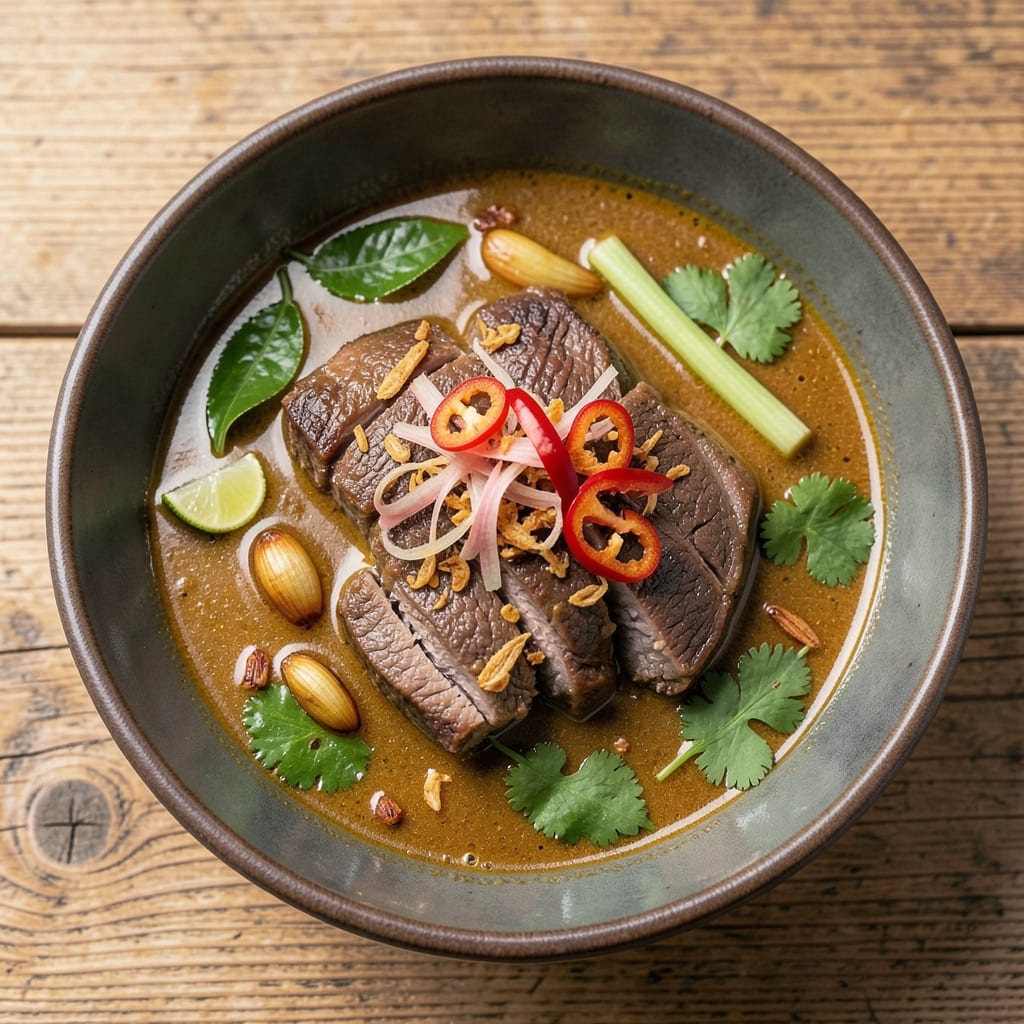
This authentic Thai beef curry recipe delivers the bold, balanced flavors that make street-side Thai food unforgettable—where sweet, sour, spicy, and umami harmonize in every bite. The secret lies in fresh herbs, aromatic pastes, and a slow-simmered coconut milk sauce that thickens into velvety perfection. I’ve perfected this version after years of testing, ensuring the beef stays tender while absorbing the complex layers of flavor without overpowering the delicate balance.
The recipe begins with a homemade curry paste—no shortcuts—where galangal, lemongrass, and kaffir lime leaves infuse the oil with their signature brightness. The beef marinates overnight in a tangy tamarind and fish sauce blend, guaranteeing deep flavor penetration. What sets this apart is the two-stage cooking method: first searing the beef to lock in juices, then simmering gently until the coconut milk transforms into a rich, fragrant sauce that coats every ingredient.
By the time you serve it, you’ll have a dish that’s restaurant-quality at home—golden, fragrant, and packed with tender beef swimming in a sauce that’s creamy yet bright. The garnish of fresh Thai basil and cilantro adds a final pop of aroma and color, while a squeeze of lime brightens each spoonful. This is the kind of curry that disappears faster than it’s served, leaving everyone asking for seconds.
Pair it with jasmine rice and steamed bok choy for the full Thai experience, or serve it over noodles for a heartier meal. The beauty of this recipe is its adaptability—spice levels can be adjusted, and it reheats beautifully for leftovers. Let’s make this curry, the way it’s meant to be.
Ingredients for authentic thai beef curry
Fresh galangal, fragrant lemongrass, and tender beef—these ingredients unlock restaurant-quality Thai curry flavors at home.
| Ingredient | Amount | Notes |
|---|---|---|
| Beef Chuck Roast 🥩 | 1 ½ lb | Cut into 1-inch cubes |
| Galangal Root 🌿 | 3 inches | Peeled and sliced thinly |
| Lemongrass 🌿 | 2 whole | Bruised and cut into 2-inch pieces |
| Kaffir Lime Leaves 🍋 | 4 whole | Bruised for aroma |
| Thai Bird's Eye Chilies 🌶️ | 3 whole | Seeds removed for mild heat |
| Shallots 🧅 | 6 whole | Peeled and sliced |
| Garlic Cloves 🧄 | 8 cloves | Peeled and smashed |
| Coconut Milk 🥥 | 1 can (13.5 oz) | Full-fat for creaminess |
| Fish Sauce 🍶 | 2 tbsp | Red Boat preferred |
| Tamarind Paste 🍋 | 1 ½ tbsp | Or 2 tbsp lime juice |
| Palm Sugar 🍚 | 2 tbsp | Or brown sugar |
| Vegetable Oil 🫒 | 2 tbsp | For curry paste |
| Thai Basil Leaves 🌿 | ¼ cup | Fresh for garnish |
| Cilantro Leaves 🌿 | ¼ cup | Fresh for garnish |
| Lime Wedges 🍋 | 2 whole | For serving |
Galangal and lemongrass are the heart of this curry. Find them at Asian markets—they’re often sold fresh in the produce section. Galangal looks like ginger but has a citrusy, peppery kick. Peel it thinly with a knife, then slice it into paper-thin rounds. Lemongrass should be firm and pale—avoid any with brown spots. Bruise the stalks with the side of your knife before cutting to release their oils. Kaffir lime leaves? Check the freezer section if fresh isn’t available—they freeze beautifully. For the chilies, bird's eye varieties pack the most heat, but Thai chilies work too if you prefer less intensity.
No galangal? Ginger at half the amount works in a pinch, though it won’t replicate the exact flavor. Short on lemongrass? Extra lime juice and a pinch of coriander can mimic its brightness. Fish sauce is non-negotiable for authentic umami—Red Boat is the gold standard, but any reputable brand will do. Tamarind paste can be tricky to find; substitute lime juice or a splash of vinegar if needed. The palm sugar adds depth, but brown sugar or coconut sugar are perfect stand-ins. For the beef, chuck roast stays tender while absorbing flavors—sirloin gets tough in this long simmer.
The curry paste keeps in the fridge for 5 days or freezes for 3 months—make extra for stir-fries. Fresh herbs like Thai basil and cilantro lose their vibrancy fast, so store them in damp paper towels in a sealed container. The cooked curry reheats beautifully—add a splash of water or coconut milk if it thickens too much. Serve with steamed jasmine rice to soak up every last bit of that fragrant sauce.
Why You'll Love This Recipe
- Simmer-Smart Prep: I swear by this recipe because it’s actually hands-off after the initial chopping. Toss in the beef, add the galangal and lemongrass, then let the slow simmer do the work—no hovering, no stress. The chili paste and kaffir lime leaves release their magic while you’re doing anything else.
- Flavor Bomb: That first spoonful? Chef’s kiss. The galangal’s peppery bite, lemongrass’s citrusy punch, and the heat from Thai chilies balance perfectly with the tender beef. It’s not just a curry—it’s a full sensory experience in one bowl.
- Leftovers That Shine: Between us, this curry begs to be made in bulk. The flavors deepen overnight, and reheating it with a splash of coconut milk turns it into something even richer. I’ve fed a houseful with one batch—no one ever complains.
- Budget-Friendly Luxury: Beef chuck roast is affordable, and the aromatics (lemongrass, galangal) stretch far. Honestly, I make this when I want restaurant-quality food without the price tag. Plus, the leftovers stretch for days of easy lunches. Win.
Step-by-step instructions for authentic Thai beef curry
This traditional method delivers deep, complex flavors with perfect balance between spice and coconut cream.
Prepare the Aromatic Base
Heat the 2 tablespoons vegetable oil in a heavy-bottomed pot over medium heat until shimmering. Add the 6 whole shallots and 8 cloves garlic, cooking for 3-4 minutes until the shallots soften and turn golden. This is your flavor foundation - don't rush this step or the aromatics won't develop properly.
Add the 3 inches galangal root, 2 whole lemongrass (bruised), and 4 whole kaffir lime leaves. Cook for another 2 minutes until the galangal becomes fragrant and the lemongrass releases its citrusy aroma. You'll notice the pot filling with steam - this indicates the aromatics are releasing their essential oils.
Build the Curry Paste
Push the aromatic mixture to one side of the pot and add the 3 whole Thai bird's eye chilies (seeds removed) to the empty space. Cook for 30 seconds until the chilies darken slightly - this prevents them from burning and ensures even heat distribution throughout the curry.
Return the aromatics to the center and stir in the 1.5 tablespoons tamarind paste and 2 tablespoons palm sugar. Cook for 1 minute until the sugar dissolves completely. The paste should become glossy and slightly sticky - this indicates proper hydration of the tamarind and sugar.
Cook the Beef and Develop the Sauce
Add the 1.5 lb beef chuck roast (cut into 1-inch cubes) to the pot and stir to coat completely in the paste. Increase heat to medium-high and cook for 5 minutes until the beef develops a light brown crust. This searing step is crucial for building depth of flavor in your curry.
Pour in the 1 can (13.5 oz) coconut milk, stirring vigorously to combine. Bring to a gentle simmer, then reduce heat to low. Partially cover the pot and let the curry cook for 1 hour to 1 hour 15 minutes, stirring occasionally, until the beef is fork-tender and the sauce has thickened to a rich consistency. You'll know it's ready when the sauce coats the back of a spoon and the beef pulls apart easily.
Finish and Garnish
Stir in the 2 tablespoons fish sauce and adjust seasoning with additional tamarind paste or palm sugar if needed. The curry should balance sweet, sour, and umami flavors perfectly. Taste and make final adjustments - this is where authentic Thai curry shines in its customizable complexity.
Remove from heat and let the curry rest for 5 minutes. Garnish with the 0.25 cup Thai basil leaves and 0.25 cup cilantro leaves, then serve immediately with 2 whole lime wedges on the side. The basil and cilantro should add fresh herbal notes that contrast beautifully with the rich coconut sauce.
Pro Tips For Making Authentic Thai Beef Curry
- CHAR THE GALANGAL FIRST: I learned this the hard way—when you toss raw galangal into the pot with everything else, it just sits there like a wet sponge, refusing to release flavor. Instead, slice it thin (about 1/4-inch) and fry it in the oil with the chilies for 2-3 minutes until it darkens slightly. That’s when it lets go of its citrusy, peppery punch.
- SIMMER LOW AND SLOW: After browning the beef, resist the urge to crank the heat. Thai beef curry needs a gentle simmer—think 180°F (82°C)—to let the beef turn fork-tender without falling apart. I used to rush it, and the curry would taste flat. A steady simmer for 2.5–3 hours (yes, even with chuck roast) makes all the difference.
- SKEWER THE LIME LEAVES: Kaffir lime leaves are delicate, and if you just toss them in whole, they’ll curl into useless little boats. Instead, tear them into rough strips and skewer them with a wooden chopstick or the handle of a spoon to keep them submerged. This guarantees they infuse the broth properly—no floating leaf drama.
- USE THE FAT FROM THE BEEF: After browning the chuck roast, don’t wipe off the fond. Let it render into the pot with the aromatics—it’s liquid gold for building depth. I was skeptical until I tried it: that caramelized beef fat adds a richness that store-bought stock can’t match. Just let it bubble away with the galangal and lemongrass.
Creative variations of these flavors
Green Curry Twist
Swap out the red curry paste for green curry paste—it’s made with green chilies, Thai basil, and often includes cilantro stems. Use 2 tablespoons of paste (like Maesri brand) instead of the homemade paste, and add ½ cup coconut milk to balance the intensity. The green curry version has a lighter, herbal profile with a subtle heat that’s perfect for summer. Garnish with extra Thai basil and serve with jasmine rice for a vibrant, refreshing dish. 🌿
Spicy Massaman Fusion
Add 1 teaspoon ground coriander and ½ teaspoon cinnamon to the paste for a Massaman-inspired twist. Use 1 can of coconut milk plus ½ cup coconut cream for extra richness. Stir in ½ cup peeled, sliced potatoes and ½ cup sliced bell peppers during the simmering stage. The result is a creamy, mildly sweet curry with a hint of spice—ideal for a cozy dinner. 🍠
Vegetarian Adaptation
Replace the beef with 1 lb firm tofu (pressed and cubed) or 1 lb mushrooms (like oyster or shiitake). Marinate the tofu in 1 tablespoon fish sauce (or soy sauce for vegetarians) and 1 teaspoon garlic powder for 15 minutes before cooking. The mushrooms add an earthy depth that pairs beautifully with the coconut sauce. This version keeps the same rich, aromatic flavors while being fully plant-based. 🌱
Coconut Milk Reduction
For a lighter sauce, reduce the coconut milk to ½ can and add 1 tablespoon cornstarch mixed with 2 tablespoons water at the end of cooking. Simmer for 2-3 minutes until the sauce thickens slightly. This technique keeps the curry creamy but less heavy, perfect for those who prefer a lighter texture. Serve with a sprinkle of crushed peanuts for crunch. 🥥
Slow-Cooker Method
Transfer the cooked beef and sauce to a slow cooker and cook on low for 4-5 hours or high for 2-3 hours. This method deepens the flavors and makes the beef even more tender. Stir occasionally and add a splash of water if the sauce gets too thick. The slow cooker version is ideal for meal prep—just reheat gently before serving. 💫
Regional Thai Variations
For a Southern Thai touch, add 1 tablespoon shrimp paste (like kapi) to the paste for a funkier, brinier flavor. In Northern Thailand, include 1 teaspoon turmeric and ½ teaspoon fennel seeds for a more earthy, aromatic profile. Both variations keep the curry’s balance but add unique regional depth. 🗺️
Nutrition facts
Frequently asked questions
Why does authentic Thai beef curry need galangal instead of ginger?
Galangal adds a unique citrusy, peppery aroma that's essential for authentic Thai curry flavors. While ginger can substitute in a pinch, it lacks the bright, slightly floral notes galangal provides. The root's complex flavor profile balances the coconut milk's richness and complements the beef perfectly—it's what makes this curry taste truly Thai.
Can I make this curry less spicy?
Remove the seeds from the Thai bird's eye chilies before cooking to reduce heat. For milder heat, use only 1 chili instead of 3, or swap in Thai green chilies (which are less potent). You can also add a pinch of sugar or more palm sugar at the end to balance any remaining spice.
What's the best way to store leftovers?
Store in an airtight container in the fridge for up to 3 days, or freeze for 3 months. The sauce may thicken when refrigerated—simply add a splash of water or coconut milk when reheating. For best texture, reheat gently on low heat, stirring occasionally. Never microwave directly from frozen.
How do I adjust this for a slow cooker?
Cook the curry paste as directed, then transfer everything to a slow cooker. Cook on low for 4-5 hours or high for 2-3 hours until the beef is tender. The slow cooker method enhances the flavors and makes the beef even more tender. Stir occasionally and add water if the sauce becomes too thick.
What's the secret to balancing the flavors?
The magic happens in the final seasoning. Taste the curry before serving and adjust with these key elements: 1 tbsp fish sauce for umami, 1 tsp tamarind paste for sourness, or ½ tsp palm sugar for sweetness. The balance should be complex but harmonious—like a perfect symphony of Thai flavors.