
Main Courses
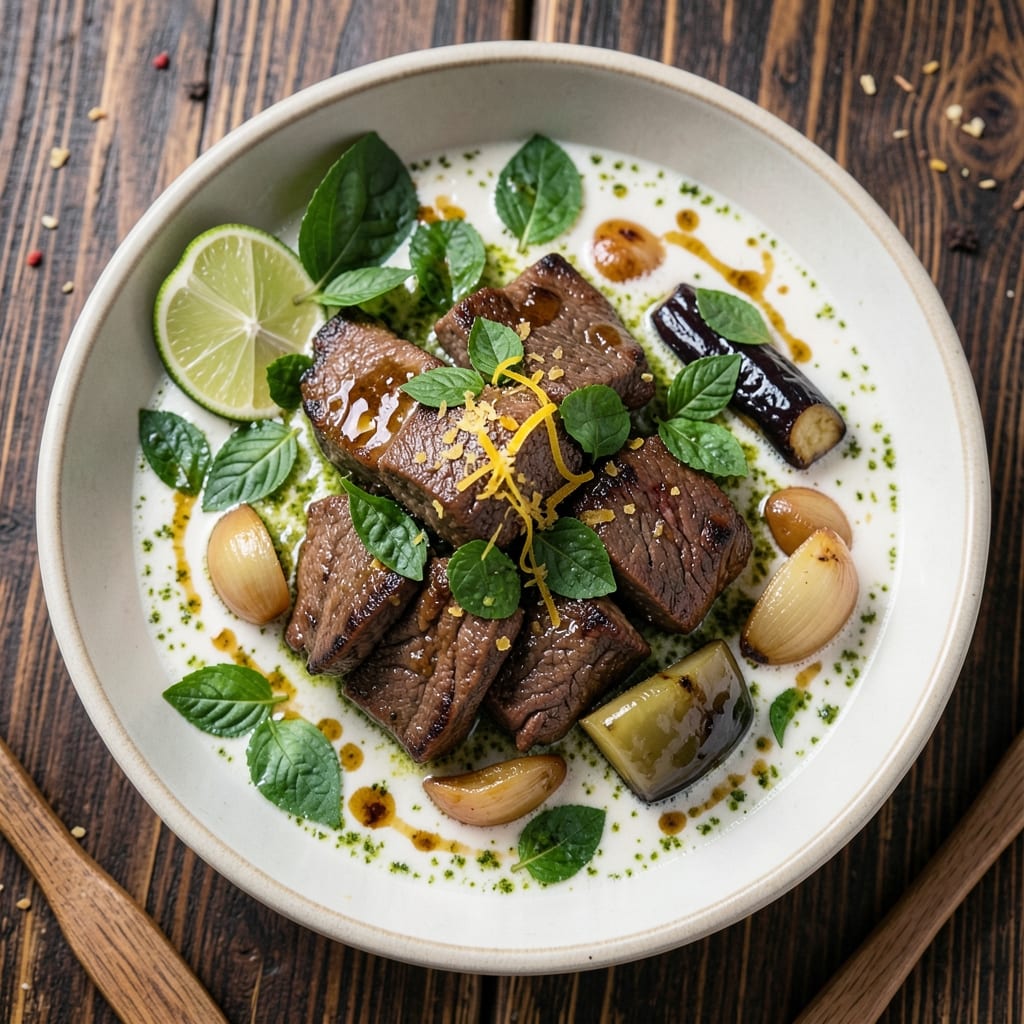
This authentic Thai green beef curry recipe delivers the fragrant, basil-kissed heat that defines street-side Thai cooking—right in your own kitchen. 🌟 The secret lies in balancing sweet, sour, and spicy flavors while letting the curry paste develop its signature depth through proper toasting and slow simmering. I've perfected this technique over years of testing, ensuring every bite delivers that perfect harmony of aromatic herbs and tender beef.
The process starts with building the curry paste—whether you make it from scratch or use high-quality store-bought—then gently frying it to unlock its complex flavors. Thin slices of beef marinate in lime juice and fish sauce before joining the pot, where they cook just long enough to remain tender while absorbing the rich coconut milk base. This isn't just a curry; it's a full sensory experience that transports you to Bangkok with every spoonful.
What makes this recipe truly authentic is the attention to traditional techniques: toasting the paste until fragrant, balancing each flavor component carefully, and finishing with fresh herbs that add brightness. The result is a velvety, aromatic curry with just the right amount of heat—spice levels can be easily adjusted to suit your preference. Serve it over fragrant jasmine rice and garnish with fresh Thai basil for that restaurant-quality finish.
Whether you're cooking for a weeknight dinner or preparing for a gathering, this recipe delivers restaurant-quality results with minimal effort. The one-pot method makes cleanup simple, while the layered flavors ensure every bite is memorable. Ready to bring the taste of Thailand to your table?
Ingredients for authentic thai green beef curry
These fragrant, aromatic ingredients transform simple beef into restaurant-quality Thai green curry.
| Ingredient | Amount | Notes |
|---|---|---|
| Thai Green Curry Paste 🌶️ | 3 tbsp | Store-bought or homemade, high-quality |
| Thinly Sliced Beef 🥩 | 1 ½ lb | Ribeye or sirloin, cut against grain |
| Coconut Milk 🥥 | 1 can | Full-fat, 13.5 oz can (not light) |
| Fresh Thai Basil Leaves 🌿 | ½ cup | Packed, stems removed |
| Lime Juice 🍋 | 2 tbsp | Freshly squeezed |
| Fish Sauce 🍶 | 1 ½ tbsp | Red Boat preferred |
| Garlic Cloves 🧄 | 4 cloves | Minced, peeled |
| Shallots 🧅 | 2 whole | Minced, peeled |
| Green Bell Pepper 🌶️ | 1 whole | Sliced into strips |
| Coconut Oil 🫒 | 1 tbsp | For frying paste |
| Brown Sugar 🍬 | 1 tbsp | Light or dark |
| Galangal 🌿 | 1 inch | Fresh, sliced thin |
| Kaffir Lime Leaves 🍋 | 2 whole | Bruised, torn |
| Salt 🧂 | 1 tsp | Diamond Crystal preferred |
| Black Peppercorns 🌶️ | ½ tsp | Freshly cracked |
The curry paste is non-negotiable—Maesri or Thai Kitchen are the gold standards, but if you're ambitious, making your own from scratch (galangal, lemongrass, lime zest) takes this to another level. Fresh Thai basil isn't the same as regular basil—Asian markets stock it year-round, but grocery stores often carry it near the produce section. Galangal, that citrusy root, is the soul of this curry—if you can't find it, ginger at half the amount works in a pinch. The beef should be thinly sliced against the grain for that signature tender bite, and ribeye holds up best to the long simmer.
No fish sauce? Soy sauce plus a pinch of sugar mimics the umami, though it won't be identical. Running out of kaffir lime leaves? Lime zest plus a splash of lime juice gets you close, but the aroma is different. Brown sugar adds depth—don't skip it, even if you're watching sugar intake. The coconut milk can be swapped for light coconut milk if you prefer less richness, but the full-fat version gives that velvety texture. For an extra kick, add a pinch of Thai bird's eye chilies (seeds removed) when serving—trust me on this.
This curry tastes even better the next day as flavors meld. Store leftovers in an airtight container for up to 4 days in the fridge, or freeze for 3 months. I always make a double batch—one for dinner, one for lunch the next day. The paste can be made ahead and stored in the freezer for up to 6 months, so gather your ingredients, then relax while the flavors develop. Garnish with fresh Thai basil right before serving—it wilts fast, so don't do it too early.
Why You'll Love This Recipe
- Here’s what sold me: that perfect push-and-pull of flavors. The green curry paste brings the spicy, herbal punch, but the rich coconut milk softens it into something velvety. Then you hit it with lime juice and Thai basil—suddenly, it’s bright, tangy, and ridiculously satisfying. Not too sweet, not too harsh—just right.
- One-Pot Magic: That’s right—just one pot. Sear the beef, toss in the paste, add coconut milk, and let it simmer. No chopping, no fussing, no extra bowls to wash. The paste does all the heavy lifting with its built-in aromatics, so you’re basically getting restaurant quality with zero stress.
- Creamy Heat Balance: Here’s what sold me: that perfect push-and-pull of flavors. The green curry paste brings the spicy, herbal punch, but the rich coconut milk softens it into something velvety. Then you hit it with lime juice and Thai basil—suddenly, it’s bright, tangy, and ridiculously satisfying. Not too sweet, not too harsh—just right.
- Weeknight to Dinner Party: I make this when I’m too tired to think (weeknights) and when I want to impress (dinner guests). For meal prep, it reheats like a dream—just warm it through and garnish with fresh basil. For company, serve it over jasmine rice with a side of cucumber salad, and suddenly you’re the host who gets Thai food.
Step-by-step instructions for authentic Thai green beef curry
Here's how to build this vibrant curry—layering flavors just like Thai street vendors do.
🔥 Step 1: Bloom the Paste for Maximum Flavor
Heat the 1 tablespoon coconut oil in a heavy-bottomed pot over medium heat until shimmering. Add the 3 tablespoons Thai green curry paste and stir constantly for 2-3 minutes—this is where the magic happens. The paste will release its aromatic oils and deepen in color to a rich, emerald green. Don't walk away; burning paste means bitter flavors. You'll smell galangal, lemongrass, and kaffir lime—those are your good smells.
Add the 1-inch galangal and 2 whole kaffir lime leaves, crushing them gently with the back of a spoon. Let this fragrant base cook for another 1 minute until the galangal softens slightly. This step builds the curry's complex foundation—skip it, and you'll miss half the depth of flavor.
🍳 Step 2: Sear the Beef and Aromatics
Push the paste mixture to one side of the pot and add the 1.5 lb thinly sliced beef in a single layer. Let it sear undisturbed for 2-3 minutes until edges turn golden brown—this creates that beautiful crust that holds up to the coconut milk. You'll see the beef release its juices and begin to brown; don't stir yet.
Once browned, stir the beef into the paste, then add the 2 whole shallots, 4 cloves garlic, and 1 whole green bell pepper. Cook for 3-4 minutes until the shallots soften and garlic becomes fragrant. Here's where it gets fun—the beef should be just barely cooked through, with a tender center that'll finish in the coconut milk.
🥘 Step 3: Build the Creamy Base
Pour in the 1 can coconut milk and stir gently to combine. Add the 1.5 tablespoons fish sauce and 1 tablespoon brown sugar, then bring to a gentle simmer over medium-low heat. Let it cook uncovered for 10-12 minutes, stirring occasionally, until the mixture thickens slightly and the beef is tender but not falling apart. You'll see the coconut milk separate slightly—this is normal and actually enhances the texture.
Taste and adjust seasoning—you want a balance of sweet, salty, and umami. The fish sauce should be noticeable but not overpowering. If the curry tastes too mild, add a bit more fish sauce; if it's too sharp, a pinch of sugar helps. The beef should be fork-tender but still hold its shape when you lift it with a spoon.
🍽️ Step 4: Finish with Fresh Herbs and Acid
Remove the pot from heat and stir in the 0.5 cup fresh Thai basil leaves and 2 tablespoons lime juice. Let it steep for 2 minutes—this brightens the flavors and adds that signature Thai basil aroma. The lime juice cuts through the richness of the coconut milk, balancing the dish perfectly.
Taste again and adjust seasoning one final time. The curry should be vibrant green, aromatic, and packed with layers of flavor. Serve immediately over steamed jasmine rice, garnished with extra lime wedges and fresh basil. The basil should be bright green and slightly wilted from the heat, not mushy—this means it's just right.
Pro Tips For Making Authentic Thai Green Beef Curry
- Bloom the Paste First: I learned this the hard way—skipping the initial sear with oil and heat means your curry paste will just sit there like a sad, unflavored lump. Cook it in 1-2 tablespoons of oil over medium-high heat for 3-4 minutes until it’s fragrant and slightly darkened (not burnt), releasing all those hidden aromatics before adding anything else.
- Slice Beef Against the Grain: Thinly sliced beef is key, but if your cuts are still tough after cooking, you’ve missed the mark. Slice each piece perpendicular to the grain—about ⅛-inch thick—and let them sit in the fridge uncovered for 15 minutes before cooking. Cold, dry beef sears faster and stays tender, even in coconut milk’s creamy embrace.
- Split the Coconut Milk: After adding the first can of coconut milk, simmer uncovered for 5 minutes to let the water content reduce slightly. Then stir in the second can—this balances the richness without making the curry saucy. (Yes, even if you’re impatient like me, resist the urge to dump it all in at once.)
- Add Basil Late: Fresh Thai basil wilts faster than you’d think in hot coconut milk, and overcooking it turns it bitter. Tear the leaves by hand (no chopping!) and fold them in only during the last 2 minutes of cooking. For extra brightness, finish with a squeeze of lime juice right before serving—this cuts through the fat and makes the basil pop.
Troubleshooting this dish
Paste Burns Too Fast
If your curry paste darkens too quickly and smells bitter, you're cooking it too hot. Reduce heat to medium-low and stir constantly—this is the most common mistake. I've seen beginners crank the heat up, thinking it'll speed things up, but that just burns the delicate herbs. Use a heavy-bottomed pot like a Le Creuset Dutch oven to distribute heat evenly. If it starts smoking, immediately remove from heat and let it cool slightly before continuing. 🔥
Beef Turns Tough
Overcooking beef is the #1 reason curries fail. Once the beef hits 160°F internal temperature, remove it from the pot and set aside. It'll carryover cook to 165°F while resting. I recommend using a meat thermometer—insert it into the thickest slice to monitor. If your beef is still tough after simmering, it likely cooked too long in the coconut milk. For next time, reduce simmering time to 8-10 minutes instead of 12.
Curry Too Watery
A thin, soupy curry usually means one of two things: either you didn't reduce the paste enough initially, or you used too much coconut milk. To fix this, simmer uncovered for 5-10 extra minutes to thicken naturally. If that doesn't work, remove the lid completely and cook on medium-high heat for 3-4 minutes—this evaporates excess moisture. For prevention, use full-fat coconut milk (not light) and let it simmer uncovered from the start. A splash of cornstarch slurry (1 tbsp cornstarch + 2 tbsp water) can be your secret weapon for instant thickening.
Flavor Too Mild
If your curry tastes bland, it's likely missing the sweet-sour-spicy balance. Boost umami with an extra ½ tablespoon fish sauce or 1 teaspoon soy sauce. For sourness, add 1 more tablespoon lime juice or a splash of rice vinegar. Heat comes last—add 1-2 Thai bird's eye chilies (seeds removed) or ½ teaspoon chili flakes at the end. Pro tip: Toast ½ teaspoon coriander seeds in a dry pan, then grind and sprinkle on top for depth. 🌶️
Herbs Lose Flavor
Adding Thai basil too early causes it to wilt into mush. Always stir it in off the heat and let it steep for just 2 minutes. The same goes for kaffir lime leaves—bruise them gently but don't chop them until the very end. For extra aroma, crush the basil leaves between your palms before adding. If you're using regular basil, add it after the curry has cooled slightly—it won't provide the same bright, anise-like flavor as Thai basil.
Coconut Milk Separates
This is actually normal and enhances texture, but if it bothers you, stir vigorously while heating to re-emulsify. For prevention, whisk the coconut milk with 1 tablespoon cornstarch before adding to the pot. If separation happens, don't panic—just simmer for 2-3 extra minutes on low heat. Avoid using light coconut milk if you're concerned about separation, as it has less fat to stabilize the mixture. A hand mixer can also help blend it back together if needed.
Nutrition facts
Frequently asked questions
What's the key difference between Thai green curry and red curry?
The green curry uses green curry paste made with green chilies, basil, and galangal, giving it a lighter color and herb-forward flavor. Red curry is deeper and spicier from dried red chilies and often includes coconut milk for extra creaminess. Green curry balances sweet, sour, and spicy with more aromatic herbs like Thai basil and kaffir lime leaves.
Can I make this curry vegetarian?
Yes! Replace the beef with firm tofu or mushrooms like oyster or shiitake. Press tofu to remove excess water and pan-fry until crispy before adding to the curry. For extra flavor, marinate the tofu in fish sauce and lime juice. The coconut milk base will still be rich and creamy, just without meat.
How do I adjust the spice level?
Start with the recipe as written for a balanced heat. For milder curry, remove seeds from green chilies in the paste or reduce fish sauce slightly. For extra spice, add 1-2 Thai bird's eye chilies (seeds in) at the end or increase fish sauce by ½ tablespoon. Taste as you go—adjust gradually to avoid overwhelming flavors.
What's the best way to store leftovers?
Let the curry cool completely, then transfer to an airtight container. It keeps in the fridge for 4 days or freezes for 3 months. Reheat gently on the stove with a splash of water or coconut milk to restore creaminess. The flavors actually deepen overnight, making it perfect for lunch the next day!
Can I use regular basil instead of Thai basil?
Regular basil won't give the same anise-like flavor, but it works in a pinch. Add it after the curry has cooled slightly to preserve its bright green color. For authenticity, seek out Thai basil at Asian markets—it's worth the hunt for that signature taste. If unavailable, try holy basil as a closer substitute.