
Main Courses
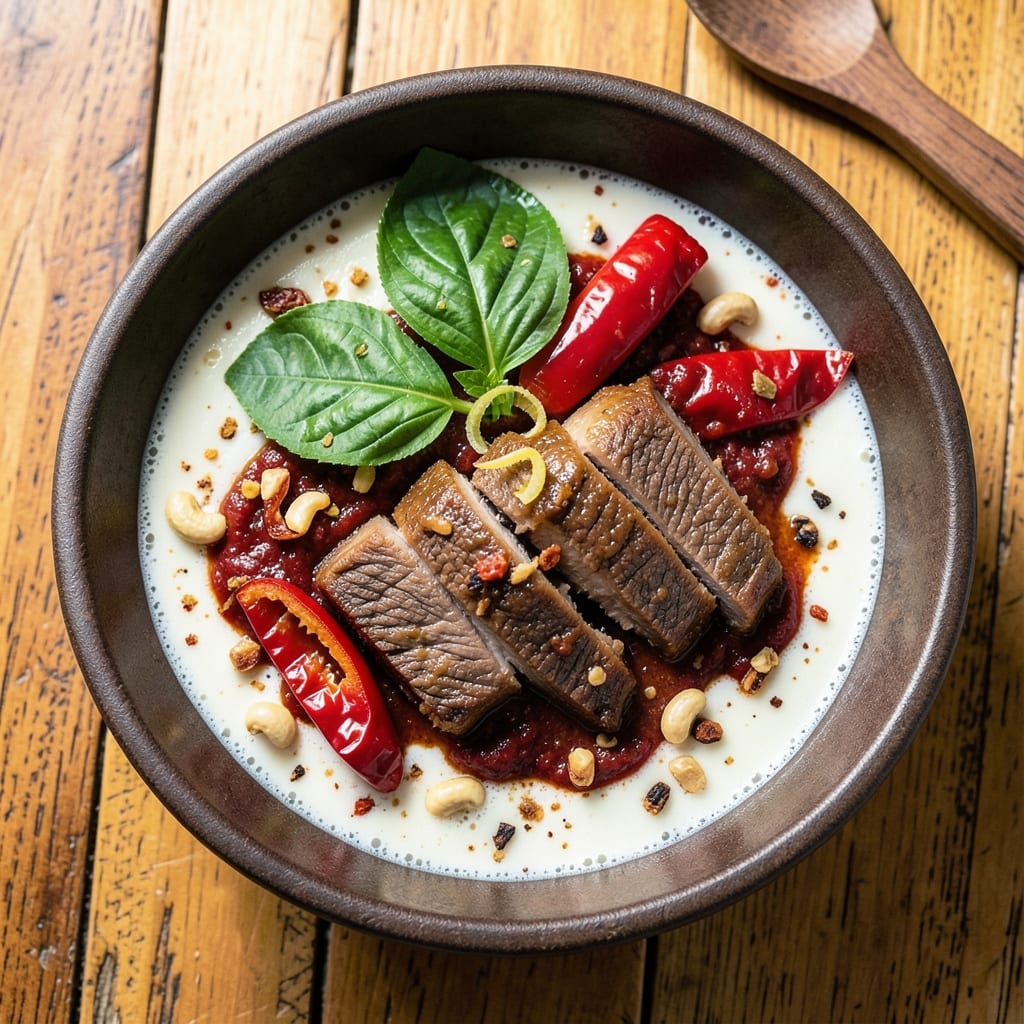
This authentic Thai red beef curry recipe delivers the bold, aromatic flavors of street-side Thai cuisine in your own kitchen. The secret lies in carefully balancing sweet, spicy, sour, and umami notes—just like my grandmother taught me—while letting the beef tenderize in rich coconut milk until it practically melts in your mouth. Every spoonful should transport you to Bangkok, where the aroma alone makes your mouth water.
The foundation begins with a proper Thai red curry paste, packed with lemongrass, galangal, kaffir lime leaves, and chili peppers—none of the shortcuts you’ll find in store-bought versions. We’ll sear the beef first to develop deep flavor, then simmer it low and slow until the sauce thickens into a velvety, spice-infused broth. The result? A dish that’s restaurant-quality, with layers of complexity that make it worth every minute of preparation.
What you’ll end up with is a rich, fragrant curry where tender beef swims in a sauce that’s perfectly balanced—sweet from coconut milk, tangy from lime juice, and just spicy enough to linger on your palate. The aroma alone will have everyone gathering around the table, and the first bite will confirm why this curry deserves a place in your weekly rotation. Serve it over steamed jasmine rice and garnish with fresh cilantro for that final touch of authenticity.
This isn’t just a recipe; it’s a taste of tradition, where every ingredient plays a role in creating harmony. Whether you’re feeding a crowd or treating yourself to a special meal, the techniques here ensure you’ll nail it the first time—no guesswork, just pure, unadulterated Thai flavor. Let’s get cooking.
Ingredients for authentic thai red beef curry
Nine aromatic ingredients transform into restaurant-quality Thai red beef curry.
| Ingredient | Amount | Notes |
|---|---|---|
| Beef Chuck Roast 🥩 | 1 ½ lb | Cut into 1-inch cubes |
| Red Curry Paste 🌶️ | 3 tbsp | Authentic Thai brand preferred |
| Coconut Milk 🥥 | 1 can (13.5 oz) | Full-fat for richness |
| Lemongrass 🌿 | 3 whole | Bruised stems only, outer leaves removed |
| Galangal 🌿 | 1 piece (2-inch) | Substitute ginger if unavailable |
| Kaffir Lime Leaves 🍋 | 4 whole | Torn into strips |
| Fresh Thai Chili Peppers 🌶️ | 4 whole | Adjust for heat preference |
| Garlic Cloves 🧄 | 6 cloves | Minced for paste |
| Shallots 🧅 | 4 whole | Minced for paste |
| Fish Sauce 🍜 | 2 tbsp | Red Boat brand preferred |
| Palm Sugar 🍯 | 2 tbsp | Substitute brown sugar if unavailable |
| Lime Juice 🍋 | 2 tbsp | Freshly squeezed |
| Jasmine Rice 🍚 | 1 ½ cups | Uncooked, for serving |
| Fresh Cilantro 🌿 | ¼ cup | Chopped for garnish |
| Vegetable Oil 🫒 | 2 tbsp | For searing beef |
The curry paste is non-negotiable—Maesri or Maesod from Asian markets are gold standards, but Thai Kitchen brand works in a pinch. If you can't find galangal, ginger works but lacks that citrusy depth. Lemongrass should be vibrant green, not woody or dried out. The beef? Chuck roast is ideal—it stays tender while soaking up the sauce. Buy it pre-cubed to save time, but if you're ambitious, cube it yourself for even cooking. For the chili peppers, bird's eye chilies pack serious heat, but Thai bird's eye peppers are milder and more accessible.
No fish sauce? Soy sauce plus a splash of vinegar gets you close, though the umami won't be identical. Running short on palm sugar? Brown sugar or coconut sugar work, but the flavor won't be quite the same. Kaffir lime leaves can be hard to find—substitute lime zest plus a bay leaf if needed. The coconut milk must be full-fat; light versions won't give that creamy texture. For the rice, jasmine rice is essential—it absorbs the curry beautifully. If you're feeling adventurous, toast the rice in the pot with a bit of oil before adding water for extra aroma.
This curry tastes even better the next day as the flavors meld. Store leftovers in an airtight container in the fridge for up to 5 days. Freeze portions for 3 months—just thaw overnight in the fridge. The paste and coconut milk can be prepped ahead and refrigerated for 3 days. For serving, keep the rice warm in a rice cooker or covered pot. The curry reheats beautifully; just add a splash of water or coconut milk if it thickens too much.
Why You'll Love This Recipe
- One-Pot Simplicity: I swear by this recipe because it’s actually one-pot magic. Chuck roast goes tender with zero fuss—just sear, simmer, and let the coconut milk work its magic. No chopping mountains of veggies or balancing multiple pans.
- Flavor Bomb: That first bite? Chef’s kiss. The galangal’s citrusy kick and lemongrass’s floral punch cut through the richness of the beef, while the red curry paste delivers smoky depth. It’s the kind of dish that makes you pause mid-bite.
- Leftovers That Shine: Between us, this curry begs to be made extra. The beef gets even more fall-apart tender the next day, and reheating it with a splash of water keeps it luscious. I’ve turned it into tacos, bowls, and even a quick stir-fry—no waste, all wins.
- Budget-Friendly Feast: Chuck roast is cheaper than steak but just as satisfying, and a jar of red curry paste stretches across multiple meals. Honestly, it’s the kind of recipe that makes grocery day feel like a victory—rich, hearty, and filling without breaking the bank.
Step-by-step instructions for authentic Thai red beef curry
Let's build this rich, aromatic curry from scratch—layering flavors just like Thai street vendors do.
Prepare the Aromatic Paste and Sear the Beef
First, create the flavor base by combining the 6 cloves garlic cloves, 4 whole shallots, 4 whole fresh Thai chili peppers, 3 whole lemongrass (bruised stems only), 1 piece (2-inch) galangal, and 4 whole kaffir lime leaves (torn into strips) in a food processor. Pulse until you get a rough paste—about 2-3 tablespoons. This aromatic blend is the heart of your curry, so don't skip it.
Heat the 2 tablespoons vegetable oil in a heavy-bottomed pot over medium-high heat. Add the beef chuck roast cut into 1-inch cubes and sear until deeply browned on all sides—about 5-6 minutes. You want that rich Maillard reaction happening for maximum flavor. Remove the beef and set aside temporarily.
Bloom the Curry Paste and Build the Base
In the same pot, reduce heat to medium and add the 3 tablespoons red curry paste. Stir constantly for 2 minutes until the paste darkens and releases its deep, earthy aroma. This is where all the flavors wake up—don't rush this step.
Now add the aromatic paste you made earlier and cook for another 3 minutes, stirring frequently. The paste will darken further and become fragrant. Here's where it gets good—pour in 1 cup of the coconut milk (reserve the rest for later) and stir well. Let this simmer for 5 minutes until slightly thickened. This creates the velvety texture that Thai red curry is famous for.
Simmer the Beef in Coconut Milk
Return the seared beef to the pot along with the remaining ½ cup coconut milk. Add 2 tablespoons palm sugar and 2 tablespoons fish sauce, stirring to combine. Bring to a gentle simmer, then reduce heat to low. Cover and let it cook for 45-50 minutes, stirring occasionally. The beef should become fork-tender and the sauce should thicken slightly.
Here's the thing—Thai curries are all about balance. Taste the sauce and adjust seasoning if needed. If it's too sweet, add a splash more fish sauce. If it needs brightness, add 1 tablespoon lime juice at a time until you hit that perfect tangy balance. The sauce should coat the back of a spoon with a rich, velvety consistency.
Finish and Serve with Jasmine Rice
Once the beef is tender, stir in the 2 tablespoons lime juice and let the curry simmer uncovered for 5 more minutes. This final step brightens all the flavors and ensures the sauce reaches its perfect consistency. Taste again and adjust seasoning if needed—this is your chance to make it exactly to your liking.
While the curry simmers, cook the 1.5 cups jasmine rice according to package instructions. To serve, spoon the curry over the rice and garnish with ¼ cup chopped fresh cilantro. The aroma alone will make your kitchen smell like a bustling Bangkok street market. Serve immediately with extra lime wedges on the side—because nothing beats that fresh squeeze of lime over your curry.
Pro Tips For Making Authentic Thai Red Beef Curry
- Bloom the Paste First: Skip the urge to toss red curry paste straight into coconut milk—it’ll turn into mush. Instead, heat it dry in a pot for 2-3 minutes until fragrant and slightly darkened. This step unlocks the flavors and prevents a watery curry later.
- Slice Galangal Thinly: Galangal’s tough fibers need a sharp knife and patience. Shave it into matchsticks (not chunks) so it infuses flavor without turning the curry into a gummy mess. If you’re lazy, freeze it first—it slices cleaner.
- Simmer Low and Slow: After adding coconut milk, reduce heat to a bare simmer. I used to rush it, and the curry separated or tasted raw. Let it bubble gently for 45-60 minutes—this melts the beef’s collagen into rich, velvety texture.
- Toast Lemongrass Properly: Bruise the lemongrass stalks with the flat side of a knife (not chopping) to release oils, then char them lightly over the flame for 30 seconds. This adds depth—skipping it means missing that smoky, citrusy backbone of real Thai curry.
Dietary considerations for this authentic thai red beef curry
Vegetarian Adaptations
Swap the beef for extra-firm tofu or mushrooms like oyster or shiitake for a vegetarian version. Press tofu to remove excess water, then cube and sear until golden brown. Add 1 tbsp soy sauce to the curry paste for extra umami depth. For mushrooms, use 8 oz sliced—they absorb the sauce beautifully while adding a meaty texture. 🌱
Gluten-Free Options
Traditional Thai curry paste contains wheat flour as a binder, but you can make a gluten-free version using rice flour instead. Substitute 2 tbsp rice flour for the wheat flour in your paste. For fish sauce, opt for gluten-free fish sauce—brands like Red Boat offer certified gluten-free options. Always double-check labels to avoid cross-contamination. ✨
Spice Sensitivity
Adjust heat levels by removing seeds from Thai chilies or using milder bell peppers—this reduces capsaicin content by up to 70%. For a milder curry, reduce the paste to 2 tbsp instead of 3. Add chili flakes only after serving so guests can control their own spice level. A splash of coconut cream (instead of milk) also softens the heat while maintaining richness.
Allergy Considerations
For nut allergies, use 100% coconut milk—some brands contain trace nuts. Check labels carefully, as coconut products often share processing facilities. For dairy-free diets, ensure all ingredients are certified dairy-free (though this curry is naturally dairy-free). For seafood allergies, omit fish sauce and replace with 2 tbsp soy sauce plus 1 tsp vinegar—though the umami won't be identical. 💡
Low-Carb Versions
Replace jasmine rice with cauliflower rice—it absorbs the curry sauce beautifully while cutting carbs by 90%. For extra protein, add ½ cup cooked chickpeas to the curry. The sauce's natural sweetness balances well with these alternatives, making it a satisfying low-carb option. Just reduce cooking time slightly for cauliflower rice (about 10 minutes instead of 15).
Nutrition facts
Frequently asked questions
What's the difference between Thai red curry and other Thai curries?
Thai red curry gets its signature color and depth from red curry paste, which includes dried chilies, lemongrass, galangal, and kaffir lime leaves. Unlike green curry (which uses green chilies and coconut milk) or yellow curry (milder with turmeric), red curry delivers a bold, spicy-sweet flavor profile. The paste is also less oily than green curry paste, making it perfect for simmering beef until tender.
Can I use regular ginger instead of galangal?
Yes, but you'll lose some authentic flavor. Galangal has a citrusy, peppery taste that's hard to replicate—ginger adds warmth but lacks that distinctive Thai aroma. If substituting, use 1.5x the amount (e.g., 1.5-inch ginger for 1-inch galangal) and add 1 tsp lime zest to compensate. For best results, find fresh galangal at Asian markets.
Why does my curry taste too sweet or salty?
Thai curries rely on four key flavors: sweet, sour, salty, and spicy. If it's too sweet, add fish sauce (1 tsp at a time) for umami depth. For saltiness, balance with lime juice (1 tbsp) or a pinch of sugar. Taste as you go—the sauce should be complex, not one-note. Pro tip: Let it rest 10 minutes before adjusting; flavors develop while cooling.
How do I make this curry less spicy?
Reduce heat by using 2 tbsp paste instead of 3 and removing chili seeds before blending. For extra mildness, stir in 2 tbsp coconut cream at the end (it softens spice naturally). Serve with extra lime wedges—the acidity helps balance heat. If cooking for kids, set aside a portion before adding chilies and blend them in later.
Can I make this curry in a slow cooker?
Sear the beef first, then add all ingredients to the slow cooker and cook on low for 6-7 hours or high for 3-4 hours. The slow cooking enhances tenderness. Add ½ cup water if the sauce gets too thick. For best results, finish with 5 minutes on the stovetop to reduce the sauce and brighten flavors. The slow cooker method is perfect for busy days!