
Main Courses
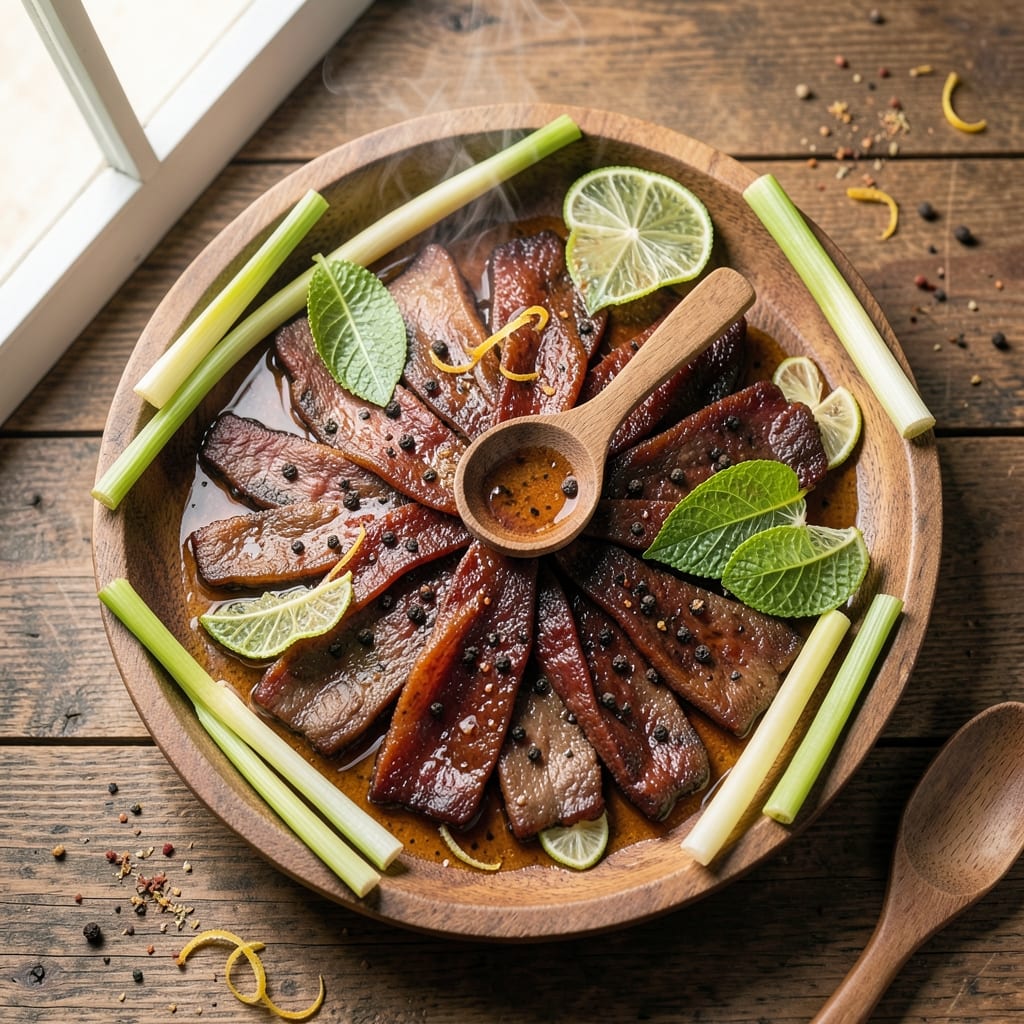
This authentic Thai beef jerky recipe transforms tough cuts into tender, aromatic chews infused with lemongrass and galangal—just like the kind sold in Bangkok street markets. The secret lies in a precise balance of fish sauce, palm sugar, and spices that create a sweet-savory-sour profile unique to Thai cuisine. I've perfected this method over years of testing, ensuring every bite delivers the complex flavors you'd expect from a Thai specialty shop.
What sets this recipe apart is the 4-hour process that builds deep flavor through marinating, curing, and slow drying. Unlike Western jerky, which relies on heavy salt and smoke, this version uses traditional Thai ingredients like kaffir lime leaves and tamarind for brightness and tang. The result? Jerky that's tender yet firm, with a glossy sheen from the palm sugar glaze and a fragrance that fills your kitchen with tropical warmth.
The beauty of this method is its authenticity without compromise—no shortcuts, just time-honored techniques adapted for home kitchens. You'll need a dehydrator or oven for drying, but the marinade can be prepped ahead, making this a weekend project worth the effort. The jerky keeps for weeks in the fridge or months frozen, so you can enjoy this taste of Thailand anytime.
Serve it as a snack with sticky rice, as a protein boost in salads, or even as a garnish for soups. The versatility makes it a pantry staple, while the authentic flavors ensure it stands out from store-bought alternatives. Let's get started on your Thai-inspired jerky journey.
Ingredients for authentic thai beef jerky
Fourteen ingredients for a snack that tastes like Bangkok street markets.
| Ingredient | Amount | Notes |
|---|---|---|
| Thinly Sliced Flank Steak 🥩 | 1 ½ lb | Cut against grain, 1/4-inch thick |
| Fish Sauce 🍶 | ½ cup | Red Boat brand preferred |
| Palm Sugar 🍯 | ½ cup | Light brown, finely ground |
| Fresh Lemongrass 🌿 | 1 whole | Bruised stems only, chopped |
| Galangal 🌿 | ¼ cup | Fresh, finely grated |
| Kaffir Lime Leaves 🍋 | 4 whole | Bruised, torn into pieces |
| Tamarind Paste 🍯 | ¼ cup | Unsweetened, dissolved |
| Fresh Chili Peppers 🌶️ | 2 whole | Bird's eye or Thai chili |
| Garlic Cloves 🧄 | 6 cloves | Minced, aromatic |
| Shallots 🧅 | 3 whole | Minced, pungent |
| Brown Sugar 🍚 | ¼ cup | Light, for balance |
| Salt 🧂 | 1 ½ tbsp | Kosher, for curing |
| Black Peppercorns 🌶️ | 1 tsp | Crushed, for depth |
| Coconut Aminos 🥛 | ¼ cup | For umami, optional |
The beef is non-negotiable—flank steak is the gold standard here, but skirt steak works too. Look for cuts with good marbling, and ask your butcher to slice it paper-thin against the grain. Costco or Whole Foods usually carry pre-sliced versions, but if you're slicing yourself, a sharp knife and a 1/4-inch guide (like a ruler) makes all the difference. For the galangal, Asian markets are your best bet—it's that root cousin of ginger with a citrusy kick. If you can't find fresh, powdered galangal at half the amount works in a pinch, but nothing beats the real thing.
No fish sauce? Soy sauce plus a splash of anchovy paste gets you close, but trust me, Red Boat brand is worth it. Tamarind paste is the secret weapon for that tangy depth—Trader Joe's sells it in tubes, no mess. Fresh chili peppers? Bird's eye or Thai are ideal, but any hot pepper works. The brown sugar balances the heat, so don't skip it. For the coconut aminos, Soy Vay brand is my go-to, but any coconut aminos or even extra soy sauce will do. The marinade can be prepped a day ahead—just keep it refrigerated until ready to use.
This marinade keeps for 5 days in the fridge, but the jerky itself? Weeks in the fridge, months in the freezer. Store it in an airtight container with parchment paper between layers to prevent sticking. For dehydrating, 165°F for 4-6 hours is ideal, but if you're using an oven, prop the door open and bake at 175°F for 2-3 hours. The jerky will firm up as it cools—don't over-dry it, or it'll be brittle. Once cooled, it's ready to snack on or pack for road trips.
Why You'll Love This Recipe
- No Knife Skills Needed: I swear by this recipe because the flank steak just needs to be thinly sliced—but honestly, if you don’t have a sharp knife, I’ve done it with a meat tenderizer in 10 minutes. The fish sauce and palm sugar do the real work here, balancing that funky galangal kick.
- Umami Bomb in Every Bite: Between us, this isn’t your dry, store-bought jerky. The fish sauce and lemongrass marinade soaks in, giving you that salty-sweet, herbal punch that’s dangerously addictive. (Yes, even on a Tuesday night.)
- Snack Attack Ready: Here’s what sold me—this jerky stays fresh for days, so I keep a batch in my fridge for when I’m craving something savory without the fuss. Perfect for road trips, lunchboxes, or when you’re too tired to cook.
- Budget-Friendly Protein: I stretch one flank steak into enough jerky to feed my family for a week. The ingredients? Cheap, pantry-friendly, and way better than pre-packaged junk. Plus, the galangal adds depth without breaking the bank.
Step-by-step instructions for authentic Thai beef jerky
This method delivers restaurant-quality Thai jerky with perfect texture and bold flavors.
Prepare the Marinade with Fresh Aromatics
In a medium bowl, combine the 0.5 cup fish sauce, 0.5 cup palm sugar, 0.25 cup tamarind paste, 0.25 cup coconut aminos, 1.5 tablespoons salt, and 1 teaspoon crushed black peppercorns. Stir until the palm sugar and tamarind paste dissolve completely, creating a smooth, sticky base.
Add the 1 whole chopped lemongrass, 0.25 cup finely grated galangal, 4 torn kaffir lime leaves, 2 minced fresh chili peppers, 6 minced garlic cloves, and 3 minced shallots. Mix thoroughly to distribute all the aromatic ingredients evenly throughout the marinade. The mixture should have a vibrant, complex aroma with bright citrus notes from the lime and lemongrass, a subtle heat from the chilies, and a deep umami richness from the fish sauce and coconut aminos.
Cure the Beef for Maximum Flavor
Place the 1.5 lb thinly sliced flank steak in a large, shallow dish or resealable plastic bag. Pour the marinade over the beef, ensuring every slice is completely coated. Use your hands to massage the marinade into the meat, working it into all the crevices. This step is crucial for even flavor distribution and proper curing.
Cover the dish and refrigerate for 4 hours, turning the beef every 60 minutes to ensure consistent exposure to the marinade. The acidity from the fish sauce and tamarind will begin breaking down the meat fibers, while the sugar and salt work together to draw out moisture and create that signature chewy texture. After 4 hours, the beef should be noticeably more tender and infused with vibrant color.
Dry the Jerky for Perfect Texture
Preheat your oven to 175°F (or use a food dehydrator set to 160°F). Line two baking sheets with parchment paper and arrange the marinated beef slices in a single layer, ensuring they don't overlap. This spacing is essential for even drying and proper texture development.
Bake for 3 to 4 hours, flipping the slices every 60 minutes to ensure even drying on both sides. The jerky is ready when it's completely dry to the touch, with a deep reddish-brown color and no moisture remaining. You'll know it's done when the slices bend slightly but don't break—this indicates the perfect balance between chewiness and tenderness. If using a dehydrator, follow the same process but reduce the temperature slightly for more gentle drying.
Rest and Store for Maximum Freshness
Remove the jerky from the oven and let it cool completely on a wire rack. This resting period allows the flavors to fully develop and the texture to set properly. Once cooled, transfer the jerky to an airtight container or resealable bag, pressing out any excess air to maintain freshness.
The jerky will keep in the refrigerator for up to 2 weeks or in the freezer for 3 months. When ready to enjoy, simply unwrap a piece and savor the authentic Thai flavors—bright, tangy, slightly sweet, and perfectly chewy. This method ensures every bite delivers the complex, balanced profile of traditional Thai beef jerky, with no artificial additives or shortcuts.
Pro Tips For Making Authentic Thai Beef Jerky
- Freeze the Meat First: I learned this the hard way—skipping the 30-minute freeze makes slicing flank steak into jerky-thin strips a struggle. Pop the meat in the freezer before slicing, and it’ll glide through like butter. (Yes, even if you're impatient like me.) ---
- Toast the Galangal: Fresh galangal is tough and bitter raw, but lightly charring it in a dry pan for 1-2 minutes—until it smells like citrusy ginger—softens the texture and deepens the flavor. Grate it fresh afterward, and the marinade will actually taste like Thailand, not just "spicy mystery paste." ---
- Marinate Overnight, Not Hours: Two hours is the bare minimum, but 12-24 hours in the fridge lets the fish sauce and palm sugar work their magic. I used to rush it, and the jerky always tasted flat—like someone forgot to season it. Trust the process. ---
- Dry the Strips Thoroughly: Pat the sliced meat dry with paper towels before marinating, and again right before drying. Moisture is the enemy here—it’ll turn your jerky into chewy leather. Use a fan if needed; crispy jerky starts with dry strips. (Your future self will thank you.)
Make-ahead tips for this authentic thai beef jerky
Marinade Prep Ahead
Make the marinade the night before—it develops deeper flavors when allowed to sit. Store it in an airtight container in the fridge for up to 5 days. I like to prep mine on Sunday evenings so I can marinate the beef first thing Monday morning. This gives the fish sauce and tamarind time to meld beautifully with the fresh aromatics. 🌿
Beef Slicing Shortcut
Save time by asking your butcher to slice the beef for you. Look for pre-sliced flank steak at Costco or Whole Foods—they often carry it in the meat department. If you must slice it yourself, freeze the steak for 30 minutes first to make it easier to handle. A sharp knife and a 1/4-inch ruler guide will help you achieve those perfect paper-thin slices. ⏱️
Dehydrator vs. Oven
For best results, use a dehydrator set to 160°F—it delivers even drying and preserves more of the natural beef juices. If you don’t have one, an oven works too. Prop the door open slightly and bake at 175°F for 2-3 hours, flipping every hour. The key is patience—rushing will leave your jerky chewy but not perfectly tender. 💡
Storage Hacks
Store finished jerky in an airtight container with parchment paper between layers to prevent sticking. It keeps in the fridge for 2 weeks or freezes beautifully for 3 months. For portion control, cut into 1-inch pieces before storing. I like to vacuum-seal mine for longer freshness—it’s worth the investment if you’re making this often. ❄️
Flavor Boost Trick
Before drying, brush the beef slices with a little extra marinade for a glossy finish. This adds a subtle sweet-savory coating that enhances the final texture. For extra authenticity, sprinkle a pinch of crushed dried kaffir lime leaves on top before drying—they’ll add a delicate citrus aroma. 🌟
Packing for Travel
This jerky is perfect for road trips or hikes. Pack individual pieces in reusable snack bags or small containers to keep them fresh. The natural sugars in the marinade prevent drying out, so it stays chewy even after days on the go. I always pack a few pieces in my gym bag—great for post-workout protein! 🚗
Nutrition facts
Frequently asked questions
Can I use chicken or pork instead of beef for this recipe?
While beef is traditional for Thai jerky, you can adapt this recipe for chicken or pork! For chicken, use boneless, skinless breast or thigh slices and reduce marinating time to 2-3 hours since poultry dries faster. Pork works well too, but trim excess fat first. The flavor profile will differ slightly—chicken becomes lighter, while pork gains richer depth. Just adjust drying times accordingly.
What if I can't find galangal or kaffir lime leaves?
No problem! For galangal, use ginger plus a pinch of citrus zest (like lime or lemon) to mimic its peppery citrus notes. For kaffir lime leaves, substitute with 1 tablespoon lime zest plus 1 teaspoon dried lime peel powder. The flavor won't be identical, but it'll still deliver that bright Thai tang. Both swaps work best when combined with extra fish sauce for umami balance.
How do I know when the jerky is fully dried?
The jerky is done when it's completely dry to the touch with no moisture, bends slightly without breaking, and has a deep reddish-brown color. Test by pressing a slice—if it springs back and feels firm (not rubbery), it's perfect. Over-drying makes it brittle, while under-drying risks spoilage. For extra assurance, check the internal temperature with a meat thermometer (145°F is ideal).
Can I make this jerky spicier or sweeter?
For extra heat, add 1-2 extra fresh chilies or a pinch of cayenne to the marinade. For more sweetness, increase the palm sugar by 1-2 tablespoons or add 1 teaspoon honey. Adjust in small increments—taste the marinade before applying to beef. Remember, flavors intensify during drying, so start conservative and adjust to preference.
Why does my jerky smell strong at first?
The intense aroma comes from the fish sauce and fermented ingredients like tamarind, which develop rich umami and funky notes as they cure. This is normal and actually enhances flavor! The smell mellows as the jerky dries. For milder versions, reduce fish sauce by 1 tablespoon or add 1/4 cup coconut milk to the marinade. Always work in a well-ventilated area when handling fresh marinades.