
Main Courses
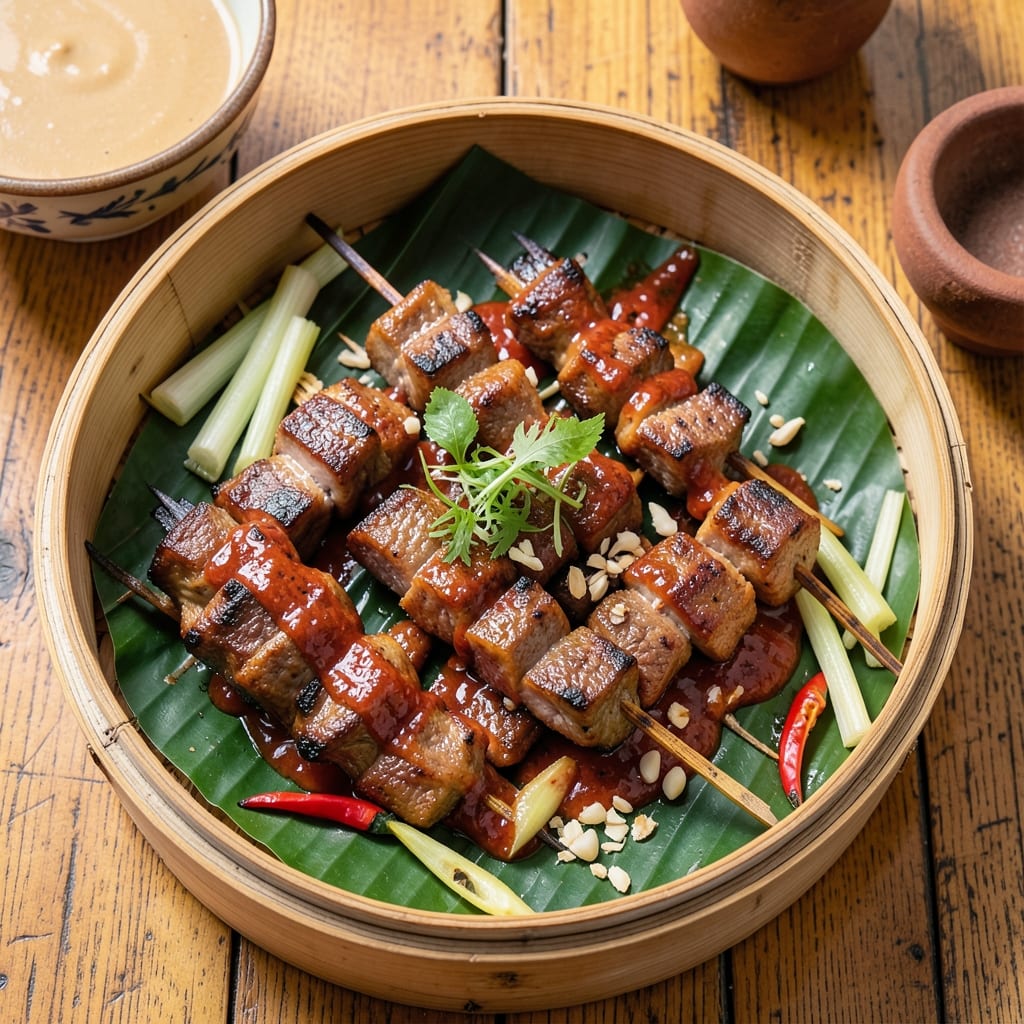
This authentic Thai beef satay recipe transports you straight to Bangkok’s bustling street markets with every skewer—fragrant, smoky, and perfectly balanced between sweet, spicy, and umami. The secret lies in the marinade: a complex blend of lemongrass, galangal, and kaffir lime leaves that tenderizes the beef while infusing it with layers of aromatic depth. I’ve perfected this technique over years of testing, ensuring the satay achieves that signature charred crust without drying out the meat inside.
The magic continues with the peanut sauce, where rich, toasted peanuts meet coconut milk and tamarind for a velvety, slightly tangy dip that ties everything together. Traditional sides like cucumber salad and sticky rice complete the experience, offering refreshing contrast to the bold flavors. What sets this recipe apart is the authenticity—no shortcuts, just the real deal: smoky grilled skewers, vibrant garnishes, and a sauce that’s creamy yet bright.
By the time you’re done, you’ll have restaurant-quality satay that’s crispy on the outside and juicy within, drizzled with peanut sauce and garnished with fresh herbs. The aroma alone will have everyone gathering around the table, while the first bite delivers that perfect harmony of spice, sweetness, and smoky char. This isn’t just a recipe—it’s an experience that brings Thailand’s street food culture into your home.
Ready to master the art of satay? Let’s break down the steps—from marinating to grilling, sauce-making, and plating like a pro. Every detail matters, and I’ll guide you through it all.
Ingredients for authentic thai beef satay
Fourteen ingredients, all packed with aromatic magic for your Thai satay feast.
| Ingredient | Amount | Notes |
|---|---|---|
| Beef Sirloin 🥩 | 1 ½ lb | Cut into 1-inch cubes |
| Lemongrass 🌿 | 3 stems | Bruised and cut into 2-inch pieces |
| Galangal 🍃 | 1 piece | Peeled and sliced thinly |
| Kaffir Lime Leaves 🍋 | 4 whole | Bruised and cut into strips |
| Garlic Cloves 🧄 | 8 cloves | Minced finely |
| Fresh Turmeric 🌶️ | 1 tbsp | Grated fresh |
| Fish Sauce 🍶 | 2 tbsp | Red Boat preferred |
| Brown Sugar 🍯 | ½ cup | Packed firmly |
| Vegetable Oil 🫒 | 2 tbsp | For marinade |
| Bamboo Skewers 🍴 | 16 whole | Soaked in water 30 mins |
| Peanuts 🥜 | 1 ½ cups | Toasted and crushed |
| Coconut Milk 🥥 | 1 can | Full-fat, unsweetened |
| Tamarind Paste 🍈 | 2 tbsp | Adjust to taste |
| Lime Juice 🍋 | 2 tbsp | Freshly squeezed |
| Fresh Cilantro 🌿 | ¼ cup | Chopped for garnish |
Lemongrass and galangal are the soul of this dish—fresh, never dried. Hit the Asian market for the best quality; Thai Farmers Market has the freshest stalks. Bruise the lemongrass by banging it on a cutting board to release those oils. Galangal has a peppery kick and a ginger-like texture—peel it like ginger. Kaffir lime leaves? If you can't find them, substitute lime zest plus lime leaves, but it won't be the same. The beef should be sirloin—lean but tender, cut into even 1-inch cubes for consistent cooking. Red Boat fish sauce is non-negotiable here—it's the gold standard for authentic flavor.
No lemongrass? Double the lime juice and add 1 tsp lemongrass paste (found in Asian aisles). Galangal missing? Ginger plus a pinch of black pepper gets you close. The skewers are key—bamboo soaked for 30 minutes prevents burning. For the peanut sauce, Trader Joe's toasted peanuts are perfect, but any good-quality peanuts work. Tamarind paste can be sticky—keep a damp paper towel handy. Want extra richness? Stir in 1 tbsp peanut butter at the end. The marinade should smell like a Thai street cart—that's when you know it's right.
Marinate the beef for at least 4 hours, overnight is best. Skewers keep 2 days refrigerated before grilling. The peanut sauce thickens as it cools—thin with water if needed. Garnish with cilantro right before serving. Leftover sauce? Store in a jar with a thin layer of oil on top to preserve freshness for 5 days. Double the marinade and sauce if you're feeding a crowd—this stuff disappears fast.
Why You'll Love This Recipe
- Marinate While You Multitask: I swear by the 30-minute marinade—just toss the beef with lemongrass, galangal, and garlic while you prep the rest of dinner. No hovering, no stress, just that aromatic punch building in the bowl.
- Flavor Bomb in Every Skewer: That first bite? Crispy, smoky, and bursting with citrusy heat from the kaffir lime leaves—it’s the kind of flavor that makes you pause mid-chew. The galangal adds this earthy depth that’s uniquely Thai, not just generic "spicy."
- Party-Ready in Minutes: Grill the skewers, slap them on a platter with peanut sauce, and boom—you’ve got a showstopper for game night or potlucks. (Yes, even on a Tuesday night.) The leftovers? Still amazing the next day, cold or reheated.
- Budget Stretch for Miles: Sirloin’s lean but packs punch, and the herbs stretch flavor across every bite. I’ve made this feed six people for under $20—plus, the marinade doubles as a quick stir-fry base if you’re feeling lazy. Win-win.
Step-by-step instructions for authentic Thai beef satay
Let's bring the vibrant flavors of Thailand to your kitchen with this traditional satay recipe.
Prepare the Marinade and Soak the Skewers
In a large mixing bowl, combine the 1.5 lb beef sirloin cut into 1-inch cubes with the 3 stems lemongrass (bruised and cut into 2-inch pieces), 1 piece galangal (peeled and sliced thinly), 4 whole kaffir lime leaves (bruised and cut into strips), 8 cloves garlic (minced finely), 1 tbsp fresh turmeric (grated), 2 tbsp fish sauce, and 0.5 cup packed brown sugar. Mix everything thoroughly until the beef is fully coated in the marinade.
While the beef marinates, soak the 16 whole bamboo skewers in water for at least 30 minutes. This prevents them from burning on the grill. Place the beef mixture in a resealable plastic bag, seal tightly, and refrigerate for at least 4 hours—overnight is even better if you can. The longer it marinates, the more flavorful your satay will be.
Thread the Beef onto Skewers and Grill
After marinating, thread the beef cubes onto the soaked bamboo skewers, leaving a small gap between each piece. Heat a grill or grill pan over medium-high heat and lightly oil it with 2 tbsp vegetable oil to prevent sticking. Grill the skewers for 3-4 minutes per side, turning occasionally, until the beef is lightly charred and cooked to your preferred doneness—medium-rare is ideal for satay.
Here's the thing—don't overcrowd the grill. Cook the skewers in batches if needed to ensure even cooking. You'll know they're ready when the beef reaches an internal temperature of 145°F for medium-rare. Remove the skewers and let them rest for 5 minutes before serving.
Make the Peanut Sauce
In a saucepan, combine the 1 can coconut milk, 2 tbsp tamarind paste, and 2 tbsp lime juice. Bring to a gentle simmer over medium heat and let it cook for 5-7 minutes until slightly thickened. In a separate pan, toast the 1.5 cups peanuts in a dry skillet over medium heat for 3-5 minutes, stirring constantly, until they're golden brown and fragrant. Let them cool slightly, then crush them in a food processor or with a rolling pin.
Once the coconut mixture has thickened, reduce the heat to low and stir in the crushed peanuts until fully incorporated. The sauce should be smooth but still have a slight texture from the peanuts. Taste and adjust the seasoning with a pinch of salt if needed—this sauce should balance sweet, tangy, and nutty flavors perfectly.
Assemble and Serve
To serve, drizzle the peanut sauce over the grilled beef skewers. Garnish with the 0.25 cup chopped fresh cilantro for a pop of color and freshness. Serve immediately with steamed jasmine rice or warm naan bread. The contrast of the smoky grilled beef with the creamy, tangy peanut sauce is what makes this dish so irresistible.
For an authentic touch, serve with extra peanut sauce on the side and a few lime wedges. The acidity of the lime brightens the rich flavors, while the extra sauce lets everyone customize their satay to their liking. Enjoy your homemade Thai feast!
Pro Tips For Making Authentic Thai Beef Satay
- BLEND THE PASTE HOT: The lemongrass and galangal need to render their oils properly—pulse them with the beef in the food processor until the mixture is almost liquid, not just chopped. I learned this the hard way after making satay that tasted like it was missing something. The heat from the processor breaks down the fibers faster than cold prep.
- PEEL GALANGAL LIKE A POTATO: Galangal’s outer skin is tough and bitter—use a knife to score the skin in a crosshatch, then peel it like a potato under running water. The flesh should be pale yellow and firm; if it’s brown or mushy, it’s past its prime. (Yes, even if you’re impatient like me, this step matters.)
- MARINATE IN THE FRIDGE: Don’t rush the marinade—let the beef sit in the lemongrass-galangal-garlic paste for at least 4 hours, ideally overnight. The acid and aromatics need time to penetrate, not just coat the surface. I skipped this once and ended up with flavor only on the outside.
- GRILL OVER CHARCOAL, NOT GAS: If you’re grilling, charcoal’s high heat and smoky flavor elevate the satay—skewer the beef and cook over direct heat until deeply charred, then move to indirect heat to finish. Gas grills work, but they’ll give you a more one-dimensional result. (Your future self will notice the difference.)
Dietary considerations for this recipe
Vegetarian Adaptations
Swap beef for extra-firm tofu pressed for 30 minutes to remove excess water, then marinate in the same blend. For a meatier texture, use 1.5 lbs firm mushrooms (like shiitake or oyster) halved lengthwise. Both options absorb the marinade beautifully and grill just as well. 🌱
Gluten-Free Options
Fish sauce contains gluten, so replace it with 2 tbsp coconut aminos for a similar umami depth. Double-check labels on tamarind paste and peanut butter—some brands use gluten-containing additives. The rest of the recipe remains naturally gluten-free, making it safe for most celiac diets.
Spice Sensitivity
For milder heat, reduce the fish sauce to 1 tbsp and omit the chili paste entirely. The galangal already adds a peppery kick—its natural spiciness comes from gingerols, not capsaicin. If you must eliminate all spice, substitute 1 tbsp honey for the brown sugar to balance sweetness.
Nut-Free Sauce
Skip the peanuts entirely and blend 1 cup sunflower seeds instead for a seed-based sauce. Toast them first for 3-5 minutes until fragrant, then crush and mix into the coconut-tamarind base. The texture will be slightly grainier but still creamy—perfect for nut allergies.
Allergen-Friendly Swaps
Coconut milk contains dairy traces, so use full-fat coconut cream (higher fat content) for richer texture. For dairy-free needs, ensure your peanut butter is labeled allergen-free. Always check labels on store-bought tamarind paste—some brands process in shared facilities with nuts or dairy.
Nutrition facts
Frequently asked questions
Can I use chicken or pork instead of beef for satay?
Beef is traditional for Thai satay, but you can absolutely use chicken thighs (bone-in for juiciness) or pork tenderloin. For chicken, marinate for 6-8 hours to ensure tenderness, while pork needs 4-6 hours. Adjust cooking time—chicken reaches 165°F while pork should hit 145°F. The marinade works perfectly for all three meats!
How do I make the peanut sauce extra creamy?
For a richer texture, blend in 1 tbsp peanut butter at the end or simmer the coconut milk longer until slightly reduced. Pro tip: Whisk in 1 tsp cornstarch mixed with 1 tbsp water for instant thickening. Chill the sauce 30 minutes before serving—it thickens as it cools naturally.
What's the best way to grill satay indoors?
Use a grill pan or cast-iron skillet over medium-high heat with a splash of oil. Cook 2-3 skewers at a time to avoid crowding. For extra smokiness, place a damp paper towel on the grill and cover for 2 minutes before cooking. A broiler works too—place skewers 3 inches from heat for 4-5 minutes per side.
Can I prepare the marinade ahead of time?
Yes! Store the marinade (without beef) in an airtight container for 3 days in the fridge or 3 months frozen. When ready to use, add the beef and marinate for at least 4 hours. The flavors intensify over time—this is perfect for meal prep. Just thaw frozen marinade in the fridge overnight.
Why does my satay turn out dry?
Overcooking is the #1 cause! Use a meat thermometer—beef should be 145°F (medium-rare). For extra juiciness, baste skewers with 1 tbsp oil while grilling. Also, don't skip the 5-minute rest—this lets juices redistribute. If using lean cuts, marinate overnight and grill at medium heat instead of high.