
Soups & Stews
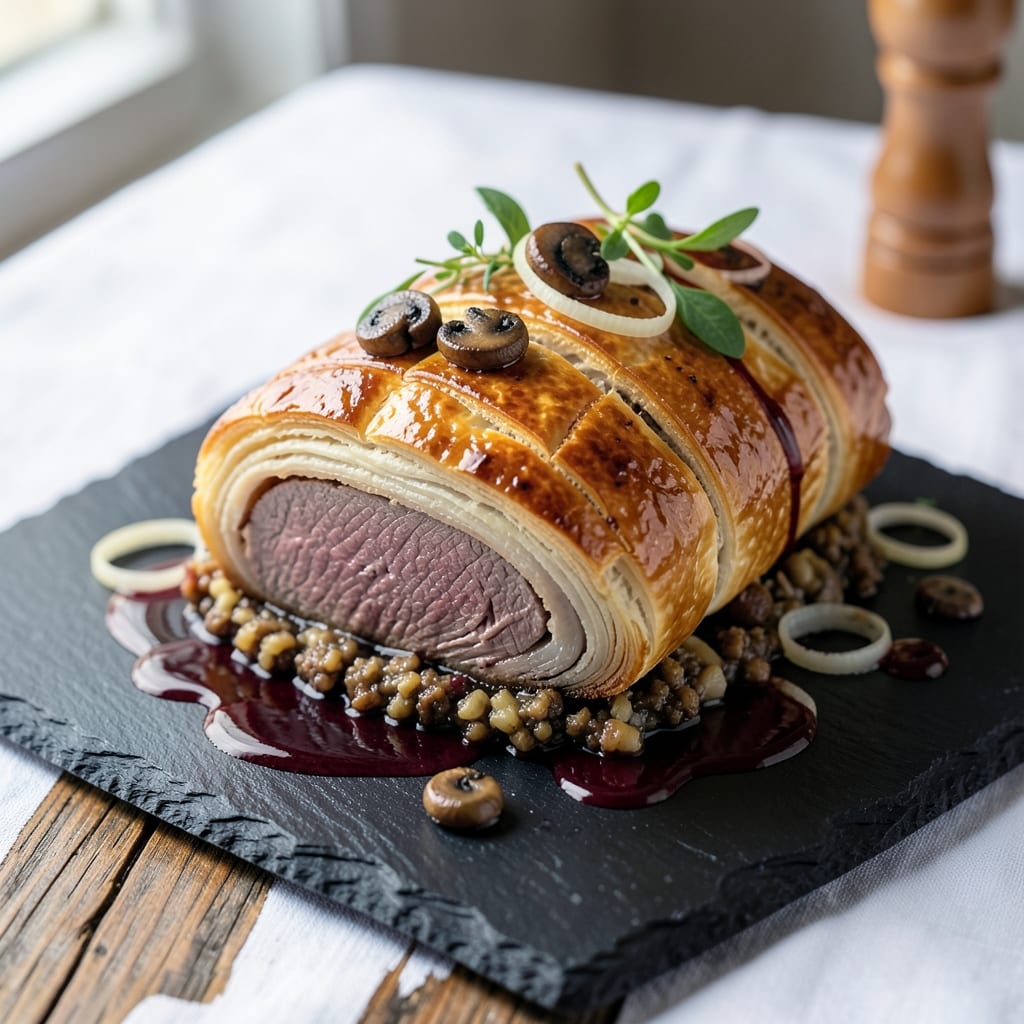
The Barefoot Contessa Beef Wellington delivers restaurant-quality elegance with its golden puff pastry encasing tender beef and savory mushroom duxelles. This classic dish transforms a simple steak into a showstopping centerpiece that feels like a Michelin-starred experience—without the complexity. The secret lies in precise technique: searing the beef to lock in juices, finely chopping mushrooms for rich flavor, and carefully wrapping the pastry to ensure a crisp, golden crust.
What sets this recipe apart is the balance of textures—tender beef, velvety duxelles, and flaky pastry—that comes together with just 30 minutes of active prep and 1 hour of baking. The duxelles, a finely chopped mushroom paste, adds depth and moisture, while the puff pastry creates a crisp shell that contrasts beautifully with the rich filling. Chilling the pastry before baking is non-negotiable; it prevents sogginess and ensures that signature golden finish.
By the time you slice into this masterpiece, you’ll reveal a perfectly cooked beef fillet with a caramelized crust, surrounded by aromatic mushrooms and a glossy red wine reduction. The aroma alone will have everyone gathered at your table, and the first bite will confirm why this dish is a crowd-pleaser for holidays or special dinners. Pair it with roasted asparagus or a crisp green salad to complete the meal.
This recipe isn’t just about the final dish—it’s about the confidence that comes from mastering each step. Whether you’re hosting a dinner party or treating yourself to a luxurious meal, the Barefoot Contessa Beef Wellington is a testament to how simple techniques can create extraordinary results. Let’s get started on crafting your own version of this timeless classic.
Ingredients for barefoot contessa beef wellington
Elevate your dinner game with these restaurant-quality ingredients for a showstopping Beef Wellington.
| Ingredient | Amount | Notes |
|---|---|---|
| Beef Tenderloin 🥩 | 1 ½ lb | Center-cut, trimmed of fat |
| Puff Pastry Sheets 🍞 | 1 sheet | Store-bought, thawed completely |
| Cremini Mushrooms 🍄 | 8 oz | Finely chopped, stems removed |
| Shallots 🧅 | 2 whole | Minced, about 2 tbsp |
| Garlic Cloves 🧄 | 4 cloves | Finely minced, about 1 tbsp |
| Dijon Mustard 🍯 | 1 tbsp | For duxelles binding |
| Prosciutto 🥓 | 4 oz | Thinly sliced, optional |
| Dry Red Wine 🍷 | ½ cup | Bold Cabernet Sauvignon |
| Beef Stock 💧 | ¼ cup | Homemade or quality jarred |
| Unsalted Butter 🧈 | 4 tbsp | Cold, for sealing |
| Fresh Thyme 🌿 | ½ tsp | Chopped leaves only |
| Salt 🧂 | 1 tsp | Diamond Crystal kosher |
| Black Pepper 🌶️ | ½ tsp | Freshly cracked |
| Egg Wash 🥚 | 1 whole | Beaten with 1 tbsp water |
The beef tenderloin is your star—center-cut and trimmed for perfect tenderness. Whole Foods or local butchers often carry the best cuts; ask for center-cut to avoid tougher ends. Prosciutto adds luxury, but skip it if you prefer a vegetarian-friendly version. For the mushrooms, cremini or baby bella work best—their meaty texture holds up when finely chopped. If you can't find fresh thyme, dried works at one-third the amount, but fresh is ideal for that bright aroma. The Dijon mustard might be in the spice aisle, but check near the condiments too—some stores stock it there.
No prosciutto? Thinly sliced pancetta or extra prosciutto slices work just as well. Short on red wine? Substitute beef stock with an extra splash of balsamic vinegar for depth. The puff pastry—store-bought is perfectly fine—should be thawed completely before handling. If your pastry sheet is too large, trim it to fit your beef snugly. For the duxelles, chop the mushrooms as finely as possible—almost like a paste. This is where the magic happens, so don't rush it. The butter should be cold and cubed when you seal the pastry to prevent sogginess.
Assemble the Wellington at least 30 minutes before baking to allow the filling to chill and the pastry to relax. Wrap the finished Wellington tightly in plastic and refrigerate for up to 24 hours—this actually improves the flavor. Bake it at room temperature for even cooking. Leftovers? Slice and reheat in a 350°F oven for 15 minutes—it reheats beautifully. Store any unused pastry in the freezer between parchment paper for up to 3 months.
Why You'll Love This Recipe
- No-Fuss Prep: I swear by this recipe because it’s the rare steak dinner that doesn’t require hours of prep. Slice the shallots and mushrooms while the beef rests—no dicing, no stress—just a quick sauté before wrapping everything in puff pastry. The tenderloin does all the heavy lifting; you just get to enjoy the process.
- Umami Bomb: That earthy mushroom-duxelles with shallots and garlic? It’s the secret weapon. The pastry seals in the flavor so every bite delivers that crispy, savory punch—like a fancy bistro experience without the fuss. (Yes, even on a Tuesday night.)
- Leftovers That Shine: This isn’t one of those dishes that turns into rubber the next day. Slice the cooled Wellington thin, and it’s still rich and tender—perfect for sandwiches or a quick lunch. Honestly, I’ve had better meals from leftovers than some takeout.
- Date Night Ready: No one needs to know it’s from a sheet pan. The golden puff pastry and elegant presentation make it feel special, whether it’s a weekend dinner or a last-minute celebration. Between us, I’ve served this to guests who swore it was from a Michelin-starred kitchen.
Step-by-step instructions for beef Wellington with mushroom duxelles
Here's how to create restaurant-quality Beef Wellington at home—crispy pastry, tender beef, and rich mushroom filling every time.
Prepare the Beef Tenderloin
Start by trimming the 1.5 lb beef tenderloin of any remaining fat or silver skin using a sharp boning knife. I like to score the surface lightly in a diamond pattern with a thin knife—this helps the duxelles penetrate later and prevents curling during baking. Season the beef generously with 1 tsp salt and 0.5 tsp freshly cracked black pepper, pressing the seasoning into the meat so it adheres well.
Let the seasoned beef rest at room temperature for 30 minutes while you prepare the duxelles. This resting period ensures even cooking throughout. I always use a meat thermometer to check the internal temperature later—you want it to reach 130°F before removing it from the oven for resting.
Make the Mushroom Duxelles
In a large skillet, melt 2 tbsp of the 4 tbsp unsalted butter over medium-high heat. Add the 8 oz finely chopped cremini mushrooms and cook for 8-10 minutes, stirring frequently, until all moisture has evaporated and the mushrooms are golden brown. You're looking for a dry, almost paste-like consistency—this is crucial for binding the filling.
Add the 2 minced shallots and 4 minced garlic cloves, cooking for another 2-3 minutes until fragrant. Stir in the 1 tbsp Dijon mustard and 0.5 tsp chopped fresh thyme, then remove from heat. Let the mixture cool slightly before spreading it evenly over the beef tenderloin, creating a ½-inch thick layer. This rich, savory duxelles is what makes Beef Wellington so special.
Assemble the Wellington
Roll out the 1 sheet puff pastry on a lightly floured surface to about ⅛-inch thickness, creating a rectangle large enough to wrap the beef completely. I like to use a rolling pin with even pressure to maintain consistent thickness. Place the beef tenderloin, coated with duxelles, in the center of the pastry, leaving about 2 inches of overhang on all sides.
Fold the pastry over the beef, sealing the edges tightly. Trim any excess pastry, then wrap the entire package in plastic wrap. Chill in the refrigerator for 20 minutes to firm up—this makes it easier to handle and prevents the pastry from tearing when you transfer it to the baking sheet. The cold pastry also helps maintain its shape during baking.
Seal and Bake to Perfection
Preheat your oven to 425°F. Brush the chilled Wellington generously with the egg wash, then place it seam-side down on a parchment-lined baking sheet. Bake for 25-30 minutes until the pastry is golden brown and the internal temperature of the beef reaches 130°F. I check the temperature with a meat thermometer inserted into the thickest part of the beef.
Remove the Wellington from the oven and transfer it to a cutting board. Tent loosely with foil and let it rest for 15 minutes before slicing. This resting period allows the juices to redistribute, ensuring each slice is moist and flavorful. The exterior should be crispy and golden, with a beautiful caramelized crust that contrasts perfectly with the tender beef inside.
Create the Pan Sauce (Optional but Recommended)
While the Wellington rests, pour the 0.5 cup dry red wine into the baking sheet, scraping up any browned bits with a wooden spoon. Add the 0.25 cup beef stock and simmer over medium heat for 3-4 minutes until slightly reduced. Stir in the remaining 2 tbsp unsalted butter, whisking until smooth and glossy. This rich, wine-infused sauce is the perfect complement to your Beef Wellington.
Slice the Wellington into 4 even portions and serve immediately with the pan sauce spooned generously over each slice. The combination of crispy pastry, tender beef, and luxurious mushroom filling makes this dish feel like a true special occasion—without the restaurant price tag.
Pro Tips For Making Barefoot Contessa Beef Wellington
- SEAR THE MUSHROOM PASTE: I used to rush this step and end up with a bland, watery duxelles—don’t make that mistake. Cook the mushroom-shallot-garlic mix on medium-low heat for 15-20 minutes, stirring occasionally, until it’s deeply browned and all the liquid has evaporated. The longer you let it reduce, the richer the flavor will be when it gets wrapped around that tenderloin.
- DON’T SKIP THE DRY BRINE: This isn’t the prettiest method, but it’s the tastiest. Pat the beef tenderloin very dry with paper towels, then sprinkle it generously with kosher salt (about 1 teaspoon per pound) and let it sit uncovered in the fridge for at least 30 minutes. The salt will penetrate deeply, and the surface will stay crisp when seared—no soggy pastry here.
- WRAP THE PASTRY TIGHT: After sealing the beef in foil, don’t just slap the puff pastry on top like a lazy bandage. Press it firmly against the edges to create a proper seal, then use a sharp knife to trim away any excess. This prevents air gaps that could lead to a chewy, uneven crust. A little effort here means a golden, shatteringly crisp finish.
- LET THE BEEF REST LONGER: I know, I know—you want to cut into that perfect roast immediately. But resist the urge. After removing the beef from the oven, tent it loosely with foil and let it rest for a full 15 minutes before slicing. This ensures the juices redistribute, and every bite stays moist instead of turning into a dry, sad slab of overcooked meat. (Yes, even if you’re impatient like me.)
Make-ahead tips for leftovers
Prep Ahead Strategy
Assemble the Wellington up to 24 hours ahead and refrigerate it wrapped tightly in plastic. The flavors meld beautifully overnight, and the pastry stays firm for easier slicing. I always prep mine the night before—just pop it in the oven when guests arrive. 💫
Duxelles Prep
Make the mushroom duxelles 1 day ahead and store it in an airtight container in the fridge. The flavors deepen as it rests, and you can reheat it gently in a skillet before spreading it on the beef. For extra richness, add a pinch of salt and pepper while reheating. This step saves 20 minutes on cooking day!
Pastry Prep
Roll out the puff pastry and chill it separately for 30 minutes before assembly. This prevents tearing when you wrap it around the beef later. I like to keep it on a floured tray in the fridge while I work on the duxelles—it stays workable without sticking. 🧈
Beef Prep
Season and score the beef tenderloin 1 day ahead and refrigerate it uncovered on a plate. This allows the seasoning to penetrate deeply. When ready to cook, bring it to room temperature by sitting it on the counter for 30 minutes before assembling the Wellington.
Sauce Prep
Make the red wine reduction sauce 2 days ahead and store it in a jar in the fridge. Reheat it gently in a saucepan with a splash of water or stock before serving. This shortcut ensures you have a restaurant-quality sauce ready without last-minute stress. 🍷
Final Assembly
Wrap the fully assembled Wellington in plastic and refrigerate for 2 hours before baking. This chilling time is crucial—it firms up the pastry and helps it hold its shape during baking. I find this extra step makes all the difference in achieving that perfect golden crust. ⏰
Nutrition facts
Frequently asked questions
Why does the recipe call for chilling the Wellington before baking?
Chilling for 20 minutes is essential to prevent the pastry from tearing when transferring it to the baking sheet. The cold pastry also helps maintain its shape during baking, resulting in a more even golden crust. This step ensures the duxelles stays put and the beef cooks evenly without the pastry collapsing.
Can I substitute prosciutto with something else?
Yes! If you don’t have prosciutto, use 4 oz thinly sliced pancetta or even extra prosciutto slices if you have them. For a vegetarian option, skip it entirely or use thinly sliced mushrooms to add extra texture. The prosciutto adds saltiness, so adjust other seasonings if omitting it.
What’s the best way to slice Beef Wellington?
Use a sharp chef’s knife and cut the Wellington into 4 even slices, working quickly to keep the filling intact. Slice through the pastry first, then angle the knife slightly to separate each portion cleanly. Serve immediately with the pan sauce to prevent the pastry from becoming soggy.
How do I fix a soggy pastry after baking?
Sogginess usually means the pastry wasn’t chilled long enough or the beef wasn’t fully cooked before wrapping. For next time, ensure the Wellington rests 2 hours before baking and use cold butter to seal the pastry. If it happens, broil the Wellington for 2-3 minutes to crisp the pastry—just watch closely to avoid burning.
What’s the ideal internal temperature for the beef?
Aim for 130°F internal temperature when removed from the oven—this ensures the beef reaches 145°F while resting, the USDA-recommended safe minimum. Use a meat thermometer inserted into the thickest part of the beef for accuracy. Overcooking can dry out the tenderloin, so don’t exceed 145°F.