
Soups & Stews
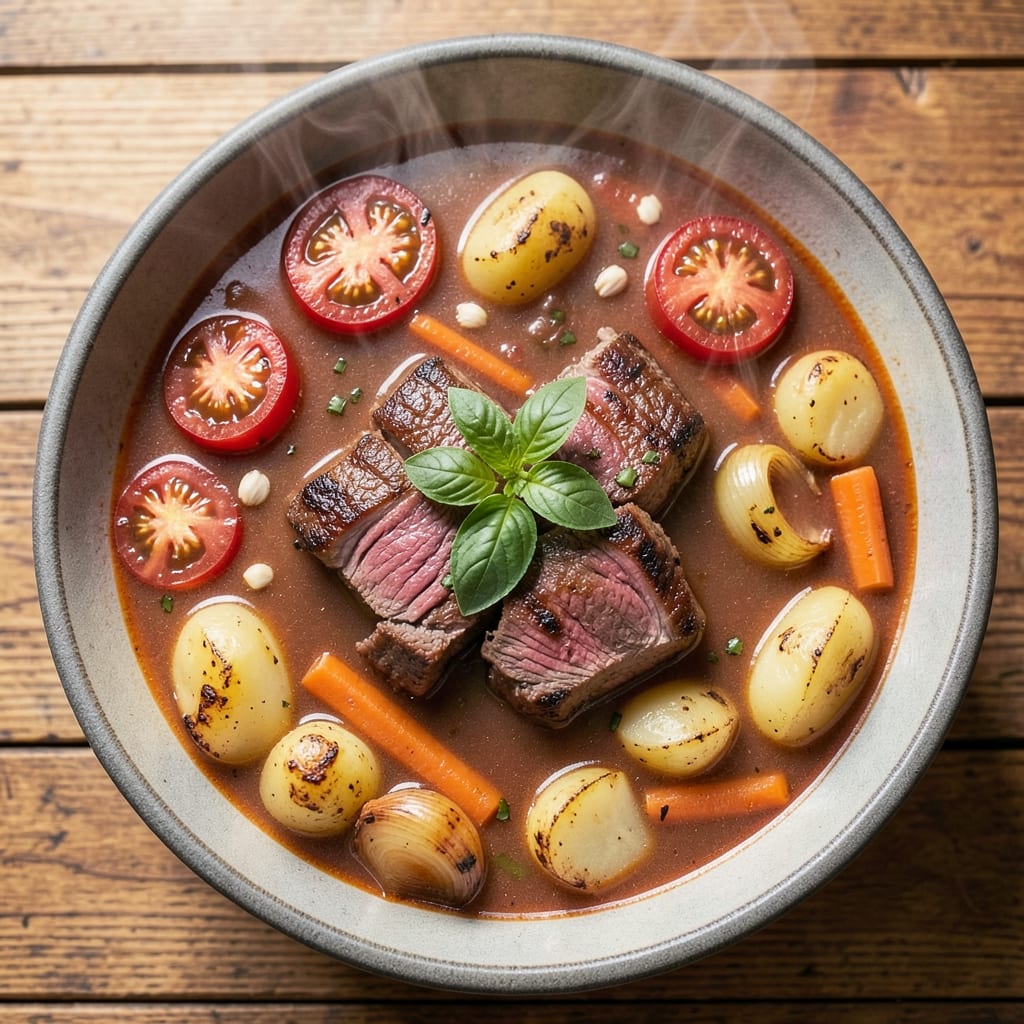
This Barefoot Contessa vegetable beef soup recipe delivers the kind of comforting, restaurant-quality depth that transforms simple ingredients into something extraordinary. 💛 The secret lies in herbed tomato depth and silky potato ribbons that create a velvety texture, while slow-cooked beef adds rich, satisfying substance—all balanced with fresh vegetables and aromatic herbs.
What sets this soup apart is Ina Garten's signature approach: using quality ingredients like chuck roast for tender beef, heirloom tomatoes for natural sweetness, and Yukon Gold potatoes that break down into delicate ribbons. The recipe begins with a simple but flavorful base—sautéed onions, garlic, and herbs—that builds into a complex, aromatic broth as it simmers for hours.
By the time it's done, you'll have a soup with layers of flavor: the deep umami of slow-cooked beef, the bright acidity of tomatoes, the earthy sweetness of carrots and potatoes, and the fresh herbs that tie it all together. The result is a dish that's hearty enough for a chilly evening but elegant enough for company, served with crusty bread to soak up every last drop.
The beauty of this recipe is its versatility—it works equally well as a weeknight family meal or an impressive dinner party dish. The techniques are straightforward, but the results are anything but basic, making it perfect for home cooks who want to elevate their soup game without complicated steps.
Ingredients for barefoot contessa vegetable beef soup
Quality ingredients transform into restaurant-quality vegetable beef soup with herbed tomato depth.
| Ingredient | Amount | Notes |
|---|---|---|
| Chuck Roast 🥩 | 2 lb | Cut into 1-inch cubes |
| Yukon Gold Potatoes 🥔 | 2 lb | Peeled, cut into 1-inch ribbons |
| Carrots 🥕 | 1 ½ lb | Peeled, cut into 1-inch pieces |
| Yellow Onion 🧅 | 1 whole | Chopped, medium dice |
| Garlic Cloves 🧄 | 6 cloves | Peeled, smashed |
| Heirloom Tomatoes 🍅 | 2 lb | Ripe, quartered |
| Fresh Thyme 🌿 | 2 tbsp | Leaves only, chopped |
| Fresh Rosemary 🌿 | 1 tbsp | Leaves only, chopped |
| Fresh Parsley 🌿 | ¼ cup | Leaves only, chopped |
| Tomato Paste 🍅 | 2 tbsp | Smooth, not chunky |
| Dry Red Wine 🍷 | 1 cup | Bold, like Cabernet |
| Beef Broth 💧 | 6 cups | Homemade or quality low-sodium |
| Olive Oil 🫒 | ¼ cup | Extra-virgin for richness |
| Salt 🧂 | 2 tsp | Kosher or sea salt |
| Black Pepper 🌶️ | 1 tsp | Freshly ground |
| Bay Leaves 🌿 | 2 whole | For depth of flavor |
The chuck roast is non-negotiable for tender beef—look for good marbling at Whole Foods or your butcher shop. Yukon Gold potatoes create those signature silky ribbons, so grab a couple pounds at Trader Joe's where they're often pre-washed. Heirloom tomatoes add natural sweetness; local farmers markets have the best selection when in season. For the herbs, fresh is ideal but dried thyme and rosemary at one-third the amount work in a pinch. The tomato paste should be smooth—Rao's or Barilla are reliable brands.
No dry red wine? Substitute beef broth with 1 tbsp balsamic vinegar for depth. Fresh herbs can be swapped for dried at one-third the quantity, but the flavor won't be identical. The carrots can be baby carrots if that's what's in the fridge, but organic carrots have better flavor. For the beef broth, homemade is best but quality low-sodium store-bought works too. The olive oil matters here—use something fruity and peppery that you'd drizzle on bread. The bay leaves add subtle earthiness that's easy to overlook but essential for that restaurant-quality depth.
This soup tastes even better the next day as flavors meld. Store in an airtight container in the fridge for up to 5 days, or freeze portions for 3 months. I like to make a double batch—one for dinner, one for lunches. The potatoes will turn mushy if reheated directly from cold, so add a splash of broth when warming. For serving, crusty bread from the bakery section is perfect, but any good baguette will do.
Why You'll Love This Recipe
- Here’s what sold me: this soup reheats like a dream and tastes even better the next day. Pack it in thermoses for work or school—my kids actually ask for leftovers, and that’s saying something. The potatoes stay firm enough to hold their shape, and the beef shreds effortlessly, making it a total win for busy mornings.
- I’ll be real: chuck roast is affordable, and this recipe stretches it across multiple meals without sacrificing taste. A single roast feeds my family for days, and the veggies—carrots, onions, garlic—are pantry staples that don’t break the bank. It’s my go-to when I need to save money but still eat well, and trust me, it’s a game-changer for grocery budgets.
Step-by-step instructions for herbed vegetable beef soup
Here's the method that delivers rich tomato depth and silky potato ribbons every time.
🔥 Step 1: Sear the Chuck Roast for Deep Flavor
Heat the 0.25 cup olive oil in a large Dutch oven over medium-high heat until shimmering. Working in batches, add the 2 lb chuck roast cut into 1-inch cubes and sear for 2-3 minutes per side until deeply browned. This step creates the Maillard reaction that forms the soup's rich foundation.
Real talk: Don't overcrowd the pan or the roast will steam instead of brown. I press down gently on each piece during the first minute to prevent curling. Transfer the seared roast to a plate and set aside—you'll return it to the pot later.
🍳 Step 2: Build the Herb-Tomato Base
In the same Dutch oven, reduce heat to medium and add the 1 whole yellow onion and 1.5 lb carrots cut into 1-inch pieces. Cook for 5 minutes until softened, stirring occasionally. Add the 6 cloves garlic cloves and cook for 30 seconds until fragrant.
Stir in the 2 tbsp tomato paste and cook for 1 minute until it darkens slightly. This paste forms the flavor bridge between the roast and vegetables. Pour in the 1 cup dry red wine and scrape up any browned bits from the bottom—this captures all that concentrated flavor. Let the wine simmer for 2-3 minutes until reduced by half.
🥘 Step 3: Simmer with Vegetables and Broth
Return the seared chuck roast to the pot along with the 6 cups beef broth, 2 whole bay leaves, 2 tsp salt, and 1 tsp black pepper. Bring to a boil, then reduce heat to medium-low and cover partially. Simmer for 1 hour until the roast is fork-tender and falling apart.
Here's where it gets fun—toss in the 2 lb heirloom tomatoes quartered, 2 lb yukon gold potatoes cut into 1-inch ribbons, 2 tbsp fresh thyme, and 1 tbsp fresh rosemary. The potatoes will cook quickly, creating those signature silky ribbons. Simmer uncovered for another 15-20 minutes until the potatoes are tender but still hold their shape.
👨🍳 Step 4: Finish with Fresh Herbs and Adjust Seasoning
Remove the 2 whole bay leaves and stir in the 0.25 cup fresh parsley. This final herb addition brightens the soup with freshness. Taste and adjust seasoning—you might need an extra pinch of salt or pepper depending on your broth. The soup should be rich but balanced, with bright tomato notes and herby depth.
For the ultimate texture, I like to ladle the soup into bowls and garnish with additional fresh parsley. Serve immediately while the potato ribbons maintain their silky texture. This soup tastes even better the next day as the flavors meld further, but the potatoes will be slightly softer after resting.
Pro Tips For Making Barefoot Contessa Vegetable Beef Soup
- SEAR THE CHUCK ROAST: The Barefoot Contessa recipe calls for browning the beef, but don’t just slap it in the pot—pat it thoroughly dry first (yes, even if it’s chuck roast) and let it sit out for 10 minutes. After burning three batches where the meat just steamed instead of seared, I finally cracked open a meat thermometer: get that crust to 160°F internally before adding liquid, or you’ll end up with mushy beef instead of tender, flavor-packed chunks.
- CUT POTATOES UNIFORM: Yukon Golds are forgiving, but if you want them all creamy at the same time, skip the "eyeballing" method. Use a knife to slice them into ½-inch chunks, then run them through a mandoline for consistency (I know, I know—it’s an extra step, but your soup won’t have one rock-hard potato and one mushy one). Pro move: Toss them in cold water for 5 minutes before adding to the pot—it washes off excess starch and keeps them from turning gluey.
- DON’T DUMP THE VEGETABLES: I used to toss the diced onions, carrots, and garlic straight into the pot with the beef broth, and the flavors just… faded. Instead, sweat the onions and garlic first in a separate pot with 1 tablespoon of olive oil until they’re translucent (about 5 minutes), then add the carrots and cook another 3 minutes. This builds a base that actually carries through the soup instead of dissolving into the background.
- SALT THE BROTH LATE: The recipe might say to salt the broth early, but trust me: wait until the potatoes are almost done (about 15 minutes before the end) to add the full salt. Why? The starch from the potatoes will soften the salt’s punch if you add it too soon, leaving your soup tasting flat. Add it late, and the flavors pop—like the difference between a whisper and a shout. (And no, you can’t just "add more later.")
Essential equipment for perfect results
Dutch Oven Essentials
The Dutch oven is your secret weapon for this soup—it distributes heat evenly and retains moisture perfectly. I swear by a Le Creuset 5.5-quart for its durability and even heating, but any heavy-gauge Dutch oven (like Lodge cast iron) will work. The deep sides prevent spills when adding ingredients, and the tight lid traps steam for tender beef and silky potatoes. 🔥
Knife Skills Matter
Invest in a sharp chef's knife (I use Wüsthof) and a mandoline for consistent potato ribbons. The Yukon Gold potatoes should be cut into 1-inch ribbons—thicker slices stay chunky, while thinner ones turn mushy. For the chuck roast, cut into 1-inch cubes for even cooking. A sharp knife makes prep faster and safer, and the results are more professional-looking.
Immersion Blender
While not required, an immersion blender (like Cuisinart Smart Stick) lets you blend some of the soup directly in the pot for a semi-smooth texture. Pulse 3-4 times in batches to create velvety pockets while keeping the potato ribbons intact. This step adds depth without sacrificing texture—just blend what you want smooth and leave the rest as-is.
Measuring Tools
Precision matters with herbs and spices. Use a small measuring spoon set (like OXO Good Grips) for the 2 tbsp tomato paste, 2 tbsp thyme, and 1 tbsp rosemary. A digital kitchen scale helps when measuring the 2 lb chuck roast and 2 lb potatoes for consistency. I keep a spice grinder handy too—freshly ground black pepper makes a noticeable difference.
Ladle for Serving
A long-handled ladle (like Circulon Stainless Steel) makes serving easier—especially when transferring hot soup to bowls. The deep well helps scoop up the potato ribbons and beef chunks without breaking them. I also keep a small whisk nearby to stir in the fresh parsley at the end for that final bright touch.
Storage Containers
For leftovers, use glass Pyrex containers with tight-sealing lids to maintain freshness. These keep the soup tasting great for up to 5 days in the fridge. For freezing, quart-sized silicone bags save space and prevent freezer burn. Label everything with the date—trust me, you’ll want to eat this again soon! ❄️
Nutrition facts
Frequently asked questions
Can I substitute chuck roast with another beef cut?
Yes, but choose wisely! Short ribs or brisket work beautifully—they're more flavorful and stay tender during long simmering. Avoid lean cuts like sirloin, as they'll turn tough. For a budget option, ground beef (80/20 fat ratio) can replace cubed roast, but use 1.5 lbs instead and brown it thoroughly first.
How do I achieve those signature potato ribbons?
Use a mandoline slicer set to 1/8-inch thickness for perfect ribbons, but a sharp knife works too! Peel Yukon Gold potatoes first, then slice lengthwise into 1/4-inch thick planks before cutting into ribbons. Soak them in cold water for 10 minutes to prevent browning, then pat dry before adding to the soup.
Can I make this soup in a slow cooker?
Brown the beef first in a skillet, then transfer everything to the slow cooker. Cook on low for 7-8 hours or high for 4-5 hours. Add the potatoes and tomatoes during the last 30 minutes of cooking. The texture will be slightly softer, but the flavors will be just as rich. Use 1/2 cup less broth since slow cookers reduce less.
Why does my soup taste bland?
Most likely, you need more acidity or salt. Boost flavor with 1 tbsp balsamic vinegar or a splash of lemon juice at the end, plus an extra 1/2 tsp salt. If using low-sodium broth, add 1 tsp salt total. Taste as you go—the soup should have bright tomato notes and herby depth, not just savory beef. Fresh herbs make a huge difference!
What's the best way to reheat leftovers?
Gently reheat on the stove over low heat with a splash of broth or water to prevent drying. Never microwave directly from cold—it turns potatoes mushy. For best results, reheat just until hot (3-5 minutes), then stir in a pat of butter and fresh parsley to revive the flavors. Leftovers taste even better the next day!