
Main Courses
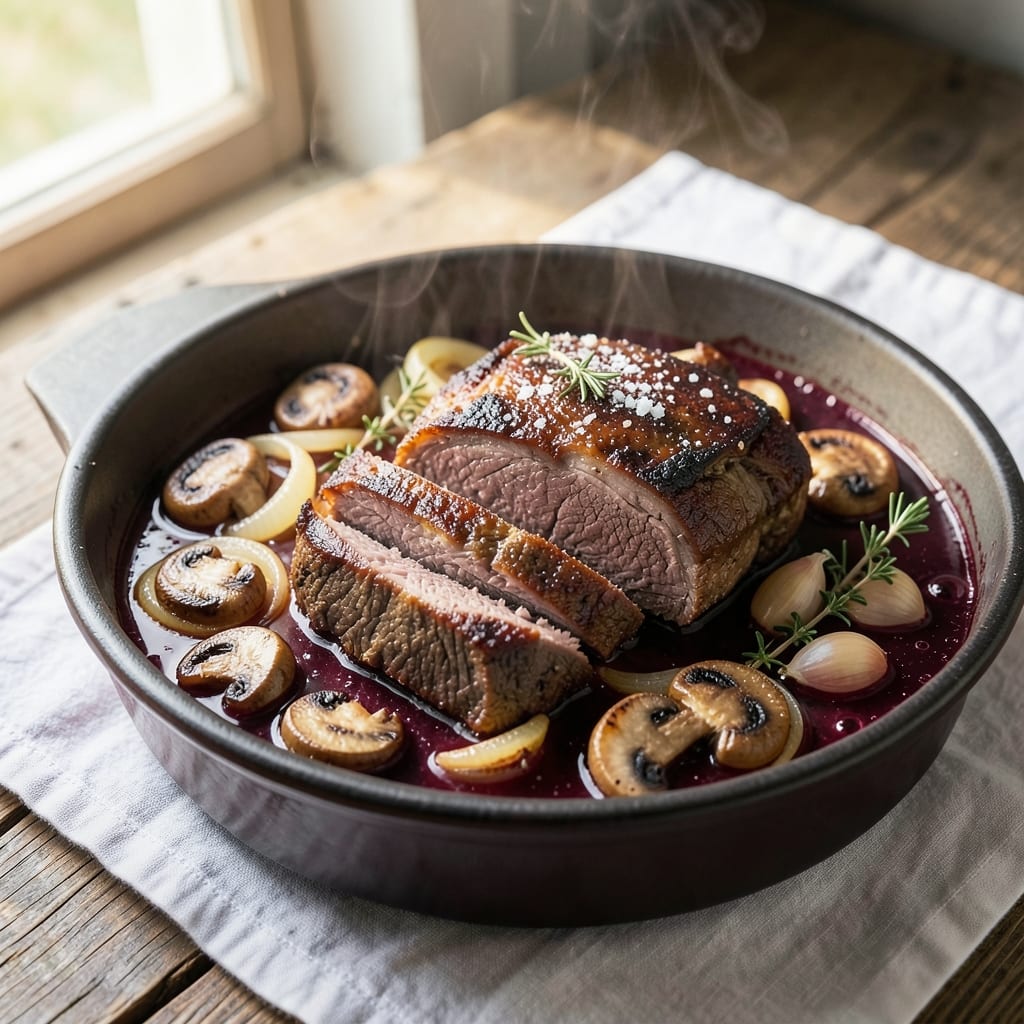
This basic beef bourguignon recipe transforms tough cuts of beef into melt-in-your-mouth tenderness through slow braising in rich red wine. The deep, caramelized flavors develop as the beef simmers with mushrooms, onions, and herbs, creating a sauce that's both elegant and deeply satisfying. What makes this dish special is the balance of techniques—proper searing for flavor, careful deglazing for depth, and patient simmering for texture. The process begins with browning the beef in batches to build flavor, then sautéing mushrooms and onions until golden. Deglazing with red wine unlocks layers of complexity, while simmering reduces the sauce to a velvety consistency. Each step builds on the last, ensuring restaurant-quality results at home without shortcuts. By the end, you'll have a dish with tender beef chunks swimming in a glossy, wine-infused sauce—perfect for serving with crusty bread or mashed potatoes. The aroma alone will have everyone anticipating dinner, while the flavors reward patience with every bite. This recipe delivers on tradition while making it accessible. Let's create a classic that feels like a home-cooked masterpiece.
Ingredients for basic beef bourguignon
Transform tough beef into tender perfection with these carefully chosen ingredients designed for deep flavor development.
| Ingredient | Amount | Notes |
|---|---|---|
| Chuck Roast 🥩 | 2 lb | Center-cut for even cooking |
| Yellow Onions 🧅 | 1 ½ lb | Medium dice, 1/2-inch pieces |
| Cremini Mushrooms 🍄 | 16 oz | Quartered, wiped clean |
| Garlic Cloves 🧄 | 6 cloves | Smashed, skin-on for flavor |
| All-Purpose Flour 🌾 | 2 tbsp | For dredging beef |
| Dry Red Wine 🍷 | 1 ½ cups | Bold Cabernet Sauvignon preferred |
| Beef Broth 💧 | 2 cups | Low-sodium, homemade or quality store |
| Tomato Paste 🍅 | 2 tbsp | Smooth, no added salt |
| Fresh Thyme 🌿 | 2 tbsp | Leaves only, stems removed |
| Fresh Parsley 🌿 | ¼ cup | Chopped, for finishing |
| Olive Oil 🫒 | ½ cup | Extra-virgin, for searing |
| Diamond Crystal Kosher Salt 🧂 | 1 ½ tsp | Divided for seasoning |
| Freshly Ground Black Pepper 🌶️ | 1 tsp | Coarsely ground |
| Bay Leaves 🍃 | 2 whole | Dried, removed before serving |
The chuck roast is non-negotiable here—its marbling ensures melt-in-your-mouth texture after hours of braising. Look for center-cut pieces at your butcher or specialty grocer like Whole Foods or Dartmouth Farms, as they hold their shape better than flank cuts. For mushrooms, cremini provide the ideal balance of earthiness and meatiness; avoid pre-sliced varieties which bruise easily. The garlic should be fresh, with skins that peel easily—Costco often carries vacuum-sealed heads that stay potent longer. Thyme is essential for that classic French bouquet, but if you only have dried, use one-third the amount and toast the leaves briefly in a dry pan to intensify their flavor.
Red wine selection matters—Cabernet Sauvignon or Merlot with 12-14% alcohol work best, but avoid overly oaky varieties. Trader Joe's often carries excellent budget-friendly options in their wine section. For the tomato paste, Barilla or Muir Glen are reliable choices, but any smooth paste will do. Beef broth should be low-sodium; Kitchen Basics or Pacific Foods brands are excellent. If you're short on fresh herbs, dried thyme works in a pinch (use half the amount), though fresh parsley at the end adds that crucial bright note. The olive oil should be extra-virgin—California Olive Ranch or Colavita are solid choices that won't overpower the dish.
This dish rewards patience—braise for at least 3 hours for optimal tenderness. Store any leftovers in an airtight container for up to 5 days in the fridge, though it tastes even better the next day as flavors meld. For longer storage, freeze for up to 3 months; the sauce will thicken further upon reheating. Portion into individual containers before freezing for easy weeknight meals. The bay leaves should be removed before serving, but don't discard them—they infuse incredible aroma into the broth. If making ahead, deglaze and reduce the sauce first, then refrigerate the beef separately to prevent it from becoming soggy.
Why You'll Love This Recipe
- One-Pan Magic: I swear by this for lazy nights—the chuck roast and onions caramelize right in the same pot where it all simmers. No extra dishes, no fuss, just deep, rich flavor with minimal cleanup.
- Rich Without Effort: That flour roux thickens the sauce into something velvety, while the mushrooms and garlic add layers of umami. It’s the kind of dish where every bite tastes like you spent hours—when really, you just let time do the work.
- Leftovers That Shine: I make this on Sundays because it only gets better the next day. The beef stays tender, the sauce deepens, and reheating it is just stirring and warming. My freezer’s full of these because they’re that good cold or reheated.
- Budget Beef Feast: A chuck roast is cheap, but this recipe makes it feel special. You’re feeding a crowd for less than takeout, and the leftovers stretch into lunches or sandwiches. Honestly, it’s my go-to for stretching groceries without sacrificing flavor.
Step-by-step instructions for beef bourguignon
Master this classic French technique with precise timing and layering for restaurant-quality depth.
Sear the Chuck Roast for Maximum Flavor
Pat the 2 lb chuck roast dry with paper towels—this ensures a proper sear. Heat 0.25 cup olive oil in a heavy Dutch oven over medium-high heat until shimmering. Season the beef generously with 0.75 tsp diamond crystal kosher salt and 0.5 tsp freshly ground black pepper, then sear for 4-5 minutes per side until deeply browned. The goal is to develop a rich crust that will dissolve into the sauce later.
Remove the beef and set aside. If the oil isn't hot enough, the meat will steam instead of sear. You'll know it's ready when you see a deep golden crust forming. This step builds the foundation for the dish's complex flavor profile.
Build the Vegetable Base
In the same Dutch oven, add 0.25 cup olive oil and reduce heat to medium. Add the 1.5 lb yellow onions and cook for 8-10 minutes until softened and golden. Stir occasionally to prevent burning. Next, add the 16 oz cremini mushrooms, 6 smashed garlic cloves, and 2 tbsp fresh thyme, cooking for another 5 minutes until the mushrooms release their moisture and turn tender.
Here's where the aromatics transform into flavor bombs. The onions should caramelize slightly, and the mushrooms should release their juices. If they stick, add a splash of dry red wine to deglaze. This layering of flavors creates the rich, earthy backbone of the bourguignon.
Develop the Sauce with Wine and Broth
Return the seared beef to the pot. Sprinkle 2 tbsp all-purpose flour evenly over the top, then pour in the 1.5 cups dry red wine. Stir well to combine, scraping up any browned bits from the bottom of the pot. Let the mixture simmer for 5 minutes until the wine reduces by half and thickens slightly.
Add the 2 cups beef broth, 2 tbsp tomato paste, and 2 whole bay leaves. Bring to a gentle simmer, then partially cover the pot. The liquid should come about halfway up the sides of the beef. This ratio ensures the meat stays submerged while allowing room for the sauce to develop.
Braise Until Tender and Sauce Thickens
Transfer the pot to a 325°F oven and braise for 2.5-3 hours, turning the beef occasionally. The meat is done when it reaches an internal temperature of 203°F and can be easily pierced with a fork. This slow cooking transforms the tough chuck roast into melt-in-your-mouth tenderness while allowing the wine and broth to meld into a velvety sauce.
Check the sauce periodically—if it reduces too quickly, add a splash of water or broth. The sauce should coat the back of a spoon by the end of cooking. This patience is what separates good bourguignon from great bourguignon.
Finish and Serve with Fresh Herbs
Remove the beef from the pot and set aside. Strain the sauce through a fine-mesh sieve into a clean pot, pressing on the solids to extract maximum flavor. Return the sauce to the pot with the beef and simmer for 5 minutes to reduce slightly. Stir in the 0.25 cup fresh parsley and season with the remaining 0.75 tsp diamond crystal kosher salt and 0.5 tsp freshly ground black pepper to taste.
Serve immediately with crusty bread or mashed potatoes. The beef should be fork-tender with a glossy, rich sauce clinging to every bite. The aroma alone will transport you to a Parisian bistro—this dish rewards attention to detail at every step.
Pro Tips For Making Basic Beef Bourguignon
- Sear the Roast Properly: The first 10 minutes in a screaming-hot pan with oil are where the flavor happens. If your chuck roast is still pink inside after searing, you’re not pushing hard enough—get that crust dark and sticky before anything else touches it.
- Slice Onions Thinly: I used to chop them into big chunks, thinking it’d save time. Wrong. Thin, even slices caramelize faster and dissolve into the sauce without leaving chewy bits. A mandoline makes this foolproof—just don’t skip the final quick blip in the pan to soften them.
- Deglaze with Wine Immediately: That browned fond stuck to your pot? Don’t ignore it. Scrape it up with a wooden spoon, then pour in the wine right away while the pan’s still hot. Let it bubble for 2 minutes before adding anything else—this extracts way more flavor than waiting.
- Brown Mushrooms Separately: Tossing them in raw with the onions means they’ll steam instead of develop that meaty, golden crust. Sear them in batches in the same pan you used for the roast—just 3-4 minutes per side—before adding them back to the pot. The difference in texture is night and day.
Storing and reheating your basic beef bourguignon
Refrigerator Storage
Let your bourguignon cool to room temperature for no more than 2 hours before transferring to an airtight container—I prefer glass Pyrex with a tight-sealing lid. Store in the fridge at 40°F or below for up to 4-5 days. The flavors actually deepen overnight as the sauce continues to meld, making it taste even better the next day. 💫
Freezer Prep Tips
For longer storage, portion the beef and sauce into quart-sized freezer bags or airtight containers, leaving 1 inch of headspace for expansion. Freeze for up to 3 months. I recommend freezing the sauce separately from the beef to prevent sogginess when reheating. Label with the date to track freshness.
Stovetop Reheating
My preferred method is stovetop reheating to maintain texture. Transfer the beef and sauce to a pot, add ¼ cup water or beef broth, and simmer over medium-low heat for 10-15 minutes. Stir occasionally to prevent sticking. If the sauce thickens too much, add another splash of liquid. Taste and adjust seasoning—it often needs a pinch of salt after reheating.
Oven Reheating
For hands-off reheating, cover the container with foil and bake at 300°F for 30-45 minutes, stirring halfway. This gentle heat ensures the beef stays tender without drying out. I use this method when serving a crowd or making a large batch for meal prep. The oven keeps everything warm and cohesive.
Microwave Safety
For quick reheating, use the microwave on 50% power in 1-minute intervals, stirring between each interval. Cover loosely with a microwave-safe lid to retain moisture. Add 1-2 tablespoons of water or broth if the dish looks dry. This method is fastest but requires more attention to prevent uneven heating.
Sauce Thickening Hack
If your reheated sauce is too thin, remove the beef and simmer the sauce uncovered for 5-10 minutes to reduce. For extra richness, stir in 1 teaspoon cornstarch mixed with 1 tablespoon cold water and simmer until thickened. This trick works wonders for restoring that perfect velvety consistency. 🔥
Nutrition facts
Frequently asked questions
Can I use a different cut of beef besides chuck roast?
While chuck roast is ideal for its marbling and tenderness, you can substitute with stew beef or chuck shoulder. Avoid lean cuts like sirloin—they won't become tender enough. If using a tougher cut, increase braising time by 30-60 minutes to ensure melt-in-your-mouth results.
What if I don't have red wine? Can I substitute?
Yes! Use dry red grape juice (like Welch's) or beef broth with 1 teaspoon balsamic vinegar for depth. Avoid white wine—it lacks the necessary acidity and body. For extra richness, add 1 teaspoon soy sauce to mimic wine's umami.
Why is my sauce too thin after braising?
This happens when the liquid ratio is off or the sauce didn't reduce enough. To fix it, remove the beef and simmer the sauce uncovered over medium-high heat for 10-15 minutes, stirring occasionally. For a quicker fix, mix 1 teaspoon cornstarch with 1 tablespoon cold water, stir into the sauce, and simmer until thickened.
How do I make this dish ahead of time?
Prepare the bourguignon up to 2 days ahead—the flavors actually improve! Store in an airtight container in the fridge. Reheat gently on the stovetop with ¼ cup beef broth to restore moisture. For longer storage, freeze the sauce separately from the beef for up to 3 months.
Can I use frozen mushrooms instead of fresh?
Frozen mushrooms work in a pinch, but they release more moisture and lack texture. Thaw and pat them dry thoroughly before cooking. For best results, use fresh cremini mushrooms—their earthy flavor is essential to the dish. If using frozen, add them 5 minutes earlier in the cooking process to avoid excess liquid.