
Main Courses
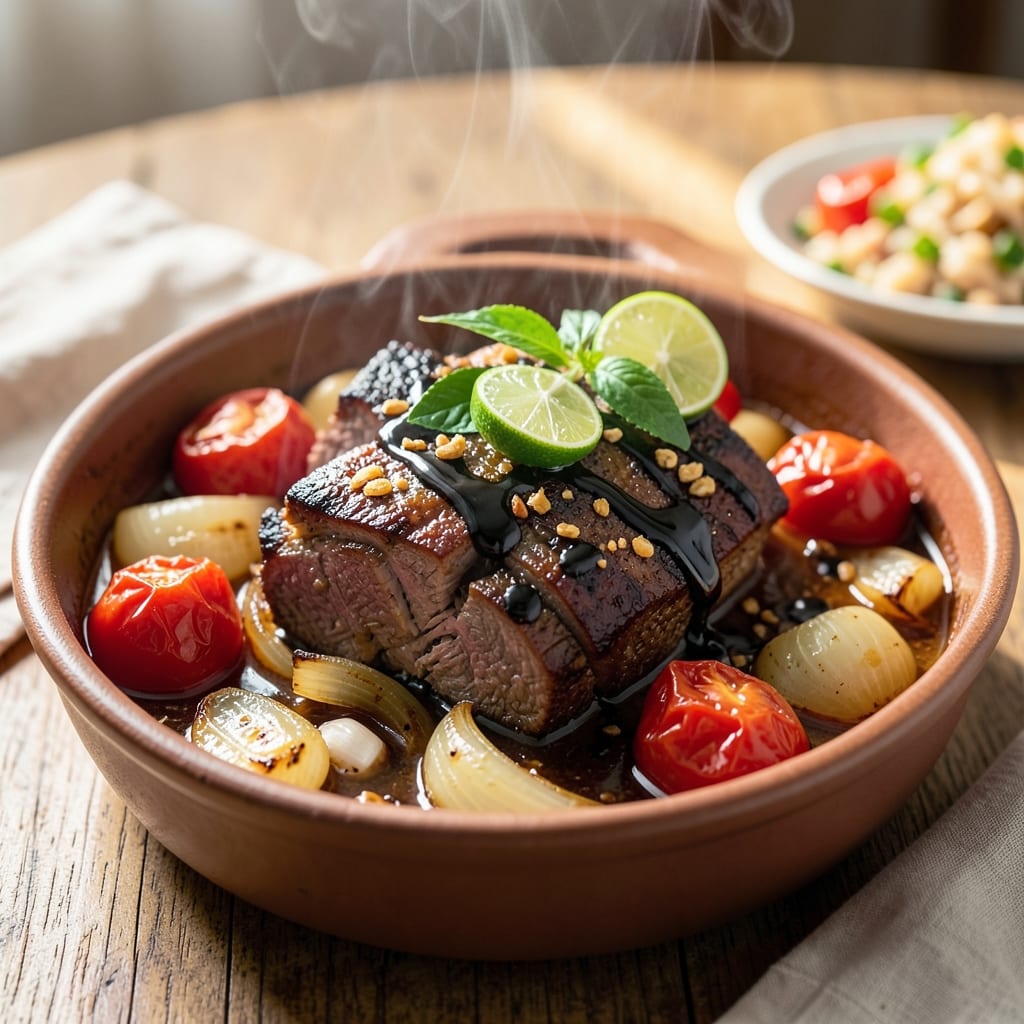
This Batangas beef caldereta recipe delivers the hearty, comforting flavors of the Philippines' most beloved stew, where tender beef simmers in a rich, creamy tomato sauce infused with aromatic spices. The secret lies in slow-cooking the beef until fork-tender while balancing sweet, tangy, and savory notes—just like my abuela used to make. What sets Batangas-style apart is the careful layering of local ingredients like calamansi (Filipino lime) and patis (fish sauce), which deepen the umami without overpowering the dish.
The recipe begins with browning beef chuck in a Dutch oven, creating a flavorful crust that forms the base of the sauce. Then, a blend of tomatoes, garlic, onions, and spices simmers for hours, allowing the flavors to meld into a velvety consistency. The addition of coconut milk and cream at the end transforms the dish into something luxuriously rich, with just the right balance of acidity from the calamansi and saltiness from the patis. This isn't just a stew—it's a celebration of Filipino home cooking, where every bite tells a story.
By the time you serve this dish, you'll have a pot of golden, aromatic beef swimming in a sauce that's both creamy and tangy, with tender meat that falls apart at the touch of a fork. The slow simmering ensures deep flavor penetration, while the final touch of fresh herbs brightens the dish without overwhelming its natural richness. Serve it with steamed rice and atchara (pickled papaya) to complete the traditional Filipino meal experience.
What makes this recipe truly special is its versatility—it's hearty enough for a family dinner but elegant enough for gatherings. The long cooking time allows flavors to develop fully, making it a dish that tastes even better the next day. Whether you're recreating a taste of home or introducing someone to Filipino cuisine, this Batangas beef caldereta will leave them asking for seconds.
Ingredients for batangas beef caldereta
Filipino pantry staples meet slow-cooked comfort in this rich beef stew.
| Ingredient | Amount | Notes |
|---|---|---|
| Beef Chuck Roast 🥩 | 3 lb | Cut into 1.5-inch cubes |
| Tomatoes 🍅 | 2 lbs | Roma or vine-ripened, halved |
| Yellow Onions 🧅 | 3 whole | Peeled, sliced into wedges |
| Garlic Cloves 🧄 | 8 cloves | Peeled, minced |
| Calamansi Juice 🍋 | ½ cup | Or substitute lime juice |
| Patis (Fish Sauce) 🐟 | 2 tbsp | Reduced fish sauce preferred |
| Coconut Milk 🥥 | 1 can (13.5 oz) | Full-fat for creaminess |
| Heavy Cream 🥛 | ½ cup | Full-fat preferred |
| Bay Leaves 🌿 | 2 whole | Fresh if available |
| Ground Black Pepper 🌶️ | 1 tsp | Freshly ground |
| Salt 🧂 | 1 ½ tsp | Adjust to taste |
| Potatoes 🥔 | 2 medium | Russet or Yukon Gold, peeled |
| Green Bell Pepper 🌶️ | 1 whole | Sliced into strips |
| Fresh Parsley 🌿 | ¼ cup | Chopped for garnish |
| Olive Oil 🫒 | ¼ cup | For browning beef |
The beef is non-negotiable—chuck roast delivers that melt-in-your-mouth texture. Look for well-marbled cuts at Filipino markets or your local butcher section. If you can't find calamansi, lime juice with a pinch of sugar mimics its tangy brightness. The tomatoes should be ripe but firm; Roma tomatoes hold up best during simmering. For patis, Red Boat brand is my go-to—it's bold and balanced, not overpowering. If you're using potatoes, Yukon Golds absorb the sauce beautifully without turning mushy.
No calamansi? Lime juice plus a teaspoon of sugar works in a pinch. Substituting coconut milk? Full-fat canned milk gives the best creaminess, but light versions thin the sauce. For extra depth, a splash of soy sauce replaces patis if needed. The green bell pepper adds freshness—swap for red or yellow peppers if preferred. Fresh bay leaves? Double the amount if using dried. And if you're short on time, pre-minced garlic from the jar saves steps without sacrificing flavor.
This dish tastes even better the next day as flavors meld. Store leftovers in the fridge for up to 4 days, or freeze for 3 months in airtight containers. The sauce thickens when chilled—just add a splash of water or coconut milk when reheating. For meal prep, cook the beef and sauce ahead, then add the potatoes and cream just before serving. Garnish with fresh parsley right before eating to keep it vibrant.
Why You'll Love This Recipe
- One-Pot Magic: I swear by this recipe—just brown the beef, toss in onions and garlic, then let the tomatoes and calamansi juice do their thing. No extra pots, no fuss, and that rich sauce practically cooks itself while you chop veggies for the side.
- Tangy-Sweet Magic: Between us, the calamansi juice is the secret weapon. It brightens up the deep, savory beef and caramelized tomatoes in a way that feels just right—not too sharp, not too sweet, but perfectly balanced. Honestly, I’ll take this over store-bought sauce any day.
- Leftovers That Shine: This dish actually gets better the next day. The flavors meld into something even richer, and reheating it is a breeze—just a splash of water, a quick stir, and boom. My lazy Sundays just got a whole lot easier.
- Budget-Friendly Feast: Beef chuck roast stretches for miles here, and the rest of the ingredients are pantry staples. I’ve fed six people (plus my picky-eating niece) for under $20, and everyone’s left happy. That’s a win in my book.
Step-by-step instructions for Batangas beef caldereta
Master this Filipino classic through precise technique and layered flavors.
Sear the Beef Chuck Roast
Heat the 0.25 cup olive oil in a large Dutch oven over medium-high heat until shimmering. Working in batches to avoid crowding, add the 3 lb beef chuck roast cut into 1.5-inch cubes and sear until deeply browned on all sides—this takes about 5-7 minutes per batch. The beef should develop a rich mahogany crust before removing it to a plate.
Don't rush this step. Proper browning builds deep flavor that carries through the long simmer. If the oil smokes excessively, reduce heat slightly to maintain control. I like to press down gently on the beef cubes during the first minute to prevent curling, which ensures even contact with the hot oil.
Sauté Aromatics and Build the Base
In the same Dutch oven, add the 3 whole yellow onions sliced into wedges and cook for 5 minutes until softened and lightly caramelized. Add the 8 cloves minced garlic and cook for 30 seconds until fragrant—you should smell that sweet, pungent aroma that signals perfect timing.
Stir in the 2 lbs halved tomatoes, 2 tbsp patis (fish sauce), 1.5 tsp salt, and 1 tsp ground black pepper. Let this mixture cook uncovered for 8-10 minutes until the tomatoes break down into a thick, jammy consistency. This reduction concentrates their natural sweetness and forms the flavor foundation of the dish.
Simmer the Beef with Vegetables
Return the seared beef to the Dutch oven along with the 2 medium peeled potatoes cut into chunks and the 1 whole green bell pepper sliced into strips. Pour in the 0.5 cup calamansi juice and add the 2 whole bay leaves. Bring everything to a gentle boil, then reduce heat to low, cover partially, and simmer for 1 hour.
During this time, the beef should become fork-tender while absorbing the rich tomato-pepper base. Stir occasionally to prevent sticking, and check the liquid level—if it reduces too much, add ¼ cup water to maintain moisture. The potatoes should be nearly tender but not falling apart yet.
Finish with Creamy Coconut and Cream
After the initial simmer, stir in the 1 can (13.5 oz) coconut milk and 0.5 cup heavy cream. Increase heat to medium-low and simmer uncovered for an additional 30-45 minutes until the sauce thickens to a velvety consistency. The sauce should coat the back of a spoon and cling to the beef and vegetables.
Taste and adjust seasoning—you may need an additional ½ tsp salt or ½ tsp patis to balance the flavors. The calamansi juice adds a bright tang that cuts through the richness of the coconut and cream, so don't be afraid to add a splash more if needed. Remove the bay leaves before serving.
Garnish and Serve
Transfer the caldereta to a serving platter and garnish with 0.25 cup chopped fresh parsley. Serve immediately with steamed white rice to soak up the rich, creamy sauce. The beef should be fork-tender with a deep, caramelized crust, while the sauce should be velvety with just the right balance of tangy, creamy, and savory notes.
For best results, let the dish rest for 5 minutes before serving. This allows the flavors to meld completely and ensures each bite delivers the perfect harmony of textures and tastes that make Batangas beef caldereta so beloved.
Pro Tips For Making Batangas Beef Caldereta
- Sear the Beef Hard: I learned this the hard way—skipping the deep sear means your beef won’t develop that rich, caramelized crust that holds up through hours of simmering. Use a heavy pot or Dutch oven, crank the heat to medium-high, and let those beef chunks brown for 5-6 minutes per side until they’re deep golden. The extra effort keeps the meat tender and packed with flavor.
- Char the Tomatoes: Don’t just chop and toss those tomatoes—this isn’t a salad. Blister them first over direct heat for 2-3 minutes until they darken and collapse slightly. That smoky depth cuts through the richness of the beef and balances the acidity of the calamansi. Just don’t walk away; burned tomatoes ruin everything.
- Salt the Beef Twice: Add a generous pinch of salt to the beef chunks before searing, then salt the simmering broth again after the onions and garlic soften. The first layer seasons the meat directly, while the second boosts the sauce. I used to skip this, and the dish always tasted flat—like it needed something it couldn’t quite grab.
- Deglaze with Calamansi Early: Pour in the calamansi juice right after searing the beef, while the browned bits are still clinging to the pot. Scrape vigorously with a wooden spoon to lift all that flavor into the sauce. If you wait until later, you’ll miss half the depth—this is the thing that makes Batangas-style caldereta tangy without being overpowering.
Wine and beer pairings for this dish
Rich Filipino Reds
Caldereta’s deep, savory flavors shine with bold Filipino red wines like Templar Cabernet Sauvignon or Lambrusco. The Templar Cabernet (from the Philippines) has dark berry notes that mirror the dish’s tomato base, while Lambrusco adds a fruity lift that cuts through the creaminess. Serve slightly chilled—55-60°F—to enhance its acidity against the dish’s richness. 🍷
Creamy White Wines
For a lighter contrast, try Filipino white wines like Petilla White Blend or Spanish Albariño. The Petilla (from the Philippines) balances the dish’s creaminess with citrus and floral notes, while Albariño (from Spain) offers crisp acidity that refreshes the palate. Both pair beautifully with the calamansi tang and patis umami. 🥂
Local Lager Pairings
Filipino lagers like San Miguel Light or Red Horse work surprisingly well—their clean, crisp profiles cleanse the palate between rich bites. For a craft twist, try Pilsen-style beers like BrewDog Punk IPA (if you want a hoppy contrast) or Heineken for a balanced, slightly bitter finish. 🍺
Non-Alcoholic Options
For a refreshing non-alcoholic match, serve calamansi soda (Filipino lime soda) or ginger beer. The tartness of calamansi soda mirrors the dish’s acidity, while ginger beer’s spice complements the patis and black pepper. For a creamy alternative, try coconut water chilled to 40°F—its natural sweetness balances the savory depth. 🥤
Regional Filipino Spirits
If you want to go all-in on Filipino flavors, pair with Lambanog (coconut vodka) or Tuba (young coconut wine). These spirits add a tropical warmth that enhances the coconut milk and cream. Serve Lambanog neat or in a caldereta-inspired cocktail with tomato juice and lime. 🥃
Serving Temperature Tips
Wine should be slightly cooler than room temperature—55-60°F for reds and 45-50°F for whites—to highlight their acidity and balance the dish’s richness. For beer, serve lager at 40°F and IPAs at 45°F to preserve their crispness. Let your drink breathe for 5-10 minutes before serving to release aromas that complement the caldereta’s depth. ✨
Nutrition facts
Frequently asked questions
What makes Batangas beef caldereta different from other Filipino beef stews?
The Batangas version stands out for its perfect balance of tangy calamansi and umami patis (fish sauce), creating a sauce that's both creamy and bright. Unlike other calderetas, this version uses beef chuck roast for maximum tenderness and incorporates coconut milk and heavy cream at the end for luxurious richness. The slow simmering process develops deeper flavors compared to quicker versions.
Can I substitute calamansi juice if I can't find it?
Yes! Mix lime juice with ½ teaspoon sugar per 0.5 cup to mimic calamansi's tartness. For extra authenticity, add a pinch of salt to enhance the umami. The sugar helps balance the acidity, while the salt bridges the gap between calamansi's complex flavor and regular lime.
How do I know when the beef is fully tender?
The beef should be fork-tender with no resistance when pierced—it should easily pull apart with a fork. For 3 lb beef chuck roast, this typically takes 1-1.5 hours of simmering. If you're unsure, cut into a small piece and check: the meat should be soft inside with no pink center. The sauce should also coat the back of a spoon by this point.
Can I make this recipe in a slow cooker?
Brown the beef first, then transfer everything to your slow cooker and cook on low for 6-7 hours or high for 4-5 hours. Add the coconut milk and cream during the last 30 minutes of cooking to prevent curdling. The slow cooker's gentle heat enhances the beef's tenderness while allowing flavors to meld beautifully.
What's the best way to reheat leftovers?
Reheat gently in a saucepan over low heat with 2-3 tablespoons of water or coconut milk to restore moisture. Avoid microwaving as it can make the sauce watery. For best texture, reheat until just warmed through—10-15 minutes—then adjust seasoning with a splash of patis or calamansi juice if needed.