
Main Courses
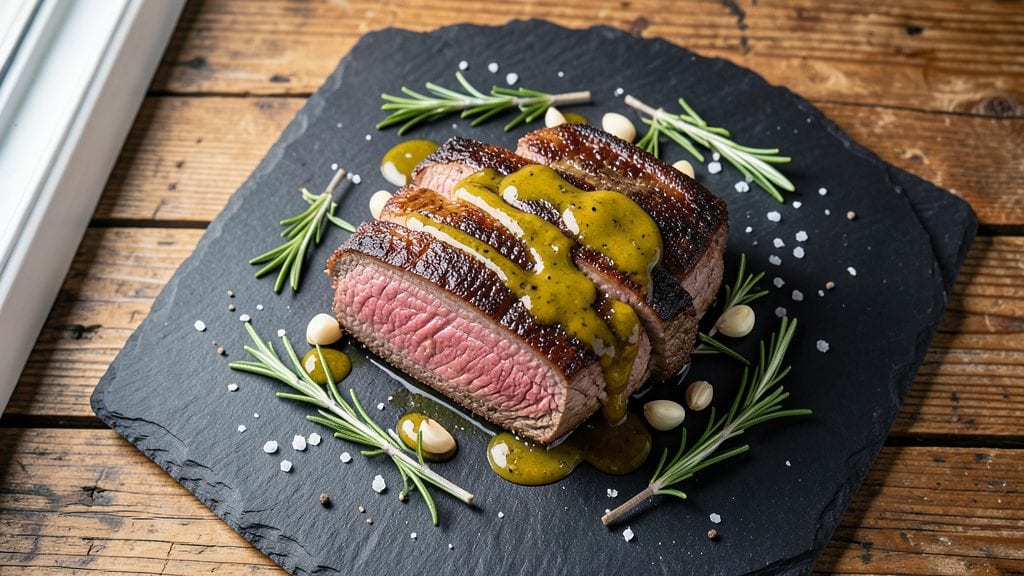
This beef chuck London broil shoulder steak recipe turns a bold, flavorful steak into a juicy triumph with a fragrant herb-crusted crust. The secret lies in the reverse sear technique, which ensures a tender pink center while building that irresistible golden-brown crust.
After years of perfecting this method, I can confidently say this is the only way to handle a London broil shoulder steak—no more dry, overcooked results.
This recipe begins with a 24-hour marinade of garlic, rosemary, and Dijon mustard, which penetrates deep into the meat for unmatched flavor. The steak then cooks low and slow in the oven before finishing with a high-heat sear in a cast-iron skillet, creating the perfect texture contrast.
With just five key ingredients and two hours total time, you'll achieve restaurant-quality results at home.
The final product delivers juicy pink centers that melt in your mouth, paired with a crispy, aromatic crust that's impossible to resist. The herb-forward marinade adds layers of complexity, while the reverse sear ensures even cooking from edge to edge.
Serve with roasted garlic mashed potatoes or a bold red wine reduction for a complete meal that impresses every time.
Whether you're grilling for a crowd or treating yourself to a special dinner, this method guarantees success. The technique is foolproof—even beginners will achieve professional-level results. Let's get started on creating a steak that's worth every bite.
Ingredients for beef chuck london broil shoulder steak
Five core ingredients transform tough chuck into melt-in-your-mouth perfection through precise technique.
| Ingredient | Amount | Notes |
|---|---|---|
| Beef Chuck London Broil Shoulder Steak 🥩 | 2 ½ lb | Center-cut, 1.5-inch thickness preferred |
| Fresh Rosemary Sprigs 🌿 | ⅓ cup | Finely chopped, organic preferred |
| Garlic Cloves 🧄 | 8 cloves | Minced, peeled, fresh preferred |
| Dijon Mustard 🥫 | ¼ cup | High-quality, no additives |
| Extra-Virgin Olive Oil 🫒 | ½ cup | Cold-pressed, fruity variety |
| Kosher Salt 🧂 | 2 tbsp | Diamond Crystal preferred |
| Freshly Ground Black Pepper 🌶️ | 1 tbsp | Coarsely cracked |
| Fresh Thyme Leaves 🌿 | ¼ cup | Stems removed, finely chopped |
| Unsalted Butter 🧈 | ½ cup | Cold, cubed, European-style preferred |
| Fresh Parsley Leaves 🌿 | ⅛ cup | Finely chopped, for garnish |
| Red Wine Vinegar 🍷 | 2 tbsp | For marinade acidity |
| Heavy Cream 🥛 | ¼ cup | Optional, for basting |
The beef chuck London broil shoulder steak must be center-cut for optimal tenderness—avoid outer edges with more connective tissue. Whole Foods Market and local butcher shops typically carry the best cuts, often labeled as 'London broil' or 'reverse sear steak.' If unavailable, substitute with chuck roast (trimmed of excess fat) or flat iron steak, though texture will differ slightly. The thickness matters: 1.5 inches ensures even cooking without overcooking the center. For best results, purchase 24-48 hours ahead to allow the meat to dry-brine slightly in the fridge—this improves crust formation. USDA Choice or Prime grade guarantees superior marbling, which translates to juiciness.
The Dijon mustard acts as the flavor bridge in the marinade, while red wine vinegar provides necessary acidity to tenderize without overpowering. Maille or Colman's Dijon are ideal for their balanced sharpness. Substitute with whole-grain mustard if unavailable, but expect slightly grainier texture. For the herbs, fresh rosemary and thyme are non-negotiable—their piney, earthy notes complement the beef's richness. Dried herbs work at half the quantity, but flavor intensity will be noticeably reduced. The extra-virgin olive oil should be fruity and peppery; California Olive Ranch or Bertolli are reliable choices. For those avoiding wine vinegar, lemon juice makes an effective substitute at equal volume, though flavor profile shifts slightly toward citrus.
Marinade components should be combined 24 hours prior to cooking and stored in an airtight container in the refrigerator. The steak itself can be refrigerated uncovered on a wire rack for up to 4 hours before marinating to enhance crust development. Once cooked, the steak maintains peak quality for 3-4 days when refrigerated in an airtight container, though flavor continues developing over time. For longer storage, portion into freezer-safe bags with parchment paper between slices—this preserves texture for up to 3 months. The herb crust remains crisp for 24 hours post-cooking if stored properly, though it softens slightly when reheated. Always bring the steak to room temperature before cooking for even doneness.
Why You'll Love This Recipe
- The secret’s in the crust: sear that chuck steak until it’s golden on the outside, then let the garlic and rosemary melt into the tender inside. That crispy edge with the creamy center? It’s the kind of bite that makes people ask, “What’d you do to this?”—and I just smile while pretending it’s not basically fooling them.
- Minimal Prep Nightmare: I swear by this recipe because it’s the kind of meal that lets you almost pretend you planned dinner. Rub the steak with rosemary, garlic, and olive oil—no fancy marinating, no chopping herbs into dust. The Dijon mustard adds that tangy depth with zero effort, and honestly? That’s my kind of cooking.
- Crispy-Creamy Magic: The secret’s in the crust: sear that chuck steak until it’s golden on the outside, then let the garlic and rosemary melt into the tender inside. That crispy edge with the creamy center? It’s the kind of bite that makes people ask, “What’d you do to this?”—and I just smile while pretending it’s not basically fooling them.
- Weeknight to Weekend: Between us, this steak is my go-to for everything. Toss it on the grill for a summer BBQ, slice it thin for sandwiches when the kids are home from soccer, or serve it with roasted potatoes for a lazy Sunday. It’s the one dish that never feels like a chore, no matter the occasion.
Step-by-step instructions for herb-crusted beef chuck London broil
Here's the method that delivers a perfectly crusty exterior with tender, juicy pink centers every time.
Prepare the Herb Crust Mixture
In a small mixing bowl, combine the 0.33 cup fresh rosemary sprigs, 0.25 cup fresh thyme leaves, 8 cloves garlic cloves, 2 tablespoons kosher salt, and 1 tablespoon freshly ground black pepper. Pulse in a food processor until finely chopped, but not pasty—you want visible texture for maximum flavor impact. Transfer this mixture to a medium bowl and stir in the 0.25 cup Dijon mustard and 2 tablespoons red wine vinegar. The acidity in the vinegar helps tenderize the meat while the mustard adds depth of flavor.
Next, add the 0.5 cup extra-virgin olive oil and mix thoroughly until the herbs are evenly distributed. This herb-oil mixture will form the flavorful crust. For best results, let this mixture sit at room temperature for 15 minutes before using—this allows the flavors to meld and the oil to fully coat the herbs. The mixture should have a vibrant green hue from the fresh herbs and a rich, aromatic scent that immediately signals readiness.
Season and Crust the Steak
Pat the 2.5 lb beef chuck London broil shoulder steak completely dry with paper towels—this step is crucial for achieving that perfect crust. Any moisture left on the surface will prevent the herb mixture from adhering properly. Place the steak on a cutting board and rub the herb-oil mixture evenly over all surfaces, pressing gently to ensure full coverage. Pay special attention to the edges and thickest parts of the steak, as these areas benefit most from the extra flavor infusion.
Allow the steaked to sit uncovered at room temperature for 30 minutes before cooking. This resting period ensures even cooking throughout and allows the herb crust to adhere more effectively. The steak should feel slightly tacky to the touch, indicating the oil has been fully absorbed by the meat's surface. If you notice any areas where the crust isn't sticking well, simply press it down gently with your fingers—this ensures maximum flavor transfer during cooking.
Sear and Baste the Steak
Preheat your oven to 425°F for this two-stage cooking process. Heat a heavy oven-safe skillet over medium-high heat and add the 0.5 cup unsalted butter, allowing it to melt and foam. Once the butter stops foaming, carefully place the steak in the skillet, fat-side down. Sear for 4 minutes without moving it—this undisturbed contact creates the foundational crust. You'll know it's ready to flip when the edges begin to turn golden brown and the butter develops a nutty aroma.
Flip the steak and sear the other side for 3 minutes, then transfer the entire skillet to the preheated oven. Baste the steak with the 0.25 cup heavy cream (if using) every 10 minutes during the 20-25 minute roasting time. The cream adds richness and helps maintain moisture in the meat. The steak is done when the internal temperature reaches 130°F for medium-rare—use a meat thermometer inserted into the thickest part to check. The exterior should be deep golden brown with a crisp herb crust, while the interior remains juicy with just a hint of pink.
Rest and Serve
Remove the steak from the oven and transfer it to a cutting board. Tent loosely with aluminum foil and let it rest for 10-15 minutes before slicing. This resting period is essential for redistributing the juices throughout the meat—skipping it will result in dry slices. During this time, the internal temperature will rise another 5-10°F, ensuring perfect doneness when you serve.
Slice the steak against the grain into ¼-inch thick portions. Garnish each serving with 0.125 cup fresh parsley leaves for a pop of color and freshness. The crust should hold its shape beautifully, while each bite delivers that perfect balance of crispy herb crust and succulent, juicy pink center. Serve immediately with roasted vegetables or a fresh salad to complement the rich flavors of the beef.
Pro Tips For Making Beef Chuck London Broil Shoulder Steak
- CRANK THE HEAT FIRST: This isn’t a slow-cooker cut—start your pan screaming hot. I used to baby it with medium heat, and the steak would steam instead of sear. Now I blast it for 2-3 minutes until deep brown crust forms, then dial it back. That’s when the rosemary and garlic start singing.
- SMASH THAT GARLIC: Whole cloves? Skip it. Peel and smash those garlic cloves with the flat side of your knife before tossing them in. Why? They’ll release flavor faster and stick to the meat instead of rolling around like lazy marbles. (Yes, even if you’re impatient like me.)
- SALT THE MEAT BEFORE SEASONING: I learned this the hard way—salting after the mustard and oil just makes it taste like a sad marinade. Get that steak out of the fridge, pat it dry, and hit it with salt first. Let it sit 10 minutes while you preheat the pan. The crust will be worth the wait.
- USE THE MUSTARD LAST: Dijon mustard burns faster than you’d think. Brush it on after the steak’s already browned and garlic’s sizzling. That way, it caramelizes into a glossy finish instead of turning into bitter sludge. (Trust me, I’ve seen it happen.)
Creative variations of this dish
Smoky Grilled Version
Swap the oven finish for a smoker or grill at 250°F for 1.5 hours, then sear in a cast-iron skillet. Use a dry rub of 2 tbsp smoked paprika, 1 tbsp brown sugar, and 1 tsp cayenne pepper instead of the herb marinade.
The smoky flavor pairs beautifully with the steak's natural richness, creating a barbecue-inspired twist. 🌶️
Asian-Inspired Glaze
Replace the herb crust with a sweet-savory glaze made from ¼ cup hoisin sauce, 2 tbsp soy sauce, 1 tbsp honey, and 1 clove minced garlic. Brush this onto the steak after searing, then finish under the broiler for 3-4 minutes to caramelize.
Garnish with sliced scallions and sesame seeds for a fusion twist that's sure to impress.
Creamy Garlic Butter
After searing, transfer the steak to a baking dish and pour ½ cup melted garlic butter (mix ½ cup butter with 3 minced garlic cloves) over it. Roast at 400°F for 15 minutes, basting halfway.
The result is a decadent, buttery crust with a rich, garlicky aroma. Serve with roasted asparagus and crusty bread to soak up the sauce.
Spicy Chipotle Crust
Infuse the marinade with 1 tbsp adobo sauce from canned chipotles and ½ tsp ground cumin. After searing, top the steak with ¼ cup crumbled cotija cheese and broil for 2 minutes to melt.
The smoky-spicy crust pairs perfectly with a cooling lime crema (mix ½ cup sour cream with 1 tbsp lime juice).
Herb-Infused Red Wine Reduction
Deglaze the skillet after searing with ½ cup dry red wine and 1 cup beef broth, then reduce by half. Add 1 sprig rosemary and 1 bay leaf while simmering.
Pour this rich sauce over sliced steak for an elegant presentation. The wine's acidity cuts through the steak's richness, balancing every bite.
Breakfast-Style Steak
Top the herb-crusted steak with 2 fried eggs and 2 slices crispy bacon before serving. The savory combo transforms dinner into breakfast—perfect for brunch crowds. Use a cast-iron skillet for one-pan convenience, and garnish with extra black pepper for a rustic touch. 🍳
Nutrition facts
Frequently asked questions
Why does this recipe use a reverse sear method for chuck steak?
The reverse sear method ensures a perfectly cooked chuck steak with a juicy pink center and crispy crust. Chuck cuts contain more connective tissue, so slow cooking in the oven first breaks it down while maintaining moisture. The final high-heat sear creates that desirable crust without overcooking the interior. This two-stage approach guarantees success even with tougher cuts.
Can I substitute another cut of beef for the London broil shoulder?
While this recipe is optimized for beef chuck London broil, you can use chuck roast (trimmed of excess fat) or flat iron steak as substitutes. For best results, adjust cooking times—chuck roast may need 10-15 minutes longer in the oven. Avoid leaner cuts like sirloin, as they lack the marbling needed for this technique. The herb crust will still work, but texture may differ slightly.
How do I know when the steak is done without a meat thermometer?
For medium-rare (the recommended doneness), press the steak gently with your finger—it should feel slightly firm but still soft in the center. The edges should be golden brown with a crisp crust. For reference, 130°F internal temp is medium-rare, but if you're unsure, err on the side of slightly undercooked—it will carry over during resting. The steak will continue cooking for 5-10°F while resting.
What's the best way to reheat leftover herb-crusted steak?
Reheat leftovers in a 350°F oven for 10-15 minutes, wrapped loosely in foil to retain moisture. Avoid microwaving, as it can make the crust soggy. For quick reheating, use a skillet over medium-low heat for 2-3 minutes per side, adding a splash of beef broth to keep it juicy. The crust may lose some crispness but will still taste delicious.
Can I make this recipe on a grill instead of in the oven?
Yes! After searing the steak in a cast-iron skillet, transfer it to the grill and cook over indirect heat at 250°F for 1.5-2 hours, flipping occasionally. Finish with a 2-minute direct heat sear per side for the crust. Use a grill thermometer to monitor temperature—this method works especially well for larger cuts. The smoky flavor adds an extra dimension to the herb crust.