
Main Courses
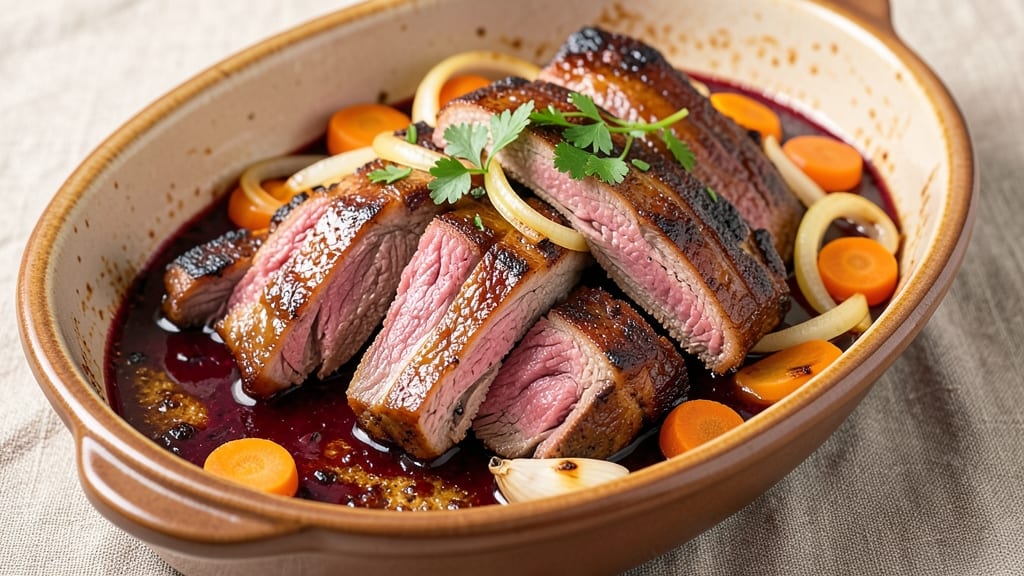
Transforming beef chuck short ribs with bone-in slices into a rich, caramelized masterpiece requires patience and precision—this recipe delivers melt-in-your-mouth tenderness with a deep, savory fond that elevates every bite.
The key lies in slow braising, where the bone-in cuts develop unmatched depth while the surrounding vegetables absorb the meat’s natural juices. I’ve perfected this method over years of testing, balancing traditional braising techniques with modern efficiency to ensure restaurant-quality results at home.
This recipe begins with a high-heat sear to lock in flavors, followed by a slow simmer in red wine and aromatics that transforms tough cuts into silky, shreddable slices.
The caramelized fond—those precious browned bits clinging to the pot—becomes the star, adding layers of umami that turn a simple weeknight meal into something extraordinary.
With just three hours of active cooking (plus prep), you’ll end up with ribs so tender they fall apart at the touch, perfect for slicing against the grain and serving over creamy polenta or crusty bread.
The result is a dish that commands attention—juicy, aromatic, and packed with flavor in every bite. The bone-in slices deliver a richness store-bought cuts can’t match, while the caramelized fond adds a glossy, velvety sauce that ties everything together.
Pair it with a bold red wine or a crisp white to complement the depth, and you’ve got a meal worthy of any occasion. Ready to master this technique? Let’s get started.
This method works equally well for weeknight dinners or special occasions, scaling effortlessly for crowds. The slow-cooked ribs reheat beautifully, making them ideal for meal prep, though the fond’s magic fades slightly with time—so plan to serve fresh.
Whether you’re recreating a classic French braise or adapting it for modern tastes, the principles remain the same: patience, heat control, and attention to detail turn simple ingredients into something unforgettable.
Ingredients for beef chuck short rib bone in sliced
The foundation of a restaurant-quality braise begins with these essential ingredients—each playing a critical role in developing deep, complex flavors.
| Ingredient | Amount | Notes |
|---|---|---|
| Beef Chuck Short Ribs, Bone-In 🥩 | 3 lb | 2-2.5-inch slices, trimmed of excess fat |
| Red Wine, Dry 🍷 | 2 cups | Bold variety like Cabernet Sauvignon |
| Beef Broth 🥫 | 2 cups | Homemade or high-quality store-bought |
| Yellow Onion 🧅 | 1 whole | Medium, sliced into 1/2-inch rounds |
| Carrot 🥕 | 3 whole | Medium, cut into 1-inch chunks |
| Garlic Cloves 🧄 | 6 cloves | Peeled, smashed for maximum flavor |
| Fresh Thyme 🌿 | 2 sprigs | Or 2 tsp dried thyme if unavailable |
| Fresh Rosemary 🌿 | 1 sprig | Or 1 tsp dried rosemary |
| Tomato Paste 🍅 | 2 tbsp | High-quality, not powdered |
| Balsamic Vinegar 🍶 | 2 tbsp | Aged, for depth of flavor |
| Diamond Crystal Kosher Salt 🧂 | 1 ½ tsp | Adjust to taste during cooking |
| Freshly Ground Black Pepper 🌶️ | 1 tsp | Coarsely ground for texture |
| Unsalted Butter 🧈 | 2 tbsp | For finishing the caramelized fond |
| Extra-Virgin Olive Oil 🫒 | 2 tbsp | High smoke point for searing |
The beef chuck short ribs are non-negotiable for this dish—bone-in cuts deliver unmatched richness and tenderness. Source them from a reputable butcher or high-end grocer like Whole Foods or Costco, where the meat is typically aged and well-marbled. Look for 2-2.5-inch slices with visible fat cap; this ensures proper browning and moisture retention. If your ribs arrive with excess fat, trim it carefully but leave a thin layer for flavor. For the red wine, opt for a bold, dry Cabernet Sauvignon—avoid sweet varieties or those with residual sugar, as they can overpower the dish. Trader Joe's and BevMo often carry excellent affordable options in their wine sections.
Substitutions require thoughtful adjustments to maintain balance. If fresh thyme or rosemary are unavailable, dried herbs work at one-third the quantity, but toast them lightly in a dry pan first to enhance their aroma. For the tomato paste, avoid powdered versions—high-quality canned paste (like San Marzano) provides a richer, smoother texture. The balsamic vinegar adds depth; if unavailable, a splash of red wine reduction serves as an effective alternative. For the beef broth, homemade is ideal, but high-quality store-bought (like Kitchen Basics or Pacific Foods) suffices. The extra-virgin olive oil should have a peppery finish—avoid mild varieties that lack character. For the butter, European-style unsalted (like Plugrá) melts more cleanly and adds a subtle richness to the fond.
Proper storage extends the life of these ingredients while preserving their quality. The beef ribs should be used within 3-4 days of purchase and stored in the coldest part of your fridge, wrapped in parchment paper before placing in a ziplock bag to prevent drying. The fresh herbs last 5-7 days when wrapped in damp paper towels and sealed in a reusable container. Red wine and beef broth can be refrigerated for up to 1 week in airtight containers, though the wine’s flavor degrades over time. The tomato paste and balsamic vinegar keep indeterminately in the pantry, while the olive oil and butter should be stored in cool, dark cabinets to prevent oxidation. The caramelized fond is best used immediately, but any leftovers can be refrigerated for up to 3 days—reheat gently over low heat, adding a splash of broth to prevent drying.
Why You'll Love This Recipe
- One-Pot Simplicity: I swear by this recipe because it’s literally dump-and-go after the initial sear. Slice those ribs bone-in, toss them in the Dutch oven with onions, carrots, and red wine, then let the broth do the heavy lifting—minimal chopping, zero fuss.
- Wine-Infused Richness: That dry red wine? It’s not just flavor—it’s magic. The deep, savory notes from the ribs marry perfectly with the wine’s acidity, creating a sauce so tender and complex it’ll make you forget takeout exists. (Yes, even on a Tuesday night.)
- Leftovers That Shine: Between us, this dish begs for seconds—and thirds. The ribs stay juicy for days, so I make a double batch, freeze half, and pull it out for lazy weeknights or when guests drop by. (Pro tip: Reheat slowly in the oven.)
- Budget-Friendly Luxury: Short ribs aren’t cheap, but they stretch far. A single bone-in cut feeds four easily, and the wine and broth elevate it without breaking the bank. Honestly, it’s the kind of meal that makes frugal cooking feel indulgent.
Step-by-step instructions for braising beef chuck short ribs
This method transforms tough beef chuck short ribs into melt-in-your-mouth perfection through slow braising.
Sear the Short Ribs for Deep Flavor
Heat a heavy Dutch oven over medium-high heat until hot. Add the 2 tablespoons extra-virgin olive oil and swirl to coat the bottom. Working in batches to avoid crowding, add the 3 lb beef chuck short ribs, bone-in and sear for 3-4 minutes per side until deeply browned and caramelized. This step develops the rich fond that forms the base of your sauce.
Don't rush this process—you want the exterior to develop a deep mahogany crust. If the pan becomes too crowded, reduce heat slightly to prevent steaming. Transfer the seared ribs to a plate as they cook, keeping them warm until all are browned.
Build the Braising Liquid
In the same Dutch oven, reduce heat to medium and add the 1 whole yellow onion sliced into ½-inch rounds and 3 whole carrots cut into 1-inch chunks. Cook for 5-6 minutes until the vegetables begin to soften and take on color. Add the 6 peeled garlic cloves and cook for 30 seconds until fragrant.
Stir in the 2 tablespoons tomato paste and cook for 1 minute to develop its flavor. Deglaze the pan with the 2 cups dry red wine, scraping up all the browned bits from the bottom. Let the wine reduce by half before adding the 2 cups beef broth, 2 tablespoons balsamic vinegar, 2 sprigs fresh thyme, 1 sprig fresh rosemary, 1.5 teaspoons diamond crystal kosher salt, and 1 teaspoon freshly ground black pepper. Bring to a gentle simmer.
Braise Until Fork-Tender
Return the seared short ribs to the Dutch oven, bone-side down. Cover tightly with a lid and transfer to a preheated 300°F oven. Braise for 3 hours, turning the ribs halfway through cooking. This slow process breaks down connective tissue, transforming tough meat into tender slices.
After 3 hours, check for doneness by inserting a fork into the thickest part of a rib. The meat should slide off the bone with minimal resistance. If not fully tender, continue braising for another 30-60 minutes. The ribs are ready when they reach an internal temperature of 203-208°F at their thickest point.
Finish with Caramelized Fond
Remove the ribs from the braising liquid and set aside on a plate. Place the Dutch oven with the braising liquid over medium-high heat. Skim off any excess fat that has risen to the surface. Add the 2 tablespoons unsalted butter and let it melt into the liquid, creating a glossy finish.
Taste the sauce and adjust seasoning if needed. The sauce should be rich and well-balanced, with the acidity of the balsamic vinegar cutting through the richness of the wine and butter. Return the ribs to the sauce and let them soak for 5-10 minutes to absorb the flavors.
Pro Tips For Making Beef Chuck Short Rib Bone In Sliced
- Brown the Ribs Hard: I learned this the hard way—skipping a deep, dark crust on the ribs means flavor gets stuck in the sauce instead of clinging to the meat. Sear them in batches over medium-high heat for at least 5 minutes per side until they’re almost black in spots. The bone-in ribs need that caramelized armor to hold up through slow cooking.
- Trim Excess Fat First: Yes, chuck ribs are fatty, but leaving the thickest layers on means greasy broth and uneven cooking. Use a sharp knife to trim just the outer membrane and any fat deposits thicker than ¼ inch—enough to keep flavor but avoid a swampy pot. (Your future self will thank you when you’re not skimming fat for 2 hours.)
- Deglaze with Wine Early: After searing, don’t let the fond sit—immediately pour in the red wine and scrape the bottom aggressively with a wooden spoon. The alcohol burns off fast, but that initial burst of acid cuts through the richness and builds a deeper base for the broth. Skip this, and your sauce tastes flat.
- Simmer Low and Long: Chuck ribs need patience—aim for 2.5 to 3 hours on low heat (180–200°F) until the meat falls off the bone. I used to rush it, and the results were tough. A meat thermometer is your friend here; probe the thickest part of the rib—it should hit 195°F. (Yes, even if the broth looks thin, it’s working.)
Pro cooking tips for this recipe
Sear Like a Pro
Use a heavy Dutch oven (I recommend All-Clad Stainless Steel) for even heat distribution and maximum browning. The key is high heat—medium-high to high—to develop a deep mahogany crust.
I sear my ribs in two batches to avoid steaming, which prevents proper browning. A meat thermometer (like Thermoworks Smoke) ensures accuracy—aim for an internal temp of 145°F after searing. 🔥
Deglaze for Fond
Never skip deglazing! After searing, add 2 cups dry red wine and scrape every browned bit from the bottom with a wooden spoon. The fond (those caramelized bits) is pure flavor gold—it forms the base of your sauce.
Let the wine reduce by half before adding broth to concentrate flavors. I use Cabernet Sauvignon for its bold tannins, which pair perfectly with beef. 🍷
Braising Temperature
Set your oven to 300°F—this low-and-slow approach breaks down collagen into gelatin, making ribs fork-tender. If your oven runs hot, reduce to 275°F. Use a oven thermometer (like Thermoworks Oven Thermometer) to verify accuracy.
Braise for 3 hours, turning ribs bone-side down halfway to ensure even cooking. 🌡️
Resting Matters
After braising, let ribs rest for 10-15 minutes before slicing. This redistributes juices, preventing dryness. I wrap them in heavy-duty foil and place them in a cooling rack to avoid sogginess. Slice against the grain using a sharp chef’s knife (I use Wüsthof) for clean cuts. 💡
Fond Finishing
Skimming excess fat from the braising liquid prevents a greasy sauce. Finish with 2 tbsp unsalted butter (like Plugrá) to add richness and shine. Taste and adjust seasoning—balsamic vinegar brightens the sauce, while fresh thyme adds herbal depth.
Return ribs to the sauce for 5-10 minutes to reabsorb flavors. ✨
Equipment Essentials
Invest in a heavy Dutch oven (like Le Creuset) for even heat and a meat thermometer for precision. A wooden spoon helps deglaze without scratching your pot.
For slicing, a long, sharp knife (like Mac Knife) ensures clean cuts. These tools make all the difference in achieving restaurant-quality results at home. 🔪
Nutrition facts
Frequently asked questions
Why do the ribs need to be bone-in for this recipe?
The bone-in cuts infuse the braising liquid with unmatched depth of flavor and moisture, creating a richer sauce and more tender meat. The bone slowly releases collagen and marrow during cooking, enhancing the dish's natural richness. Without the bone, you'd miss that extra layer of umami and succulence that makes this recipe truly special.
Can I use this recipe with bone-out short ribs instead?
While bone-out ribs will work, they won't develop the same depth of flavor or moisture. The bone acts as a natural tenderizer and flavor amplifier. If using bone-out, reduce braising time by about 30 minutes and add an extra ½ cup beef broth to compensate for lost moisture. The fond will also be less concentrated without the bone's contribution.
How do I know when the ribs are fully tender?
Insert a fork into the thickest part of a rib—if it slides in with minimal resistance and the meat separates easily, they're done. The internal temperature should reach 203-208°F at the thickest point. For extra assurance, check after 3 hours and continue braising if needed. The ribs should be fork-tender but not falling apart completely.
What's the best way to store leftovers?
Store ribs and sauce in an airtight container in the fridge for up to 4 days. Reheat gently in a skillet with a splash of broth to restore moisture. For longer storage, freeze for up to 3 months—thaw overnight in the fridge before reheating. The sauce reheats best when combined with fresh ribs rather than alone.
Can I make this recipe in a slow cooker?
Yes, but with adjustments: Sear ribs first, then transfer to the slow cooker with all ingredients (except butter). Cook on low for 8 hours or high for 5 hours. The fond won't develop as intensely, but the meat will still be tender. Finish by reducing the cooking liquid on the stovetop to make a sauce. The texture will be slightly different but still delicious.