
Main Courses
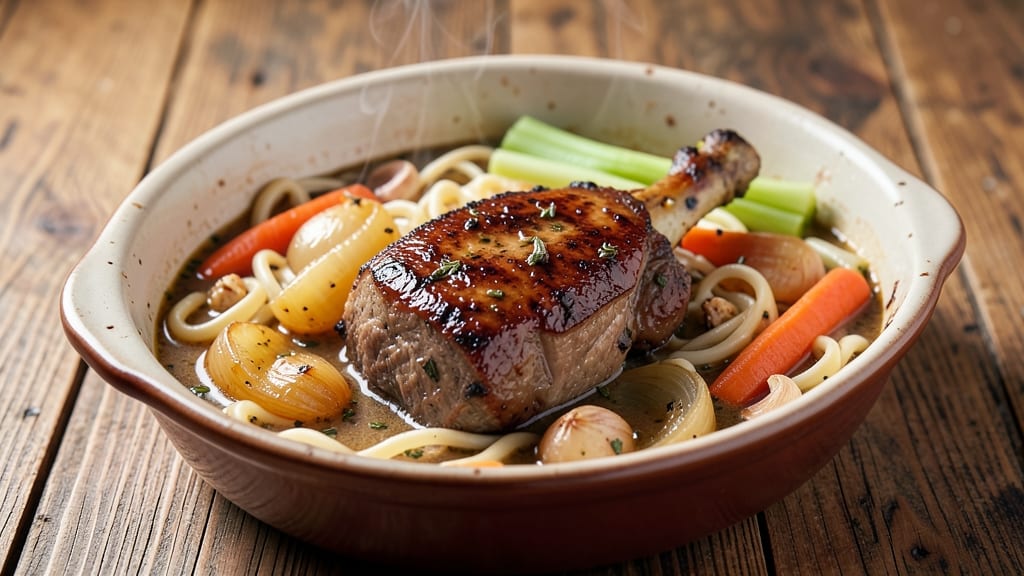
Transforming tough beef hock into melt-in-your-mouth richness is one of the most rewarding cooking techniques you'll master. This slow-braised method unlocks deep, collagen-rich flavors that elevate simple egg noodles into a hearty, restaurant-worthy dish.
I developed this recipe after years of experimenting with different braising times and liquid ratios to achieve that perfect balance of tender meat and velvety sauce.
The secret lies in patience and precision—simmering the hock low and slow for hours until the connective tissue dissolves into a luxurious, gravy-like broth.
Traditional methods like French jarret de bœuf or Chinese beef brisket inspire this approach, but I've adapted it for home cooks with a foolproof technique that delivers consistent results every time. The egg noodles soak up all that rich flavor, turning a humble ingredient into a satisfying centerpiece.
What you'll end up with is a dish that's deeply comforting yet impressively elegant—tender beef hock that falls apart at the touch of a fork, swimming in a glossy, aromatic sauce.
The noodles absorb just enough of that flavorful liquid to become part of the experience, while the crispy edges add satisfying texture. This is the kind of meal that makes weeknight dinners feel special without requiring hours of prep or expensive ingredients.
Serve with crusty bread for soaking up every last drop of that collagen-rich sauce, or pair it with roasted root vegetables for a complete, satisfying meal. The versatility of this technique means you can adapt it to different cultural traditions while keeping the core method intact.
Let's get started on creating this deeply flavorful dish that will become a staple in your cooking repertoire.
Ingredients for beef hock
Fourteen ingredients. One deeply flavorful dish. All you need for melt-in-your-mouth beef hock perfection.
| Ingredient | Amount | Notes |
|---|---|---|
| Beef Hock 🥩 | 2 lb | With bone and connective tissue |
| Egg Noodles 🍜 | 8 oz | Fresh or dried, medium width |
| Yellow Onion 🧅 | 1 whole | Medium size, sliced into wedges |
| Carrot 🥕 | 2 whole | Medium size, cut into chunks |
| Celery Stalk 🌿 | 3 whole | Cut into 1-inch pieces |
| Garlic Cloves 🧄 | 6 cloves | Smashed, not minced |
| Tomato Paste 🍅 | ½ cup | High-quality, no sugar added |
| Red Wine 🍷 | 1 cup | Bold dry variety like Cabernet |
| Beef Broth 💧 | 4 cups | Homemade or high-quality store-bought |
| Bay Leaves 🌿 | 2 whole | Fresh preferred, dried works |
| Thyme Sprigs 🌿 | 4 whole | Fresh, stems removed |
| Olive Oil 🫒 | 2 tbsp | Extra-virgin for searing |
| Salt 🧂 | 1 ½ tsp | Kosher or sea salt |
| Black Peppercorns 🌶️ | 1 tsp | Freshly cracked |
| Crusty Bread 🍞 | 8 slices | For serving, optional |
The beef hock is where the magic happens—look for thick, meaty hocks with good marbling at your butcher shop. Costco or Whole Foods usually carry them pre-packaged, but ask for the freshest cut if buying from a local butcher. The bone-in version gives more flavor, but if you're pressed for time, a beef shank works too. For the broth, homemade is ideal, but Kitchen Basics or Pacific Foods make solid store-bought options. The red wine should be something you'd drink—no cooking wine here. The egg noodles? Barilla or De Cecco are my go-tos for that perfect al dente bite.
No red wine? Dry sherry or extra beef broth works in a pinch. Fresh thyme out of season? Dried at one-third the amount keeps the flavor. The tomato paste can be that squeeze tube from Trader Joe's—no need for fancy jars. If you're short on time, pre-cut mirepoix from the grocery store freezer section saves chopping. The beef hock can be trimmed of excess fat if you prefer, but leave some for flavor. For a deeper color, add a splash of balsamic vinegar with the wine. The bread is truly optional, but crusty sourdough soaks up that sauce like a dream.
This dish tastes even better the next day—make extra if you can. The braised hock keeps for 3-4 days in the fridge, and the sauce freezes beautifully for up to 3 months. I like to portion the noodles separately so they stay al dente when reheating. For a quick weeknight dinner, you can even prep the hock and sauce ahead, then cook the noodles fresh. The aroma alone will have everyone at the table hungry.
Why You'll Love This Recipe
- One-Pot Magic: Honestly, I’ve made this so often the kids groan when I pull out the pot—because it’s that easy. Toss in the hock, veggies, and noodles all at once, then let it simmer. The onions and carrots soften into the broth while the hock falls apart, so you’re basically doing nothing except stirring once. (Yes, even on a Tuesday night.)
- Deep Umami Bomb: That beef hock? It’s the secret weapon—slow-cooked until the broth turns rich and dark, with a flavor so bold it’ll make you forget takeout exists. The celery and onion build layers of savory depth, while the egg noodles soak up every last drop. Between us, the first bite always gets a slow nod of approval.
- Leftovers That Shine: This dish actually tastes better the next day. I swear it. The flavors meld overnight, and reheating it turns it into a hearty soup or a quick noodle stir-fry. Pack it for lunches, freeze portions, or just eat it straight from the pot—no judgment here. My lunchbox has never been happier.
- Budget Feast for All: You’re feeding a crowd for less than half the price of a restaurant meal. Beef hock stretches into a full pot of goodness, and the veggies? They’re the affordable kind you can grab in bulk. Honestly, I’ve served this at potlucks, game days, and even my mom’s birthday—no one’s ever turned it down. Solid. Reliable. My secret weapon.
Step-by-step instructions for slow-braised beef hock with egg noodles
This method transforms tough beef hock into melt-in-your-mouth richness using just a Dutch oven and patience.
Sear the Beef Hock for Deep Flavor
Heat the 2 tablespoons olive oil in a heavy Dutch oven over medium-high heat until shimmering. Pat the 2 lb beef hock completely dry with paper towels—this ensures maximum browning. Place the hock in the pot, bone-side down, and sear for 8-10 minutes until deeply golden brown on all sides. I press down gently with a spoon during the first minute to prevent curling, which guarantees even contact with the pan.
The reason we don't rush this step is simple: those browned bits (fond) dissolve into the braising liquid, creating layers of umami flavor. If the oil starts smoking before the hock browns, reduce the heat slightly—you want color, not char. Once golden on all sides, remove the hock and set it aside on a plate.
Build the Aromatic Base
In the same Dutch oven, add the sliced 1 whole yellow onion, 2 whole carrots cut into chunks, and 3 whole celery stalks cut into 1-inch pieces. Cook for 8-10 minutes over medium heat, stirring occasionally, until the vegetables soften and the onion becomes translucent. This step develops their natural sweetness and removes any bitterness from the celery.
Add the 6 smashed garlic cloves, 0.5 cup tomato paste, 1.5 teaspoons salt, and 1 teaspoon freshly cracked black peppercorns. Stir for 2 minutes until the garlic releases its aroma and the tomato paste darkens slightly. Here's where the magic starts—this base will form the foundation of your rich braising liquid. If the paste sticks to the bottom, add 1 tablespoon of the red wine to loosen it.
Deglaze and Braise the Beef Hock
Pour in the 1 cup red wine and scrape up all the browned bits from the bottom of the pot with a wooden spoon. This deglazing step captures all the concentrated flavor you've built. Let the wine simmer for 3-4 minutes until it reduces by half and develops a slightly syrupy consistency. You'll see it darken and thicken—this indicates the alcohol is burning off, leaving behind deeper flavor compounds.
Return the beef hock to the pot, bone-side up. Add the 4 cups beef broth, 2 whole bay leaves, and 4 whole thyme sprigs. Bring to a gentle simmer, then reduce the heat to low (or 300°F if using an oven). The liquid should barely bubble—this slow cook will break down the collagen in the hock into gelatinous richness. Cover and braise for 2.5-3 hours, checking occasionally to ensure the liquid doesn't evaporate completely.
Finish the Braise and Prepare the Noodles
After 2.5 hours, remove the beef hock and shred the meat from the bone using two forks, discarding the bone and any large connective tissue. Return the shredded meat to the pot. Skim any excess fat from the surface of the braising liquid if desired, then increase the heat to medium and simmer uncovered for 10-15 minutes to thicken the sauce slightly. The liquid should coat the back of a spoon—this ensures every bite of noodle is coated in that velvety braising liquid.
While the beef finishes, cook the 8 oz egg noodles in salted boiling water according to package instructions until al dente. Reserve 1 cup of pasta water before draining, then toss the noodles with 1 tablespoon of the braising liquid to prevent sticking. The starchy pasta water will help emulsify the sauce when combined later.
Assemble and Serve
Divide the cooked egg noodles among 4 bowls. Ladle the shredded beef hock and its rich braising liquid over the noodles, ensuring each serving gets an even distribution of meat and sauce. The sauce should be thick enough to cling to the noodles without being gloppy—if it's too thin, simmer it uncovered for another 2-3 minutes to reduce further. Here's the thing—this dish tastes even better the next day as the flavors meld further.
Serve immediately with 8 slices crusty bread on the side for soaking up every last drop of that collagen-rich sauce. The beef should be fork-tender, falling apart at the touch, while the noodles maintain a pleasant bite. Garnish with fresh thyme leaves if you like, but trust me, the dish stands strong on its own rich, umami-packed flavors.
Pro Tips For Making Beef Hock
- Blanching the Hock: Drop that beef hock into boiling water for 30 seconds before braising—it loosens the skin and connective tissue so it renders properly. I used to skip this and ended up with chewy, unyielding meat that fought me the whole way.
- Dice the Veggies Small: Cut onions, carrots, and celery into ¼-inch pieces—they’ll soften faster and infuse flavor without turning to mush. Big chunks mean half-cooked bits in your broth, and nobody wants that.
- Deglaze with Red Wine: After browning the hock, hit the pot with ½ cup red wine and scrape hard—it pulls up all the caramelized bits stuck to the bottom. Skip this, and you’re missing depth of flavor.
- Simmer Low and Long: Crank the heat to high for 10 minutes to blister the hock, then drop to a bare simmer (tiny bubbles, maybe 170°F). Rush this, and you’ll end up with a watery stew instead of rich, gelatinous broth.
Make-ahead tips for beef hock
Prep Ahead for Maximum Flavor
Start by searing and braising the beef hock 24 hours ahead—this is my secret for deeper flavor development. After the initial 3-hour braise, cool the hock and sauce completely, then refrigerate in an airtight container.
The flavors intensify overnight as the collagen continues to break down. Reheat gently on the stovetop before adding the noodles for a restaurant-quality result. 💫
Noodle Prep Shortcut
Cook and drain the egg noodles 1 day ahead and store them in the fridge. Reheat them in the microwave with a splash of water for 30 seconds before tossing with braising liquid.
This keeps them al dente while saving you 10 minutes of active cooking time on busy weeknights. I like to portion them into individual containers for easy reheating.
Freezer-Friendly Components
The braised beef hock freezes beautifully for up to 3 months. After shredding the meat, portion the sauce and beef into quart-sized freezer bags, leaving 1-inch headspace for expansion. Thaw overnight in the fridge before reheating—never microwave directly from frozen.
The noodles can be frozen separately for up to 2 months, but I recommend cooking them fresh when reheating for best texture.
Sauce Boost for Leftovers
If the sauce seems too thin after reheating, simmer it uncovered for 5-7 minutes to reduce. For extra richness, whisk in 1 tablespoon cornstarch mixed with 2 tablespoons cold water until thickened.
I also like to add a splash of red wine (about 2 tablespoons) to revive the depth of flavor. The beef hock leftovers can be chopped and used in sandwiches or tacos for a completely different meal. 🔥
Equipment for Make-Ahead Success
Invest in a wide-mouth quart-sized mason jar for storing braising liquid—it's perfect for freezing and reheating portions. A fine-mesh strainer helps remove any remaining connective tissue before freezing. For reheating, I use a stainless steel saucepan because it distributes heat evenly and prevents scorching.
Don't forget a meat thermometer to check that the beef reaches 165°F before serving.
Weeknight Time-Saver
Prep the entire dish morning or afternoon and store components separately. Reheat the braised beef hock in the saucepan for 10 minutes, cook the noodles fresh, and assemble everything in 5 minutes.
This makes it perfect for busy evenings when you still want a homemade, flavorful meal. The aroma alone will have everyone at your table hungry and excited. ✨
Nutrition facts
Frequently asked questions
What makes beef hock different from other beef cuts like shank or brisket?
The beef hock comes from the joint connecting the leg and hoof of cattle, containing more connective tissue and collagen than brisket or shank. This is why slow-braising transforms it into tender, melt-in-your-mouth meat rather than requiring long marinating. The bone-in version adds extra flavor, while the collagen-rich sauce makes it perfect for noodle dishes or soups.
Can I substitute beef shank for beef hock in this recipe?
Yes, beef shank works well as a substitute! Look for a cut with similar size and connective tissue. The cooking time may be slightly shorter (2-2.5 hours instead of 3 hours), but the result will still be rich and tender. Just ensure you're using a bone-in cut for maximum flavor development.
How do I know when the beef hock is fully tender?
The hock should easily pull apart with a fork or two, with no resistance when pierced. A meat thermometer reading of 195-205°F in the thickest part indicates perfect tenderness. If it's still slightly firm, return it to the pot for another 30-45 minutes covered. The sauce should also coat the back of a spoon when thickened.
What can I do with leftover braising liquid?
The rich sauce freezes beautifully for up to 3 months—perfect for future meals! Use it as a base for soups, gravies, or even pasta dishes. For immediate use, try it with mashed potatoes, rice, or as a dipping sauce for crusty bread. The collagen-rich liquid makes an excellent broth for other recipes too.
Why does my beef hock turn out tough instead of tender?
Overcooking or insufficient liquid are common culprits. Ensure your pot has enough liquid to cover the hock by at least 1 inch and maintain a gentle simmer (not a rolling boil). If using a Dutch oven, cover it tightly and check liquid levels every 30 minutes. Adding a splash of water or broth as needed prevents drying.