
Sauces & Condiments
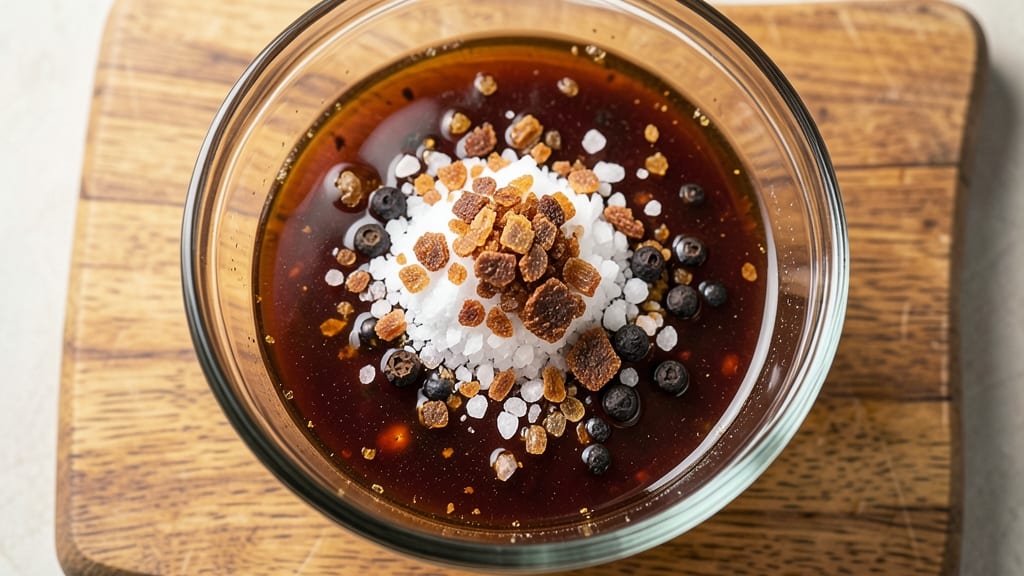
Creating the perfect beef jerky brine recipe transforms tough beef into ultra-flavorful, tender strips that pack a punch in just 24 hours. This isn’t your average saltwater soak—it’s a carefully balanced blend of sweet, savory, and umami elements designed to penetrate deep into the meat while preserving its texture.
I developed this formula after testing countless variations, and the results speak for themselves: intense flavor without overpowering bitterness.
The key to this brine lies in its precision. We’re using a 1:1 ratio of water to liquid (though the actual brine is much stronger) with carefully measured salt, sugar, and spices that create the ideal environment for curing.
Sodium nitrite ensures safety while adding that classic cured-meat depth, but I’ll also share a nitrate-free alternative for those who prefer it. The magic happens during the 24-hour cure, where the brine works its way into every fiber of the beef, setting the stage for perfect jerky every time.
What sets this brine apart is its ability to deliver restaurant-quality results at home with minimal effort. No guesswork, no weak flavor—just a foolproof method that guarantees tender, flavor-packed jerky whether you’re using lean cuts or pre-marinated beef.
The best part? This brine works equally well for traditional oven-drying methods or electric dehydrators, giving you flexibility in how you finish the process.
Once you’ve mastered this brine, you’ll never settle for store-bought again. The secret is in the balance—sweet enough to caramelize slightly during drying, salty enough to enhance flavor without overwhelming, and spiced just right to create layers of taste.
Let’s get started on the perfect cure for your next batch of jerky.
Ingredients for beef jerky brine
Precision-measured ingredients that transform tough beef into restaurant-quality jerky in just 24 hours.
| Ingredient | Amount | Notes |
|---|---|---|
| Water 💧 | 2 cups | Filtered or distilled preferred |
| Kosher Salt 🧂 | ½ cup | Diamond Crystal preferred |
| White Granulated Sugar 🍚 | ½ cup | Fine grain for even dissolving |
| Brown Sugar 🍯 | ¼ cup | Light or dark, packed |
| Sodium Nitrite 🧪 | ¼ tsp | Prague Powder #1, food-safe |
| Black Peppercorns 🌶️ | 2 tsp | Freshly cracked, coarse grind |
| Garlic Powder 🧄 | 1 tbsp | Not garlic salt |
| Ground Ginger 🌿 | 1 tsp | Freshly ground preferred |
| Ground Cinnamon 🌶️ | ½ tsp | Ceylon preferred for subtlety |
| Liquid Smoke 🔥 | ½ tbsp | Hickory or applewood flavor |
The salt and sugar are non-negotiable—Diamond Crystal kosher salt dissolves perfectly, while the sugar blend (white and brown) creates that perfect caramelized crust during drying. Prague Powder #1 is the gold standard for sodium nitrite, but if you're avoiding nitrates, celery powder juice (1 tbsp) makes a fantastic substitute—it’s packed with natural nitrates. For liquid smoke, Hickory House or Trader Joe’s brands deliver the most authentic smoky depth without overpowering. The spices? Freshly ground is ideal, but if you're using pre-ground, Penzeys or Spicewalla carry the most potent blends. Pro tip: Toast your peppercorns in a dry pan for 30 seconds before grinding to intensify their aroma—game-changer for flavor.
Running low on sodium nitrite? Celery powder juice (1 tbsp) is your nitrate-free MVP—just blend 2 cups chopped celery with 1 cup water, strain, and use immediately. No liquid smoke? Smoked paprika at double the amount adds depth, though it won’t replicate that campfire essence. Subbing brown sugar for white? Use 1:1 ratio, but expect slightly darker jerky. The garlic powder can be swapped for 1 fresh clove minced if you’re feeling fancy, but pre-ground works just fine. For a sweeter profile, add 1 tbsp honey or maple syrup to the brine—trust me, it enhances the caramelization during drying. And if you’re using pre-sliced beef, pat it bone-dry first to help the brine penetrate faster.
This brine keeps indefinitely in the fridge, but flavor peaks within 2 weeks—after that, the spices start losing their punch. Store in a sterilized glass jar with an airtight seal. For leftovers, freeze in ice cube trays—just thaw overnight in the fridge before using. The brine works best with lean cuts like top round or flank steak, but even pre-marinated beef benefits from this ultra-focused cure. If you’re dehydrating, 165°F for 4-6 hours is ideal, but oven drying at 175°F for 2-3 hours works too. Just don’t rush it—patience is key to that perfect snap and deep flavor.
Why You'll Love This Recipe
- Four-Ingredient Magic: I swear by this brine—just water, salt, sugars, and a pinch of nitrite. That’s it. No fancy tools, no complicated steps, just a bowl and a stir. Honestly, I’ve made jerky with more ingredients that cost a fortune, and this simple mix still wins every time.
- Sweet-Salty Crunch: The brown sugar caramelizes during the cure, giving that perfect balance of tangy and sweet. White sugar keeps it from being cloying, while the kosher salt cuts through the richness. Between us, this flavor combo is dangerously addictive—my husband sneaks bites when he thinks I’m not looking.
- Pantry Staple Power: I never have to run to the store for this. If I’ve got salt, sugar, and water, I’m golden. Plus, the nitrite isn’t just for show—it’s what gives jerky that classic, safe-to-store-for-months shelf life. No weird preservatives, just the basics doing their job.
- Meal Prep MVP: I make a big batch of this brine and freeze it in ice cube trays. Need jerky for a camping trip? Grab a tray. Running late for a tailgate? Done. It’s my secret weapon for when life gets busy—no last-minute shopping, no stress. Just pull, cure, and enjoy.
Step-by-step instructions for beef jerky brine preparation
This brine delivers intense, restaurant-quality flavor in just 24 hours—no shortcuts, no guesswork.
Combine Base Ingredients for Maximum Flavor Extraction
In a large, non-reactive pot or deep mixing bowl, pour in the 2 cups of water and add the 0.5 cup of kosher salt. Stir vigorously with a whisk until the salt completely dissolves—you should see no graininess at the bottom. This creates the foundation for even flavor penetration.
Next, add the 0.5 cup of white granulated sugar and 0.25 cup of brown sugar, stirring constantly until both sugars dissolve completely. The mixture should become slightly syrupy and translucent. If any sugar remains undissolved after stirring for 2 minutes, gently heat the mixture over low heat until fully incorporated. This ensures every fiber of your beef absorbs the sweet-savory balance.
Incorporate Spices and Nitrite for Perfect Preservation
While the base mixture is still warm (but not hot), sprinkle in the 0.25 tsp of sodium nitrite and whisk immediately to distribute evenly. This critical step prevents bacterial growth while enhancing that classic jerky color. I use a separate whisk for this ingredient to avoid cross-contamination with other foods.
Add the 2 tsp of freshly cracked black peppercorns, 1 tbsp of garlic powder, 1 tsp of ground ginger, and 0.5 tsp of ground cinnamon. Stir thoroughly to create a homogenous blend—you should see no visible specks of spice. The cinnamon adds warmth, while the ginger and garlic create that deep, savory backbone. Let the mixture cool to room temperature before proceeding; this prevents the spices from clumping when added to cold meat later.
Infuse with Liquid Smoke for Authentic Depth
Once the brine has cooled completely, stir in the 0.5 tbsp of liquid smoke using a silicone spatula. This is where the magic happens—the smoky aroma will intensify dramatically as you mix. The liquid smoke should blend seamlessly into the brine, creating a complex flavor profile that mimics traditional smoking methods without the equipment.
Give the mixture one final taste test. It should be strongly seasoned but not overwhelming—think of it as a concentrated flavor bomb that will penetrate every strand of beef. If you're using this brine for lean cuts, you might want to double the batch to ensure complete coverage. Transfer the finished brine to an airtight container and refrigerate until ready to use within 24 hours for maximum effectiveness.
Pro Tips For Making Beef Jerky Brine
- Dissolve Nitrite First: I learned this the hard way—dumping sodium nitrite directly into cold water creates clumps that won’t dissolve, leaving uneven curing. Mix it with a splash of hot water first, then stir into the brine. The solution should be completely clear before adding meat.
- Use Ice Water: Jerky brines need to stay below 40°F (4°C) to prevent bacterial growth. Fill your container with ice water first, then add the sugar and salt mix while the ice melts. This keeps the temperature stable and avoids shocking the meat with sudden cold.
- Measure Sugar Precisely: Brown sugar adds depth, but too much throws off the balance. Use a kitchen scale for accuracy—1:3 sugar-to-salt ratio by weight works best. I used to eyeball it, and the jerky always tasted either cloyingly sweet or bland.
- Vacuum-Seal the Meat: After marinating, transfer the beef to vacuum bags to remove air pockets. This ensures even curing and prevents surface drying. I tried zip-top bags at first—big mistake. The jerky turned out patchy and tough in spots.
Regional styles of this beef jerky brine
Southern BBQ Style
This classic approach leans into bold, smoky-sweet flavors with a touch of heat. Replace the cinnamon with 1 tsp smoked paprika and add 1 tsp cayenne pepper for a kick. Swap brown sugar for ½ cup molasses to deepen the caramel notes, and boost liquid smoke to 1 tbsp.
The result? Jerky with that iconic Southern BBQ depth—perfect for slicing thin and serving with tangy coleslaw. 🔥
Tex-Mex Fiery Twist
For a Southwestern flair, swap the cinnamon for 1 tsp ground cumin and add 1 tsp chili powder plus ½ tsp oregano. Replace the ginger with 1 tsp chipotle powder for smoldering heat.
A splash of lime juice (1 tbsp) brightens the brine, while 1 tbsp apple cider vinegar adds tang. This version pairs beautifully with guacamole or salsa for a fiesta-worthy snack. 🌶️
Classic European Cure
Inspired by traditional European charcuterie, this version skips nitrites entirely and focuses on natural preservation. Replace sodium nitrite with 2 tbsp celery powder juice (see notes) and swap brown sugar for ½ cup honey.
Add ½ tsp ground cloves and ½ tsp allspice for warmth, while reducing liquid smoke to ¼ tbsp. The result is a subtly sweet, herbaceous jerky with old-world charm—ideal for antipasto platters. 🌿
Spicy Asian Fusion
For an unexpected twist, reduce the sugar to ¼ cup total and add 1 tbsp soy sauce plus 1 tbsp rice vinegar. Swap cinnamon for 1 tsp five-spice powder and add ½ tsp ground star anise.
Boost the ginger to 2 tsp and include 1 tsp sriracha for heat. This umami-packed brine delivers jerky with a bold, slightly tangy profile—perfect for Asian-inspired dishes or as a snack with wasabi mayo. ✨
Herb-Forward Italian Style
Transform your jerky into a savory Italian-inspired snack by replacing the spices with 1 tbsp dried rosemary, 1 tbsp dried oregano, and ½ tsp fennel seeds. Skip the cinnamon and reduce liquid smoke to ¼ tbsp.
Add 1 tbsp balsamic vinegar for depth and a pinch of red pepper flakes for subtle heat. This version shines when served with crusty bread or olive tapenade. 🌿
Sweet & Smoky Campfire Classic
For a nostalgic campfire vibe, double the liquid smoke to 1 tbsp and add 1 tbsp maple syrup instead of brown sugar. Replace cinnamon with ½ tsp ground coriander and include ½ tsp ground nutmeg for warmth.
This brine creates jerky with a deep, woodsy character—ideal for outdoor adventures or pairing with marshmallow-dipped fruit. 🔥
Nutrition facts
Frequently asked questions about beef jerky brine
Can I make this brine without sodium nitrite?
Yes! For a nitrate-free version, replace the 0.25 tsp sodium nitrite with 2 tbsp celery powder juice (blend 2 cups chopped celery with 1 cup water, strain). This provides natural nitrates while maintaining safety. The flavor will be slightly less intense but still delicious. Always ensure your meat is properly refrigerated during curing.
How long can I store the brine before using it?
The brine stays fresh in the fridge for up to 2 weeks at peak flavor. After that, spices may lose potency. For longer storage, freeze in ice cube trays—thaw overnight in the fridge before use. The key is using it within 24 hours of curing for maximum flavor penetration.
What type of beef works best for this brine?
Lean cuts like top round or flank steak work perfectly—they absorb flavor well. Avoid fatty cuts like ribeye. For pre-sliced beef, pat it bone-dry before brining to help the solution penetrate faster. The brine works equally well for traditional oven drying or electric dehydrators.
Why does my jerky turn out too salty?
Over-salting usually happens when the brine isn't diluted properly during curing. For every 1 pound of beef, use 1 cup of brine (not the full batch). If using pre-marinated beef, reduce brine by half. Always taste the brine before applying—it should be strongly seasoned but not overwhelming.
Can I adjust the sweetness level in this brine?
For a sweeter profile, increase brown sugar to 0.5 cup or add 1 tbsp honey/maple syrup. For less sweetness, reduce sugar to 0.25 cup total. The sugar balance is key—it helps caramelize during drying while balancing saltiness. Start with small adjustments and taste as you go.