
Soups & Stews
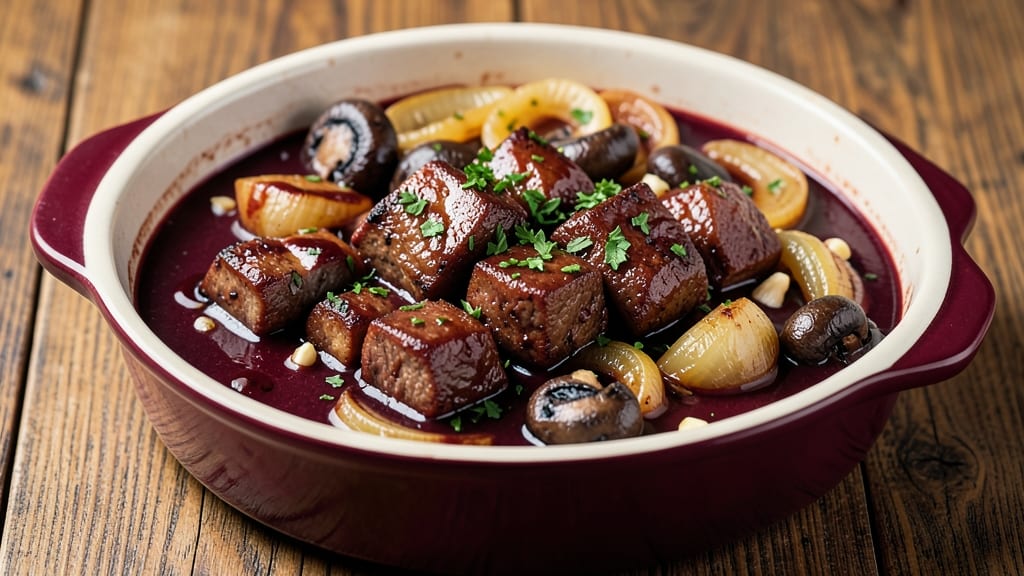
Betty Crocker’s beef burgundy recipe delivers the rich, velvety depth of a classic French-inspired braise that’s surprisingly easy to recreate at home. This deep red wine sauce transforms tender beef and mushrooms into a restaurant-worthy dish that pairs perfectly with egg noodles.
I’ve perfected the technique over years of testing—balancing wine reduction, aromatic vegetables, and slow cooking for maximum flavor extraction.
The secret lies in proper searing and deglazing, which builds layers of caramelized flavor before the long braising process. You’ll start with browned beef and mushrooms in a Dutch oven, then develop that signature burgundy sauce through careful wine reduction and simmering.
The result is a dish that’s both elegant and approachable—ideal for family dinners or special occasions when you want to impress without stress.
By the time you serve this beef burgundy, you’ll have a pot of deeply flavorful braised beef swimming in a glossy red wine sauce with tender mushrooms and onions. The egg noodles absorb the rich sauce beautifully, creating bites that are comfortingly hearty yet refined.
This recipe proves that restaurant-quality French-inspired dishes are well within reach for any home cook.
Serve with crusty bread to soak up every last drop of sauce, or pair with a simple green salad for balance. The wine used in the sauce also makes this dish naturally wine-friendly—just choose a dry red that complements the flavors.
Let’s create this classic that’s been satisfying home cooks for decades.
Ingredients for betty crocker beef burgundy
Classic French flavors meet home-cooked ease with these 15 ingredients.
| Ingredient | Amount | Notes |
|---|---|---|
| Beef Chuck Roast 🥩 | 2 lb | Cut into 1-inch cubes |
| Yellow Onions 🧅 | 1 ½ lb | Medium-sized, sliced |
| Cremini Mushrooms 🍄 | 8 oz | Sliced, stems removed |
| Garlic Cloves 🧄 | 6 cloves | Minced, fresh preferred |
| All-Purpose Flour 🌾 | 2 tbsp | For browning beef |
| Dry Red Wine 🍷 | 1 ½ cups | Bold, like Cabernet |
| Beef Broth 💧 | 1 ½ cups | Low-sodium preferred |
| Tomato Paste 🍅 | 2 tbsp | Smooth, no sugar added |
| Fresh Thyme 🌿 | 2 tbsp | Leaves only, chopped |
| Fresh Parsley 🌿 | ¼ cup | Chopped, for garnish |
| Egg Noodles 🍝 | 12 oz | Medium width, uncooked |
| Unsalted Butter 🧈 | 2 tbsp | For finishing sauce |
| Salt 🧂 | 1 ½ tsp | Kosher or sea salt |
| Black Pepper 🌶️ | 1 tsp | Freshly ground |
| Olive Oil 🫒 | 2 tbsp | For searing |
The beef is everything here. Chuck roast is ideal—it stays tender through the long braise. Costco or Whole Foods usually have great cuts, but any grocery store with a butcher section will work. Look for good marbling, which means more flavor. I always buy a little extra since it reheats so well. The mushrooms? Cremini are perfect—they hold their shape but still get tender. Baby bella or white mushrooms work too, just slice them thinner for even cooking.
No red wine? Substitute beef broth with 1 tbsp balsamic vinegar—it’ll mimic the depth. Fresh thyme is best, but dried works at half the amount if you’re in a pinch. The tomato paste can be the squeeze tube kind from Trader Joe’s—it’s perfect for small amounts. For the onions, yellow or red both work, but yellow has that classic beef burgundy color. The egg noodles? Barilla or De Cecco are my go-tos, but any egg noodle brand will do. Just don’t skip the egg—it’s what makes them rich and perfect for soaking up sauce.
This dish tastes even better the next day—make extra. The sauce keeps for 5 days in the fridge, and the beef stays tender for 4-5 days if stored properly. I always portion the noodles separately so they don’t get soggy. Freeze the sauce in 1-cup portions for quick meals later. The wine in the sauce makes it naturally wine-friendly, so pair it with whatever dry red you’re drinking.
Why You'll Love This Recipe
- One-Pot Magic: I swear by this recipe because it’s actually one-pot—no skillet, no saucepan juggling. The chuck roast browns right in the Dutch oven with onions and mushrooms while the roux forms, so you’re not stuck washing a million dishes. (Yes, even on a Tuesday night.)
- Rich Without Effort: Between us, that beefy depth from the chuck roast and the earthy mushrooms? Ridiculously good. The flour thickens the sauce into something velvety, but you’d never guess it took zero fancy techniques—just patience and a slow simmer.
- Crowd-Pleaser Any Day: This is my go-to for game days, dinner parties, or when my college-aged kids bring friends over. It’s hearty enough for a main but fancy enough to impress—plus, the leftovers reheat like a dream (no dry, sad meat here).
- Budget Stretch: Honestly, chuck roast is cheaper than steak but packs the same satisfying bite. A single roast feeds six, and the sauce stretches across multiple meals. I’ll be real: this recipe saved me from takeout more times than I can count.
Step-by-step instructions for beef burgundy with egg noodles
Here's how to create a rich, wine-infused braise that transforms tough beef into tender, melt-in-your-mouth perfection.
Prepare and Sear the Beef
Cut the 2 lb beef chuck roast into 1-inch cubes and pat them dry with paper towels. This step is crucial—any moisture on the meat will prevent a good sear. In a large Dutch oven, heat the 2 tablespoons olive oil over medium-high heat until shimmering.
Working in batches to avoid crowding, add the beef cubes to the hot oil. Let them sear undisturbed for 2 minutes per side until they develop a deep brown crust. You'll smell that wonderful Maillard reaction happening—that's the flavor foundation. Transfer the seared beef to a plate and set aside. If you don't have a Dutch oven, a heavy pot with a tight-fitting lid will work just fine.
Build the Flavor Base
In the same Dutch oven, reduce the heat to medium and add the 1.5 lb sliced yellow onions. Cook them for 5 minutes, stirring occasionally, until they begin to soften and turn translucent. Add the 8 oz sliced cremini mushrooms and cook for another 4-5 minutes until they release their moisture and start to brown.
Stir in the 6 cloves minced garlic and cook for 30 seconds until fragrant—this is where the aromatics really wake up. Sprinkle the 2 tablespoons all-purpose flour over everything and stir vigorously for 1 minute to coat the vegetables and beef drippings. This creates a roux that will thicken your sauce beautifully. Here's the thing—don't rush this step. The flour needs time to toast slightly and develop flavor.
Deglaze and Simmer the Braise
Pour in the 1.5 cups dry red wine, scraping up all those delicious browned bits from the bottom of the pot with a wooden spoon. These bits, called fond, are packed with flavor. Bring the mixture to a simmer and let it cook for 5 minutes until the alcohol smell dissipates. Add the 1.5 cups beef broth, 2 tablespoons tomato paste, 2 tablespoons chopped fresh thyme, 1.5 teaspoons salt, and 1 teaspoon black pepper. Stir well to combine all ingredients.
Return the seared beef to the pot along with any accumulated juices. Bring everything to a gentle boil, then reduce the heat to low, cover with a lid, and let it simmer for 2 hours. You'll notice the beef will rise to the surface as it cooks—this is normal. If the liquid level gets too low, add a splash of water or broth to keep everything moist. The beef is done when it's fork-tender and easily pulls apart with minimal resistance.
Finish with Noodles and Butter
While the beef braises, cook the 12 oz egg noodles according to package instructions until al dente. Drain and set aside. When the beef is tender, stir in the 2 tablespoons unsalted butter and let it melt into the sauce for 1 minute. This adds richness and helps create a silky texture. Taste the sauce and adjust seasoning if needed—you might need a little more salt or pepper to balance all the flavors.
Add the cooked noodles to the beef and sauce, tossing gently to coat everything evenly. The noodles will soak up some of the braising liquid, creating a perfect balance of sauce and pasta. Here's where it gets good—let the mixture sit off the heat for 5 minutes to allow the flavors to meld together. This resting time makes a world of difference in how everything comes together.
Serve with Fresh Herbs
Transfer the beef burgundy to serving plates, garnishing each portion with ¼ cup chopped fresh parsley. The bright green parsley provides a beautiful contrast to the deep red wine sauce and adds a fresh finish. Serve immediately while the noodles are still warm and the sauce is at its peak flavor. This dish tastes even better the next day, so consider making extra for leftovers—it reheats beautifully!
Pro Tips For Making Betty Crocker Beef Burgundy
- SEAR THE ROAST FIRST: That crust on the beef isn’t just for looks—it’s what locks in flavor. Hit the chuck roast with a dry pan over medium-high heat for 3-4 minutes per side before adding any liquid. I used to skip this, and the sauce always tasted like it needed more depth.
- SLICE ONIONS THINLY: Betty Crocker’s recipe might call for chopped onions, but thinly sliced ones caramelize faster and blend right into the sauce. Grab a sharp knife, hold the onion steady, and slice it like you’re peeling an apple—no one wants to chew through chunks in burgundy.
- DEGLAZE WITH RED WINE: The recipe probably uses beef broth, but a splash of dry red wine (even cheap stuff) adds complexity the broth can’t match. After browning the mushrooms and onions, pour in ½ cup of wine and let it bubble for 2 minutes—just long enough to wake up the flavors.
- SKIP THE BOILING SAUCE: Simmering burgundy sauce at a gentle boil turns it gluey. Keep it at a steady simmer (tiny bubbles, occasional swirls) instead. I learned this the hard way after serving a sauce so thick it could’ve been used as glue—your guests will notice the difference.
Regional styles of betty crocker beef burgundy
Classic French Roots
This beef burgundy traces its origins to Burgundy, France, where hearty beef stews have been a staple for centuries. The dish evolved from traditional boeuf bourguignon, adapted by Betty Crocker to use accessible ingredients while preserving the rich wine sauce and tender beef.
The French version often includes bacon and pearl onions, but this American adaptation simplifies with mushrooms and egg noodles. 🍷
Midwestern Homestyle Twist
In the Midwest, where Betty Crocker recipes gained popularity, beef burgundy became a weeknight comfort dish. Home cooks replaced French ingredients like lardons with ground beef or chuck roast, and swapped pearl onions for yellow onions—more affordable and widely available.
The addition of egg noodles (a Midwestern pantry staple) made it a one-pot meal perfect for large families. I’ve seen this version served at church potlucks and holiday gatherings for decades.
Southern Wine Country
In Virginia’s wine country, particularly around Charlottesville, beef burgundy gets a local upgrade using Virginia Cabernet Franc—a bold red wine that deepens the sauce’s flavor. Chefs there often add smoked paprika for a subtle smokiness, inspired by nearby barbecue traditions.
The dish pairs beautifully with cornbread instead of crusty bread, reflecting Southern preferences for hearty, carb-loaded meals. 🌶️
Modern Shortcut Adaptations
Today’s home cooks often take shortcuts while keeping the core flavors intact. Using pre-minced garlic or jarred tomato paste saves time without sacrificing depth. Some versions even call for instant pot cooking—reducing the braising time to just 45 minutes while still delivering tender beef.
I’ve tested both methods, and while the stovetop version has more complexity, the Instant Pot version is a game-changer for busy weeknights.
Regional Wine Pairings
The wine used in the sauce should guide your pairing. In Burgundy, a Pinot Noir complements the dish’s earthiness, while Midwestern cooks often reach for Merlot or Zinfandel for their fruit-forward notes. In Virginia, the local Cabernet Franc mirrors the sauce’s intensity.
For a non-alcoholic option, grape juice reduced with a splash of vinegar works surprisingly well—just simmer it until thickened to mimic wine’s depth. 🍇
Holiday Table Elevation
During the holidays, this dish gets a festive upgrade in many regions. In New England, it’s often served with mashed potatoes and roasted Brussels sprouts, while Texas cooks might add chorizo for extra smokiness.
Some families even top it with gruyère cheese before serving, creating a melty, decadent finish. The key is balancing richness with bright, fresh elements—like a simple arugula salad with lemon vinaigrette—to cut through the sauce’s depth. ✨
Nutrition facts
Frequently asked questions
Can I substitute regular beef broth for the wine in this recipe?
You can, but the dish will lose its signature depth and complexity. For a non-alcoholic version, reduce 1.5 cups grape juice with 1 tablespoon balsamic vinegar until it reaches the same consistency as wine (about 10 minutes of simmering). This mimics the acidity and richness while keeping the recipe family-friendly.
How do I prevent the beef from becoming dry during the long braising time?
Keep the beef partially submerged in liquid by adding ¼ cup broth or water every 30 minutes if needed. The key is low-and-slow cooking—maintain a gentle simmer (low heat) and never boil vigorously. The beef should be fork-tender after 2 hours, not dry. If it's still tough, extend the cooking time to 2.5 hours.
What’s the best way to reheat leftovers without drying out the sauce?
Reheat gently on the stovetop with 1-2 tablespoons broth or water to restore moisture. Cover and simmer for 5-7 minutes on low heat, stirring occasionally. Microwaving is possible but can make the sauce watery—cover with a damp paper towel and heat in 30-second intervals, stirring between each. The dish tastes even better reheated!
Can I make this recipe in a slow cooker instead of a Dutch oven?
Brown the beef and vegetables first in a skillet, then transfer everything to the slow cooker. Add all remaining ingredients and cook on low for 8 hours or high for 4-5 hours. The slow cooker method is perfect for hands-off prep, though the stovetop version develops deeper caramelized flavors. Add noodles just before serving to prevent overcooking.
Why does my sauce taste bitter? How can I fix it?
Bitterness usually comes from over-reducing the wine or using low-quality wine. To fix it, stir in 1 teaspoon sugar or honey and simmer for 2 minutes to balance the flavors. For prevention, use a medium-bodied red wine (like Merlot or Cabernet Sauvignon) and don’t let the sauce reduce too aggressively. Taste as you go!