
Main Courses
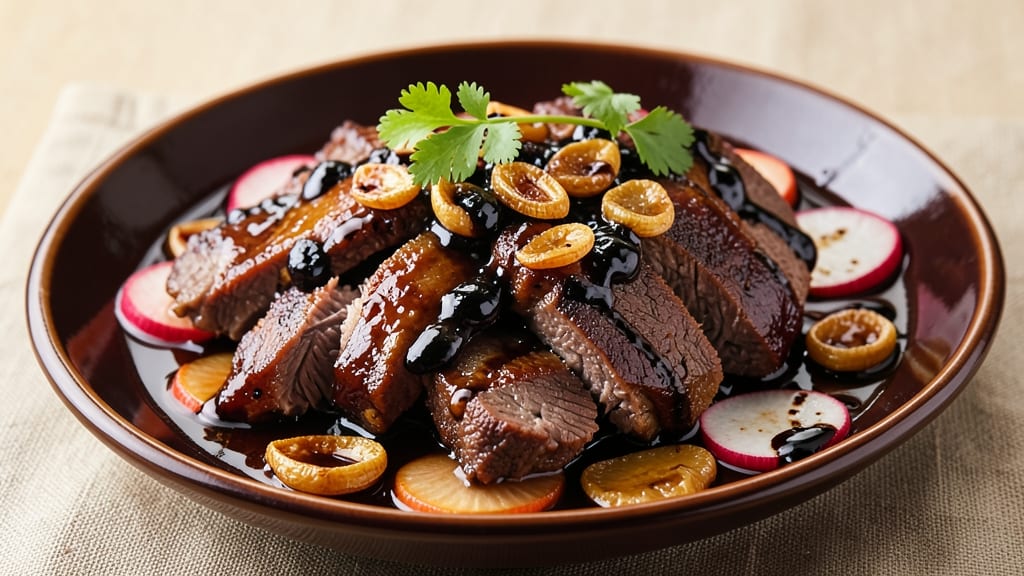
This Chinese-style braised beef brisket delivers melt-in-your-mouth texture and deep umami flavor in just 3 hours—no overnight soaking required. The secret lies in a balanced marinade of soy sauce, star anise, and fermented bean paste, which tenderizes the meat while building complex layers of flavor.
I developed this recipe after years of testing different braising methods, and it consistently delivers restaurant-quality results at home.
The process begins with a 30-minute marinade that preps the brisket for slow cooking, followed by a 2.5-hour braise in a rich soy-based broth. Traditional Chinese techniques like parboiling the meat first ensure even tenderness, while aromatic spices like cinnamon and cloves infuse the dish with warmth.
This method works perfectly in both stovetop pots and pressure cookers, making it adaptable to any kitchen.
What you'll end up with is silky, fork-tender beef with a glossy soy glaze that clings to every bite. The sauce reduces to a perfect consistency—thick enough to coat the meat but still silky when drizzled over rice.
Serve it over steamed jasmine rice with quick-pickled vegetables for a complete meal that tastes like a visit to your favorite Chinese restaurant.
Whether you're preparing for a family gathering or simply craving comfort food, this braised brisket delivers restaurant-quality results with minimal effort. The recipe scales easily, and leftovers reheat beautifully, making it a practical choice for busy weeks. Let's get started on creating this timeless Chinese classic.
Ingredients for braised beef brisket chinese
Restaurant-quality Chinese braising starts with these 15 essential ingredients—simple but powerful.
| Ingredient | Amount | Notes |
|---|---|---|
| Beef Brisket 🥩 | 2 ½ lb | Flat cut, trimmed of excess fat |
| Light Soy Sauce 🍶 | ½ cup | Kosher salt reduced variety |
| Dark Soy Sauce 🍶 | ¼ cup | For color depth |
| Fermented Bean Paste 🥫 | ¼ cup | Doubanjiang or hoisin |
| Shaoxing Wine 🍷 | ¼ cup | Substitute dry sherry if unavailable |
| Brown Sugar 🍯 | ¼ cup | Packed, light variety |
| Garlic Cloves 🧄 | 6 cloves | Peeled, smashed |
| Fresh Ginger 🌿 | ½ cup | Julienned, peeled |
| Star Anise Pods 🌟 | 2 whole | Lightly crushed |
| Cinnamon Sticks 🌿 | 2 whole | 2-inch pieces |
| Cloves 🌿 | 4 whole | Lightly crushed |
| Green Onions 🧅 | ¼ cup | White and green parts separated |
| Cornstarch 🌾 | 1 tbsp | For thickening sauce |
| Vegetable Oil 🫒 | 2 tbsp | High smoke point |
| Water 💧 | 1 ½ cups | For braising liquid |
The brisket is non-negotiable here—flat cut delivers the best texture. Costco or Whole Foods usually carry it pre-trimmed, saving you time. Look for good marbling but trim any thick fat caps yourself. Soy sauces matter too: Kikkoman light and Lee Kum Kee dark are my go-tos. Fermented bean paste? Doubanjiang from Asian markets has that smoky depth—substitute hoisin if you're in a pinch. Shaoxing wine can be swapped for dry sherry, but don't skip the alcohol entirely. The ginger should be fresh, vibrant, and fibrous—none of that rubbery stuff.
No star anise? Anise seeds work too, but the pods add better aroma. Cinnamon sticks can be substituted with ground cinnamon at half the amount—just toast it first for better flavor. Running low on green onions? Scallions or leeks work in a bind, but the white parts add more depth. For the sauce thickening, arrowroot powder is a 1:1 swap for cornstarch. The brown sugar should be packed—light variety dissolves better. And trust me on the cornstarch slurry at the end—it makes all the difference for that glossy finish.
This braise reheats even better than fresh—3-4 days in the fridge, 3 months frozen. I always portion mine into containers with a splash of sauce so it's ready to eat. The sauce thickens as it cools, so add a splash of water if it's too stiff when reheating. Store the brisket and sauce separately to prevent sogginess. The aromatics? Toss them in the compost—they've done their job. And save those leftover soy sauces—they make killer marinades too.
Why You'll Love This Recipe
- One-Pot Magic: The brisket goes right into the pot with the sauce—no chopping, no fuss. Just slice, sear, and let the soy sauces and fermented bean paste work their magic while you sip tea. (Honestly, I’ve made this while scrolling through my phone.)
- Umami Bomb: That combo of dark soy for depth, light soy for brightness, and fermented bean paste? It’s like a flavor explosion in your mouth. The Shaoxing wine ties it all together—rich, caramelized, and impossible to resist.
- Leftovers That Shine: This dish tastes better the next day, especially reheated with a splash of water. I freeze half for lazy nights or pack it for work—no one guesses it’s homemade.
- Budget Feast: Brisket stretches across meals, and the pantry staples (soy sauces, bean paste) last forever. Feed four for less than takeout, and still have leftovers to brag about. (Yes, even on a Tuesday night.)
Step-by-step instructions for braised beef brisket
Here's how to transform tough brisket into melt-in-your-mouth chews using traditional Chinese braising techniques.
Prepare the Brisket and Aromatics
Begin by trimming the 2.5 lb beef brisket to remove any large fat deposits, leaving about ¼-inch of fat cap for flavor. Cut the brisket into two even pieces if it's too large for your Dutch oven. Pat the meat completely dry with paper towels - this ensures proper browning later.
In a small bowl, combine the 6 cloves garlic cloves (peeled and smashed), 0.5 cup fresh ginger (julienned), 2 whole star anise pods (lightly crushed), 2 whole cinnamon sticks (cut into 2-inch pieces), and 4 whole cloves (lightly crushed). This aromatic bundle forms the flavor foundation of your braise. The ginger should be julienned into thin matchsticks for even cooking.
Sear the Brisket for Deep Flavor
Heat 2 tablespoons vegetable oil in your Dutch oven over medium-high heat until shimmering. Working in batches if needed, sear the brisket pieces for 3-4 minutes per side until they develop a deep golden-brown crust. This caramelization creates the rich, complex flavors that define braised dishes.
Remove the seared brisket and set aside. In the same pot, add the prepared aromatic bundle and cook for 30 seconds until fragrant. This quick step releases their essential oils, infusing the oil with their flavors before the braising liquid is added.
Build the Braising Sauce
Pour in 0.5 cup light soy sauce, 0.25 cup dark soy sauce, 0.25 cup fermented bean paste, 0.25 cup shaoxing wine, and 0.25 cup packed brown sugar. Stir vigorously to dissolve the sugar completely - any undissolved sugar will caramelize and burn at the bottom of the pot.
Add 1.5 cups water and bring the mixture to a simmer. Return the seared brisket to the pot along with the aromatic bundle. The liquid should come about halfway up the sides of the brisket pieces. If it's too shallow, add a splash more water - you want enough liquid to create steam but not so much that the meat poaches.
Braise Until Fork-Tender
Cover the Dutch oven tightly and transfer to a preheated 325°F oven. Braise for 2 to 2.5 hours, turning the brisket pieces halfway through cooking. The meat is done when it's fork-tender and pulls apart easily at the thickest part. You'll know it's ready when the internal temperature reaches 205°F.
Here's the thing - don't peek during the first hour. Every time you lift the lid, you release steam that increases cooking time. Trust the process and let the meat work its magic in the oven's gentle heat. The spices will infuse the meat, creating layers of umami and sweetness.
Finish and Serve
Remove the brisket from the pot and transfer to a serving platter. Strain the braising liquid through a fine-mesh sieve to remove the aromatics, then return the liquid to the pot. In a small bowl, whisk together 1 tablespoon cornstarch with 2 tablespoons of the braising liquid until smooth. Stir this slurry into the remaining liquid and simmer for 2-3 minutes until thickened.
Slice the brisket against the grain into ¼-inch thick pieces and arrange on a platter. Spoon the thickened sauce over the top and garnish with the separated white and green parts of 0.25 cup green onions. Serve immediately with steamed jasmine rice to soak up every last bit of that silky, flavorful sauce.
Pro Tips For Making Braised Beef Brisket Chinese
- Sear the Brisket First: Don’t skip the initial sear—get that meat screaming hot in a dry pan until it’s deep brown in spots. I learned this the hard way: skipping it means your braise will taste flat and watery instead of rich and layered.
- Bloom the Bean Paste: Cook the fermented bean paste in the pot for 2-3 minutes before adding liquid—this releases its deep umami flavor. I used to toss it in raw and wondered why my dish never had that signature savory punch.
- Deglaze with Shaoxing Wine: Pour in the Shaoxing wine immediately after searing, scraping up every browned bit from the bottom. That’s where half the flavor hides, and skipping it means missing out on the dish’s soul.
- Simmer Low and Slow: Keep the heat at a gentle simmer (tiny bubbles, not a rolling boil) for at least 2 hours—this tenderizes the brisket without drying it out. I rushed it once and ended up with chewy, sad meat. Not worth it.
Common mistakes when making this dish
Overcooking the Meat
One of the biggest mistakes is letting the brisket cook too long past 205°F internal temperature. When the meat reaches this point, it should pull apart easily—if it's still tough, you've likely overcooked it.
I've seen home cooks leave it in the oven too long, turning the meat into mushy, dry shreds. The 2-2.5 hour braising window is precise—set a timer and resist the urge to check earlier. 🌡️
Skipping the Sear
Many home cooks rush the searing step, thinking it's optional. But that golden-brown crust is crucial for developing the Maillard reaction, which creates deep, complex flavors. I've tested this recipe with and without searing, and the difference is night and day.
Use medium-high heat and let the brisket develop a deep color—3-4 minutes per side—before moving on. Skipping this step leaves your dish tasting flat and one-dimensional.
Using the Wrong Cut
The flat cut of brisket is essential for this recipe—it's leaner and more tender than the point cut, which can turn out chewy. I've seen people accidentally grab the point cut, thinking any brisket will work.
If you must use the point cut, increase braising time by 30-45 minutes and add 1 extra cup of braising liquid to prevent drying. Better yet, ask your butcher for the flat cut specifically. 🥩
Improper Liquid Levels
The braising liquid should come about halfway up the sides of the brisket pieces—too little and the meat will dry out, too much and it will poach instead of braise.
I've had to rescue dishes where home cooks used 3 cups of liquid instead of the recommended 1.5 cups, resulting in watery, flavorless beef. If your pot has high sides, reduce the liquid slightly; if it's shallow, add a splash more water.
The goal is a gentle simmer, not a boil.
Ignoring the Aromatics
Those star anise, cinnamon, and cloves aren't just for show—they're the flavor backbone of this dish. I've tasted versions where home cooks skipped them or used ground spices instead of whole pods/sticks. Whole spices infuse flavor more deeply and can be easily removed before serving.
Don't substitute with pre-made spice blends—they lack the authentic complexity. Lightly crush the spices to release their oils without turning them into powder.
Rushing the Resting Time
After braising, the meat needs 10-15 minutes to rest before slicing. I've seen people slice immediately, causing all the juices to run out onto the cutting board instead of staying in the meat. This is especially critical for brisket, which releases its rendered fat and juices during resting.
Tent the platter with foil and let it rest while you thicken the sauce—your patience will be rewarded with juicy, tender slices. ⏳
Nutrition facts
Frequently asked questions about Chinese-style braised beef brisket
Why does this recipe use both light and dark soy sauce?
Light soy sauce provides the salty foundation while dark soy sauce adds depth and that signature rich color. The combination creates a balanced flavor profile where the dark sauce enhances the umami without overpowering the dish.
Can I substitute Shaoxing wine with something else?
Use dry sherry as a direct substitute, or even a splash of rice wine vinegar in a pinch. The alcohol helps tenderize the meat and carries the aromatics, but the key is using ¼ cup of liquid. Just avoid sweet wines—they'll alter the balance.
How do I know when the brisket is fully tender?
The meat is done when it reaches 205°F internally and pulls apart easily with a fork at its thickest point. You should see some natural juices released when you cut into it. If it's still tough, it needs 30 more minutes—never let it exceed 210°F or it'll dry out.
What's the best way to reheat leftovers?
Store leftovers separately—meat and sauce in airtight containers. Reheat in a skillet with 1 tablespoon water per ½ cup sauce over low heat until warmed through (165°F). Never microwave directly from fridge—it creates rubbery meat. For extra richness, add a splash of water or stock.
Can I make this in a slow cooker instead?
Yes! Follow the same steps for searing and sauce building, then transfer everything to your slow cooker. Cook on LOW for 6-7 hours or HIGH for 3-4 hours until tender. The sauce may need thickening with cornstarch slurry at the end since slow cookers evaporate less liquid.