
Main Courses
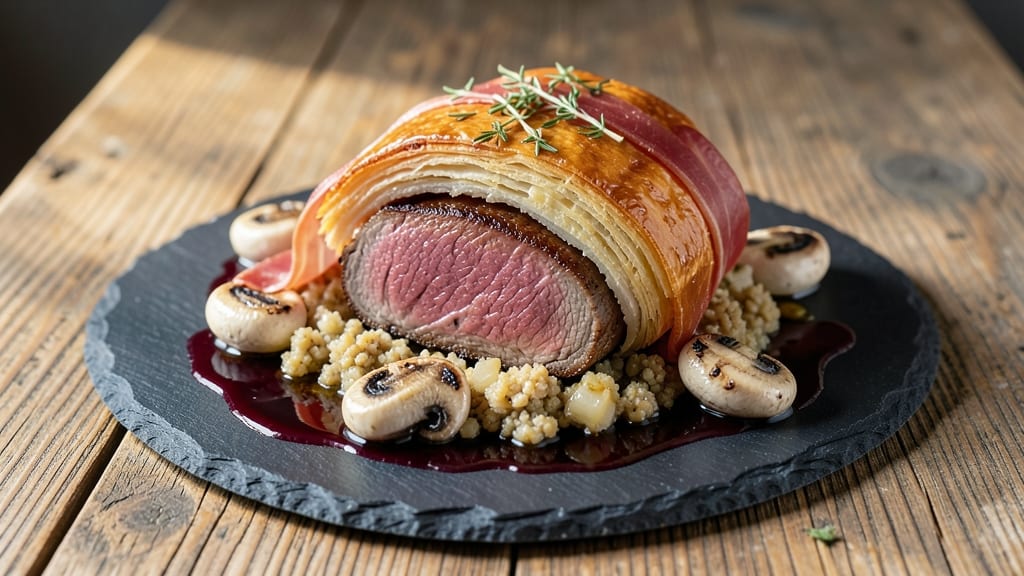
This classic beef Wellington recipe delivers the restaurant-quality centerpiece you've been craving—tender beef fillet wrapped in prosciutto, mushroom duxelles, and a golden, crispy pastry crown.
The secret lies in precise technique: searing the beef to lock in juices, carefully assembling the layers, and baking until the pastry achieves that perfect caramelized finish. After years of perfecting this dish, I can confidently say this is the only Wellington method you'll ever need.
The foundation of a great Wellington begins with the duxelles—a finely chopped mushroom mixture that adds earthy depth and moisture to the beef. Thinly sliced prosciutto wraps the fillet, creating a flavorful barrier that keeps the meat juicy while adding salty contrast.
The pastry isn't just for show; it must be rolled thin enough to crisp beautifully without overwhelming the delicate filling. Every step matters, from the initial sear to the final resting period.
When served, you'll have a showstopping main course with a perfectly cooked beef center—rare but not cold, surrounded by tender prosciutto and rich duxelles. The pastry crown will be golden and crisp, flaking apart just slightly to reveal the luscious filling beneath.
This is the kind of dish that makes dinner parties memorable, transforming an ordinary meal into an elegant experience worthy of any occasion.
While this recipe requires attention to detail, the results are worth every effort. The technique builds confidence with each step, and the final presentation will impress even the most discerning guests. Let's get started on creating your restaurant-worthy Wellington at home.
Ingredients for classic beef wellington
Elevate your dinner game with these premium ingredients for a showstopping Wellington.
| Ingredient | Amount | Notes |
|---|---|---|
| Beef Tenderloin Fillet 🥩 | 1 ½ lb | Center-cut, 1-inch thick, trimmed of fat |
| Prosciutto di Parma 🥓 | 6 oz | Thinly sliced, high-quality |
| White Mushrooms 🍄 | 1 lb | Fresh, cremini or button |
| Shallots 🧅 | 2 whole | Peeled, finely minced |
| Garlic Cloves 🧄 | 4 cloves | Peeled, finely minced |
| Dijon Mustard 🍯 | 2 tbsp | High-quality, smooth |
| Extra-Virgin Olive Oil 🫒 | 2 tbsp | For cooking mushrooms |
| Unsalted Butter 🧈 | 2 tbsp | Cold, for pastry |
| All-Purpose Flour 🌾 | 1 cup | For pastry dough |
| Cold Water 💧 | ¼ cup | For pastry dough |
| Diamond Crystal Kosher Salt 🧂 | ½ tsp | For seasoning |
| Freshly Ground Black Pepper 🌶️ | ¼ tsp | For seasoning |
| Fresh Thyme Leaves 🌿 | 2 tbsp | Finely chopped |
| Dry White Wine 🍷 | ½ cup | For deglazing |
| Heavy Cream 🥛 | ¼ cup | For brushing pastry |
The beef tenderloin is non-negotiable—center-cut, 1-inch thick ensures even cooking and optimal tenderness. Source from a trusted butcher like D'Artagnan or your local specialty grocer; ask for the most marbled section of the tenderloin for extra richness. Prosciutto di Parma adds luxury; avoid pre-sliced deli ham—the authentic Italian prosciutto has a delicate saltiness that enhances the dish. For mushrooms, cremini or button varieties work best, but avoid pre-sliced—they release too much moisture. Shallots should be fresh, firm, and pale; yellowing indicates age. Garlic should be plump and firm, not sprouting or soft.
No prosciutto di Parma? High-quality dry-cured ham works in a pinch, but it lacks the same depth of flavor. Substitute cremini mushrooms for button if needed, but avoid portobello—they're too dense and won't cook evenly. Short on shallots? Substitute 1 tbsp minced red onion, but reduce to half the amount. For the Dijon mustard, avoid powdered versions—they lack the tang needed for binding the duxelles. The white wine should be dry and crisp; Sauvignon Blanc works well, but avoid sweet varieties. Heavy cream must be full-fat for optimal pastry brushing—light cream won't crisp properly.
Store the beef tenderloin, wrapped in parchment and plastic, in the coldest part of your fridge for up to 3 days. Prosciutto keeps for 2 weeks in the fridge, but use within 1 week for peak flavor. Mushrooms should be used within 5 days of purchase; store in a paper bag in the fridge. The pastry dough can be made 1 day ahead and stored wrapped in plastic. For the duxelles, make it 1 day before assembly—the flavors meld beautifully overnight. The finished Wellington can be assembled 4 hours ahead and refrigerated before baking.
Why You'll Love This Recipe
- One-Pan Magic: I swear by this—no chopping boards, no extra pans. Just sear the mushrooms and shallots in the same dish you’ll bake the beef. The prosciutto melts into the mushroom duxelles like butter on toast, and cleanup? One spatula, one pan. Done.
- Umami Bomb: That crispy prosciutto-wrapped beef with the earthy mushroom paste? It’s the kind of flavor that makes you pause mid-bite. The shallots and garlic caramelize into something sweet and savory, while the prosciutto adds this salty, smoky punch that cuts through the richness. Honestly, it’s the kind of dish that makes you want to call everyone over.
- Date Night Ready: Between us, this is my go-to for when I want to feel fancy without trying too hard. The presentation? Impressive enough for company, but the taste is what sells it. Serve it with a glass of red and some roasted potatoes, and suddenly you’re hosting a dinner party—no Pinterest-perfect skills required.
- Leftovers That Don’t Suck: Most fancy dishes turn into sad leftovers, but not this one. The beef stays tender for days, and the mushroom paste reheats like a dream. I’ll be real: I’ve had it cold the next day in a sandwich (yes, really) and it still tasted like a million bucks. Plus, the prosciutto adds this extra layer of flavor that makes every bite feel special.
Step-by-step instructions for crafting the perfect beef Wellington
Here's the method that delivers a restaurant-quality Wellington with tender beef and flawless pastry.
Prepare the Duxelles and Season the Fillet
Begin by creating the duxelles—the aromatic mushroom paste that will stuff your beef. Finely chop the 1 lb white mushrooms and transfer them to a nonstick skillet. Cook over medium heat with the 2 tbsp extra-virgin olive oil for 8-10 minutes until all moisture evaporates and the mushrooms turn golden brown. Add the 2 minced shallots and 4 minced garlic cloves, cooking for another 3 minutes until soft and fragrant.
Remove from heat and stir in the 2 tbsp finely chopped fresh thyme leaves. Let the mixture cool completely before using. Meanwhile, pat the 1.5 lb beef tenderloin fillet dry with paper towels and season both sides generously with the 0.5 tsp diamond crystal kosher salt and 0.25 tsp freshly ground black pepper. Spread the 2 tbsp dijon mustard evenly over the surface of the fillet.
Assemble the Wellington with Prosciutto and Duxelles
Lay out the 6 oz thinly sliced prosciutto di parma on a clean work surface. Place the seasoned beef fillet in the center of the prosciutto, then spread the cooled duxelles evenly over the mustard-coated surface. Gently roll the prosciutto and beef together, using the prosciutto to completely encase the fillet. Secure with kitchen twine at 1-inch intervals, creating a tight cylindrical package.
Chill the wrapped fillet in the refrigerator for 15-20 minutes while you prepare the pastry. This brief resting period helps the prosciutto adhere better and prevents the filling from shifting during baking.
Create the Pastry Wrapping and Seal the Wellington
In a food processor, combine the 1 cup all-purpose flour, 2 tbsp cold unsalted butter, and pinch of salt. Pulse until the butter is pea-sized. Add the 0.25 cup cold water and pulse until the dough just comes together. Shape into a disk, wrap in plastic, and chill for 20 minutes.
Roll out the chilled dough on a lightly floured surface to create a large rectangle approximately 12x16 inches. The dough should be about 1/8-inch thick. Brush the surface with the 0.25 cup heavy cream, then carefully place the chilled beef package in the center. Fold the dough up around the package, overlapping the edges by about 1 inch. Trim and seal the edges with a fork, pressing gently to create a decorative pattern.
Bake to Golden Perfection
Preheat your oven to 425°F. Place the assembled Wellington on a parchment-lined baking sheet and brush the entire surface with additional heavy cream. Bake for 30-35 minutes, until the pastry reaches a deep golden brown color and the internal temperature of the beef reaches 125°F for medium-rare.
Remove from the oven and let rest for 15 minutes before slicing. This resting period allows the juices to redistribute, ensuring each slice remains perfectly tender. For presentation, slice the Wellington into 1-inch thick rounds and serve immediately with a red wine reduction or roasted vegetables.
Pro Tips For Making Classic Beef Wellington
- Trim the Prosciutto Thin: Cut those Parma slices paper-thin—no thicker than 1/16 inch—so they crisp without overwhelming the beef. I used to eyeball it and end up with chewy, soggy prosciutto that ruined the texture. A sharp knife and a steady hand (or a mandoline if you’re impatient) make all the difference.
- Sear the Beef Hard: Get that crust deep brown, not just light brown—it’s the only way the Wellington holds together. I learned this the hard way when my first attempt came out undercooked and fell apart. High heat for 3-4 minutes per side, no rushing.
- Dry the Mushrooms Well: Pat those sliced mushrooms bone dry with paper towels before cooking—they’ll brown beautifully and won’t turn to mush. Wet mushrooms mean a watery duxelles, and nobody wants that. (Yes, even if you’re impatient like me.)
- Rest the Meat Twice: Let the beef rest 10 minutes after searing, then again 15 minutes after baking—this guarantees juicy slices, not a dry mess. I skipped the second rest once and regretted it. (Your future self will thank you.)
Serving suggestions for this recipe
Plating Presentation
Slice the Wellington into 1-inch thick rounds using a sharp chef's knife, cutting through the pastry and filling cleanly. Arrange each slice on a white or dark slate plate to highlight the golden crust and rich filling.
I like to fan the slices slightly apart for an elegant, restaurant-worthy presentation. 🍽️
Sauce Pairings
Serve with a red wine reduction made from the pan drippings—deglaze with ½ cup dry white wine, simmer until thickened, then finish with 1 tbsp cold butter. Alternatively, a truffle-infused béchamel adds luxurious depth. Both sauces complement the beef's richness beautifully.
Vegetable Sides
Roasted duchesse potatoes or haricots verts with brown butter provide the perfect textural contrast. For a lighter option, a mixed greens salad with shaved fennel and a lemon vinaigrette balances the richness. I often serve asparagus with a sprinkle of flaky salt for a simple yet sophisticated pairing.
Wine Recommendations
A bold Cabernet Sauvignon or Syrah from Bordeaux or the Rhône Valley pairs exceptionally with Wellington. The tannins cut through the pastry's richness, while the fruitiness complements the beef's depth. For a lighter option, a Pinot Noir with bright acidity works beautifully. 🍷
Garnishing Touches
Add a final touch with fresh thyme sprigs or edible flowers for color contrast. A drizzle of truffle oil or a sprinkle of flaky sea salt elevates the dish further. I avoid over-garnishing—let the Wellington shine as the star of the plate.
Serving Temperature
Serve the Wellington immediately after slicing while the pastry is still crisp and the beef is perfectly warm. The internal temperature should be 125°F for medium-rare—use a meat thermometer to check. Allowing it to rest for 10-15 minutes before serving ensures the juices stay locked in. ⏰
Nutrition facts
Frequently asked questions
Can I make the Wellington ahead of time?
The Wellington assembly can be done 4 hours ahead and refrigerated, but bake it just before serving for the best pastry texture. The duxelles can be made 1 day ahead—it actually tastes better after flavors meld overnight. Never freeze the assembled Wellington, as the pastry loses its crispness when thawed.
What's the best way to prevent the pastry from getting soggy?
Keep the pastry dough thin (1/8-inch thick) and roll it out just before wrapping. Brush with heavy cream before baking to create a moisture barrier. Also, ensure the beef is completely dry before assembling, and chill the wrapped fillet for 15-20 minutes before adding the pastry.
How do I know when the beef is perfectly cooked?
Use a meat thermometer to check the internal temperature—125°F for medium-rare is ideal. The beef will continue rising 5°F while resting. For medium, aim for 135°F. Never overcook; the beef should be slightly pink in the center when sliced.
What if I don't have prosciutto di Parma?
Use high-quality dry-cured ham like serrano or black forest ham instead. Avoid deli ham—it's too salty and lacks the delicate flavor. If substituting, reduce the amount to 4 oz to prevent overwhelming the dish with saltiness.
Can I bake this in a convection oven?
Yes, but reduce the temperature to 400°F and bake for 25-30 minutes instead. Convection ovens cook faster, so monitor closely to avoid over-browning. The pastry may crisp slightly faster, so check at 20 minutes for doneness.