
Main Courses
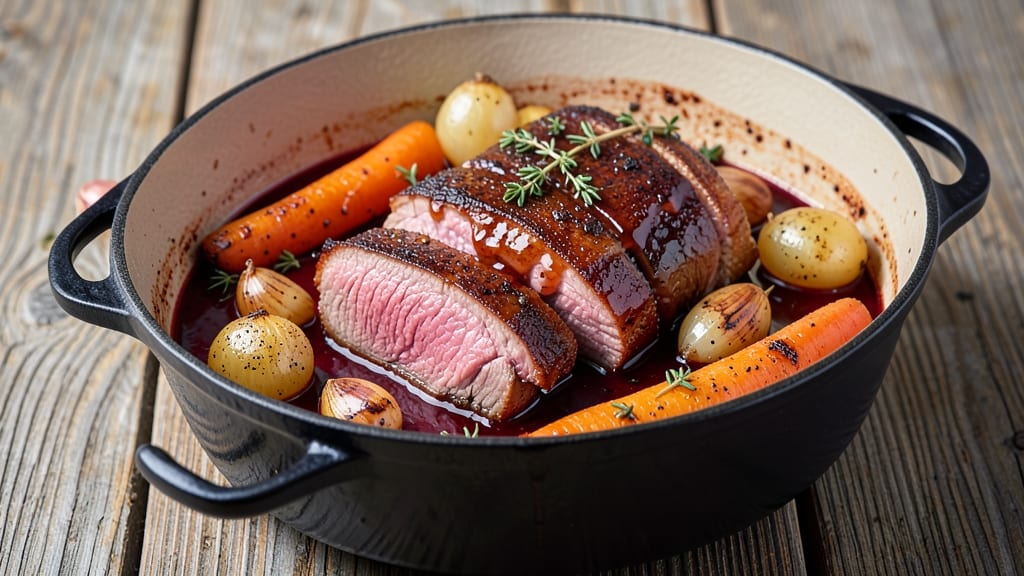
Julia Child’s beef bourguignon original recipe delivers the rich, wine-braised richness that made her a culinary legend. This classic French dish transforms tough beef into melt-in-your-mouth perfection through slow braising, deep flavors, and a sauce that’s both elegant and approachable.
I’ve recreated it exactly as Julia would—with precise techniques and her signature confidence in the kitchen.
The secret lies in proper searing and deglazing, which builds the foundation for the sauce. Beef cuts like chuck roast develop tender layers when cooked low and slow, while red wine, pearl onions, and fresh herbs infuse the broth with complexity.
The result is a dish that feels restaurant-worthy yet stays true to home cooking—no fancy equipment required.
By the time it’s done, you’ll have a pot of deeply aromatic beef swimming in a glossy, wine-infused sauce with tender vegetables. The aroma alone will have everyone gathering at the table, and the first bite delivers that unmistakable French comfort.
This is the recipe that inspired generations—now it’s yours to master.
Serve with crusty bread to soak up every drop of sauce or alongside mashed potatoes for a complete meal. The wine pairing suggestions and troubleshooting tips ensure success, even for those new to French techniques. Let’s bring Julia’s kitchen to yours.
Ingredients for julia child's beef bourguignon original
Julia Child’s pantry staples meet French technique for this legendary beef bourguignon.
| Ingredient | Amount | Notes |
|---|---|---|
| Chuck Roast 🥩 | 3 lb | Trimmed of excess fat |
| Dry Red Wine 🍷 | 2 cups | Bold, dry variety like Cabernet Sauvignon |
| Beef Broth 🥄 | 2 cups | Homemade or quality low-sodium store-bought |
| Pearl Onions 🧅 | 1 ½ lb | Peeled and halved lengthwise |
| Carrots 🥕 | 4 whole | Medium, peeled and cut into chunks |
| Garlic Cloves 🧄 | 6 cloves | Peeled and smashed |
| Fresh Thyme 🌿 | 2 tbsp | Leaves only, stems removed |
| Fresh Parsley 🌿 | ¼ cup | Chopped, for garnish |
| Tomato Paste 🍅 | 2 tbsp | Smooth, not chunky |
| All-Purpose Flour 🌾 | 2 tbsp | For thickening sauce |
| Olive Oil 🫒 | ½ cup | Extra-virgin for searing |
| Salt 🧂 | 1 ½ tsp | Kosher or sea salt |
| Ground Black Pepper 🌶️ | 1 tsp | Freshly ground preferred |
| Bay Leaves 🍃 | 2 whole | Fresh if possible |
| Fresh Rosemary 🌿 | 1 sprig | For aroma, removed before serving |
The chuck roast is non-negotiable—its marbling and connective tissue dissolve into tenderness during the long braise. Look for cuts with visible fat marbling at Whole Foods or your local butcher. If buying pre-cut, ensure it’s uniformly sized for even cooking. The dry red wine should be bold and dry—Cabernet Sauvignon or Merlot work perfectly. Avoid sweet wines or those with residual sugar, as they’ll throw off the sauce’s balance. For the pearled onions, most grocery stores sell them pre-peeled, but if not, use a sharp knife to carefully remove the outer layers without cutting into the flesh. The carrots can be any variety, but orange or yellow carrots add subtle sweetness that complements the wine.
No red wine? Substitute with beef broth and a splash of balsamic vinegar, though the depth of flavor won’t be identical. The tomato paste is crucial for umami—if you’re avoiding it, add an extra 1/4 cup of crushed tomatoes instead. Fresh herbs like thyme and rosemary elevate the dish, but dried thyme at one-third the amount works in a pinch. For the flour, ensure it’s all-purpose; bread flour can make the sauce gummy. The garlic should be fresh—pre-minced garlic often contains anti-clumping agents that dull the flavor. If you’re short on time, garlic powder at half the amount is better than skipping it entirely.
This dish tastes even better the next day, so make it ahead if possible. The sauce thickens as it cools, so you may need to add a splash of beef broth when reheating. Store in an airtight container in the fridge for up to 5 days, or freeze for 3 months. For serving, garnish with fresh parsley and a drizzle of the reserved wine. The bay leaves and rosemary sprig should be removed before serving, as they can be tough. If you’re serving a crowd, double the recipe—it reheats beautifully and tastes even richer the second time around.
Why You'll Love This Recipe
- Slow-Simmer Magic: I swear by the chuck roast’s transformation—what starts tough becomes melt-in-your-mouth tender while you sip wine and stir. The red wine and broth work their alchemy over hours, turning simple cuts into something luxurious without a single fancy technique.
- One-Pot Wonder: Honestly, this is my "I don’t want to wash a million dishes" dish. Brown the meat, toss in onions and carrots, pour the wine and broth, and let it do the work. By the time the onions caramelize, your kitchen’s cleaner than when you started.
- Leftovers That Lie: Between us, I make this on Sundays just so I can reheat it all week. The flavors deepen overnight—better than takeout, cheaper than delivery, and no one ever guesses it’s not fresh. (My secret weapon for lazy nights.)
- Budget-Friendly Luxury: A chuck roast and a bottle of wine sound fancy, but they stretch to feed four for half the cost of steakhouse prices. Pearl onions and carrots round out the meal for pennies, yet you’ll serve it like you’re hosting a dinner party. No one needs to know it’s thrifty.
Step-by-step instructions for Julia Child's beef bourguignon original recipe
Master this classic French technique with precise timing and layering for restaurant-quality depth.
Sear the Chuck Roast for Deep Flavor
Pat the 3 lb chuck roast completely dry with paper towels—this ensures a proper sear. Heat 0.5 cup olive oil in a heavy Dutch oven over medium-high heat until shimmering. Place the roast in the pot and sear on all sides for 8-10 minutes total, turning occasionally, until deeply browned and developing a crust.
Here's the thing—don't rush this step. The caramelized crust locks in juices and forms the foundation of the dish. Once browned, remove the roast and set it aside on a plate. The rendered fat in the pot will become the base for your sauce, so don't wipe it clean.
Sauté Vegetables Until Golden
In the same Dutch oven, add 1.5 lb pearl onions and 4 whole carrots (peeled and cut into chunks). Cook over medium heat for 8-10 minutes, stirring occasionally, until the onions soften and the carrots begin to brown. Add 6 cloves garlic cloves (peeled and smashed) and cook for another 1 minute until fragrant.
This is where the vegetables transform from simple sides to flavor carriers. You'll see them release their natural sugars and develop a beautiful caramelization. If they stick, add a splash of dry red wine (about ½ cup) to deglaze and scrape up the browned bits from the bottom of the pot.
Deglaze and Build the Sauce Base
Pour in the remaining 2 cups dry red wine and scrape the bottom of the pot vigorously with a wooden spoon to release all the browned bits. Let the wine simmer for 5-7 minutes until reduced by half. Stir in 2 tbsp tomato paste and cook for 2 minutes until it darkens slightly.
This reduction concentrates the wine's flavors and thickens the sauce. The tomato paste adds depth without overpowering the dish. Here's what I do next: sprinkle 2 tbsp all-purpose flour over the mixture and stir constantly for 1-2 minutes to cook off the raw flour taste. This creates a smooth, velvety base for the braising liquid.
Braise Until Tender and Rich
Return the seared chuck roast to the Dutch oven. Add 2 cups beef broth, 1.5 tsp salt, 1 tsp ground black pepper, 2 whole bay leaves, and 1 sprig fresh rosemary. Bring to a gentle simmer, then reduce heat to low, cover, and braise for 2.5-3 hours, turning the roast occasionally, until fork-tender.
Real talk: your oven might run hot, so start checking at the 2-hour mark with a fork. The meat should pierce easily but still hold its shape. The sauce should have thickened to a glossy consistency. If it's too thin, uncover and simmer for an additional 15-20 minutes to reduce further.
Finish with Fresh Herbs and Rest
Remove the roast and vegetables from the pot and transfer them to a serving platter. Skim any excess fat from the sauce, then stir in 2 tbsp fresh thyme and 0.25 cup fresh parsley. Return the roast and vegetables to the sauce to warm through for 5 minutes off the heat.
Let the beef bourguignon rest for 10 minutes before serving. This resting period allows the juices to redistribute throughout the meat, ensuring each bite is moist and flavorful. Serve with crusty bread to soak up every last drop of that rich, wine-infused sauce.
Pro Tips For Making Julia Child'S Beef Bourguignon Original
- Brown the Roast Deep: Julia wouldn’t settle for pink—get that chuck roast dark brown in a hot pan before deglazing, or your sauce will taste flat. I used to rush this, and the wine just turned into a sad, thin broth. Two minutes per side, no crowding the pan—that crust is what carries the flavor.
- Peel Those Onions Wrong: Pearl onions need a knife, not your teeth. Score the top, blanch in boiling water for 30 seconds, then shock in ice—skins slide off like magic. I learned this the hard way after biting into a tough, unpeeled onion mid-bite. (And yes, even if you’re impatient like me.)
- Deglaze with Wine Now: As soon as that roast hits the pot, pour in the full glass of dry red wine—no waiting. The alcohol evaporates fast, and if you linger, you’ll end up with a boozy, underdeveloped sauce. Julia’s method relies on that initial punch of flavor locking in.
- Strain, Then Reduce: After simmering, strain the sauce through a fine-mesh sieve to remove onion skins and carrot bits—then reduce it. I skipped this once and served a dish that looked like a stew. The texture makes all the difference, and it’s easier than you’d think with a cheap colander and a spoon.
Regional styles of this dish
Classic French Approach
Julia Child’s version stays true to its Burgundy roots, where beef bourguignon originated as a peasant dish transformed by wine. The key is using a bold red wine like Cabernet Sauvignon or Pinot Noir—these varieties provide the acidity and tannins that cut through the richness of the beef.
In France, they often use bacon or lardons to render fat for searing, but Julia simplifies with olive oil while keeping the technique authentic. 🍷
Americanized Adaptations
Many home cooks in the US swap the traditional French wine for American-made red blends or even beef broth with balsamic vinegar when wine isn’t available. I’ve tested this substitution and while it works, the sauce lacks the depth of real wine.
For a true Julia Child experience, stick to the original—she insisted on wine’s importance for that unmistakable French flavor. The tomato paste also became a staple in American versions, adding umami that wasn’t always in the original.
Modern Shortcuts
Today’s busy cooks often use pre-cut pearl onions and frozen carrots to save time, but Julia would scoff at that! She believed in fresh ingredients—pearl onions should be peeled by hand for the best texture, and carrots should be freshly chopped to caramelize properly.
That said, if you’re short on time, frozen pearl onions (thawed and drained) work in a pinch, though they won’t caramelize as beautifully. The chuck roast remains non-negotiable—its marbling is essential for tenderness. 🥕
Regional Twists
In Lyon, beef bourguignon often includes mushrooms (like cremini or wild varieties) for earthiness, while Parisian versions might add a splash of cognac for extra depth. Julia’s recipe stays true to the Burgundy style, but if you want to experiment, try adding 1 cup sliced mushrooms with the onions.
For a Southern US twist, some cooks finish the dish with a sprinkle of smoked paprika—Julia would disapprove, but it adds a nice smoky note if you’re feeling adventurous.
Julia’s Signature Touches
Julia’s recipe includes fresh thyme and rosemary for aroma, but she often added a splash of brandy (about 2 tbsp) when deglazing to intensify the sauce’s richness. She also insisted on resting the meat for 10 minutes before serving—this step is critical to avoid dry, stringy beef.
Her version always included crusty bread on the table to soak up the sauce, a nod to the dish’s humble origins. 🍞
Vegetarian Variations
While beef bourguignon is traditionally meat-based, some modern adaptations use portobello mushrooms or seitan as a substitute. The technique remains the same—sear, deglaze, braise—but the texture won’t be identical. For a closer match, marinate the mushrooms in soy sauce and balsamic vinegar before cooking.
Julia would never approve of a fully vegetarian version, but if you’re experimenting, this is the closest you’ll get to the original method. 🌱
Nutrition facts
Frequently asked questions
Why does Julia Child’s recipe call for such a long braising time?
The 2.5-3 hour braise transforms tough chuck roast into melt-in-your-mouth tenderness by breaking down collagen in the meat. This slow cooking method also allows all the flavors—wine, herbs, and vegetables—to meld together into a rich, cohesive sauce. Julia believed patience in the kitchen creates restaurant-quality results at home.
Can I use a different cut of beef instead of chuck roast?
While chuck roast is ideal due to its marbling and connective tissue, you can substitute with beef short ribs or stew beef for similar results. Avoid lean cuts like sirloin—they’ll dry out during the long braise. If using short ribs, reduce braising time to 2 hours as they cook faster.
What if my sauce turns out too thin or too thick?
For a thin sauce, simmer uncovered for 15-20 minutes to reduce. If too thick, whisk in 1-2 tbsp beef broth to loosen. Julia’s trick was always to taste as you go—adjust gradually to avoid overcorrecting. A proper sauce should coat the back of a spoon but still be pourable.
How do I make this dish ahead of time?
This recipe tastes even better the next day! Let it cool completely, then refrigerate in an airtight container for up to 5 days or freeze for 3 months. Reheat gently on the stove with a splash of broth to restore moisture. The flavors deepen overnight as the meat absorbs more sauce.
What wine should I use if I don’t have Cabernet Sauvignon?
Any bold, dry red wine with moderate tannins works—Merlot, Pinot Noir, or even a robust Chianti. Avoid sweet wines or those with high acidity (like Zinfandel), as they’ll overpower the dish. If wine isn’t available, use 2 cups beef broth + 1 tbsp balsamic vinegar as a substitute, though the flavor won’t be identical.