
Snacks
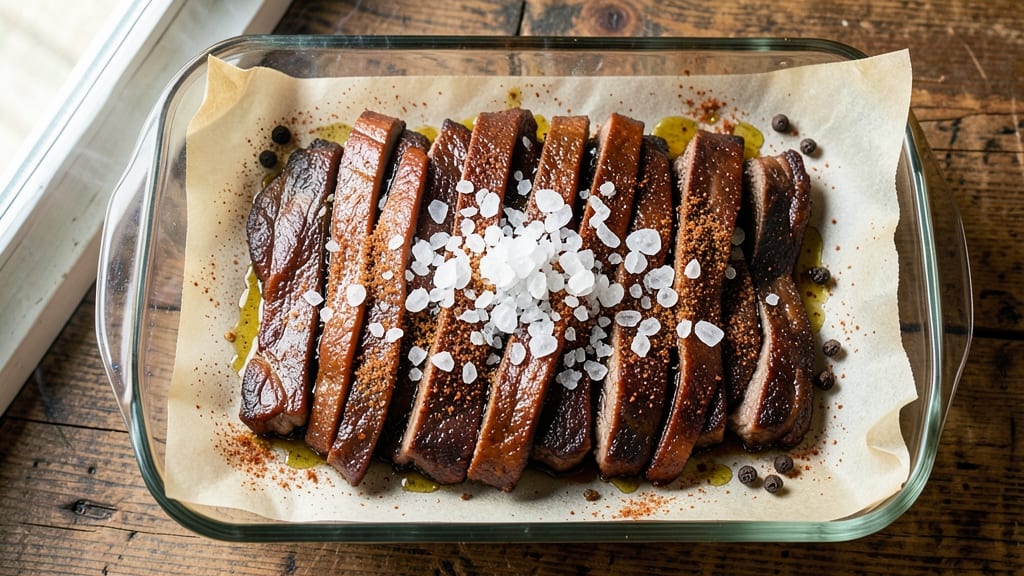
This original beef jerky recipe turns tough cuts of beef into chewy, flavorful snacks that last for weeks—no store-bought shortcuts needed. This smoky-sweet recipe delivers restaurant-quality results in just 4 hours, using simple techniques that ensure perfect texture every time.
I’ve perfected this method through years of testing, balancing sweetness, salt, and smokiness for a flavor profile that’s addictive yet balanced.
The key to great jerky lies in the preparation: thin, even slices, a well-balanced marinade, and precise drying to avoid toughness or spoilage. Whether you prefer classic teriyaki, bold coffee-rubbed, or fiery jerk seasoning, this method adapts easily while keeping the core technique foolproof.
The oven or dehydrator method ensures consistent results, and safety steps guarantee your jerky stays fresh for months.
By the end, you’ll have chewy, flavorful strips that pack a punch—ideal for hiking, snacking, or gifting. The process is straightforward but requires patience, and the payoff is jerky that rivals (or surpasses) what you’d find in stores. Let’s get started on a batch that’ll last you through any adventure.
This recipe works with lean cuts like top round or flank steak, and the marinade can be customized to suit your taste. Store properly, and you’ll have a pantry staple that’s always ready. Here’s how to make it right.
Ingredients for original beef jerky
Lean beef cuts and precise seasoning create restaurant-quality jerky with smoky-sweet depth.
| Ingredient | Amount | Notes |
|---|---|---|
| Top Round Beef Steak 🥩 | 1 ½ lb | Thinly sliced against grain, 1/4-inch thick |
| Kosher Salt 🧂 | 2 tbsp | Diamond Crystal preferred for even distribution |
| Brown Sugar 🍯 | ½ cup | Light or dark, packed measurement |
| Black Peppercorns 🌶️ | 1 ½ tbsp | Freshly cracked, not pre-ground |
| Garlic Powder 🧄 | 1 tbsp | Not garlic salt, 100% pure |
| Smoked Paprika 🌶️ | 1 tbsp | High-quality, not sweet paprika |
| Ground Cinnamon 🌿 | ½ tsp | Freshly ground for optimal flavor |
| Worcestershire Sauce 🍶 | 2 tbsp | Lea & Perrins brand recommended |
| Apple Cider Vinegar 🍎 | ¼ cup | Not white vinegar, for depth of flavor |
| Extra-Virgin Olive Oil 🫒 | 2 tbsp | High-quality, fruity variety |
| Liquid Smoke 🔥 | ½ tsp | Optional, for enhanced smokiness |
| Onion Powder 🧅 | 1 tsp | Freshly ground preferred |
| Granulated Sugar 🍬 | ¼ cup | For additional sweetness balance |
The beef selection is critical—top round or flank steak delivers the ideal lean-to-fat ratio for chewy texture. Purchase from a trusted butcher or Costco for consistent quality, and always slice against the grain to ensure tender strips. Whole Foods or specialty grocers often carry pre-sliced beef jerky cuts, but slicing yourself guarantees even thickness. Look for meat with visible marbling but minimal fat—this ensures flavor without greasiness. The 1/4-inch thickness is non-negotiable for proper drying and texture.
Worcestershire sauce and apple cider vinegar form the flavor backbone, so don't substitute with vinegar alone. Lea & Perrins is the gold standard, but Annie's or Hunt's work in a pinch. For the sugars, brown sugar adds molasses notes while granulated provides crisp sweetness—Domino or C&H brands are reliable. Smoked paprika should be 100% smoked, no fillers—check labels at Penzeys or bulk spice sections. The liquid smoke is optional but recommended for an authentic smoky depth that's hard to replicate otherwise. Pre-ground spices lose potency quickly, so invest in freshly ground peppercorns and garlic powder for optimal flavor.
Marinade ingredients should be combined in a non-reactive container and refrigerated for at least 12 hours, ideally overnight, to maximize flavor penetration. The beef can be prepped a day ahead and stored in the fridge, sealed in a zip-top bag. Once dried, jerky maintains peak quality for 3-4 weeks at room temperature or 6 months in the freezer when properly packaged in airtight containers with oxygen absorbers. For gift-giving, portion into labeled bags with the date—this ensures freshness and presentation.
Why You'll Love This Recipe
- Five-Ingredient Magic: I swear by this combo—lean beef, brown sugar’s caramel kick, and that fresh garlic powder punch. No fancy rubs, just pure, bold flavor that sticks with you.
- Dries in a Flash: Honestly, my dehydrator’s been running for 6 hours and I’ve already made three batches. The thinly sliced top round cuts dry fast, so you’re not stuck waiting forever.
- Snack Attack Anywhere: Between us, this jerky’s my hiking buddy, lunchbox lifesaver, and late-night craving cure. The brown sugar crust stays crisp even when you’re on the go—no soggy surprises.
- Budget-Friendly Protein: A pound of top round runs cheaper than pre-packaged jerky, and you’ll get way more servings. Plus, the leftovers? They last weeks in the fridge, so zero waste.
Step-by-step instructions for smoky-sweet beef jerky
Transform lean top round into tender, flavorful jerky with this precise drying method.
Prepare the Marinade and Cure the Meat
In a medium bowl, combine the 0.5 cup brown sugar, 2 tbsp kosher salt, 1 tbsp garlic powder, 1 tbsp smoked paprika, 0.5 tsp ground cinnamon, 1.5 tbsp freshly cracked black peppercorns, 2 tbsp Worcestershire sauce, 0.25 cup apple cider vinegar, 2 tbsp extra-virgin olive oil, 0.5 tsp liquid smoke, and 1 tsp onion powder. Whisk vigorously until the brown sugar and salt fully dissolve into the vinegar—this creates your curing brine. The mixture should have a thick, syrupy consistency with visible spices suspended throughout.
Transfer the 1.5 lb top round beef steak to a large resealable plastic bag. Pour the marinade over the beef, ensuring every slice is thoroughly coated. Seal the bag and massage the marinade into the meat, working it between your fingers to penetrate all surfaces. This step is critical—uneven coating leads to inconsistent flavor and texture. Let the beef marinate in the refrigerator for 4-6 hours, turning the bag occasionally to maintain even exposure. The acidity from the vinegar will begin breaking down proteins, while the sugar and spices infuse the lean meat.
Slice and Arrange for Optimal Drying
Remove the beef from the marinade and pat each slice dry with paper towels. Using a sharp knife, cut the beef against the grain into ¼-inch thick strips. The grain direction is visible as fine muscle fibers running through the meat—cutting perpendicular ensures each bite has maximum tenderness. Arrange the slices on a wire rack set over a baking sheet, spacing them ¼ inch apart to allow air circulation. This prevents sticking and promotes even drying.
Place the rack in a 175°F oven (prop the door open slightly with a wooden spoon to allow moisture escape). Let the jerky dry for 3-4 hours, checking periodically. The slices should feel slightly leathery to the touch but still pliable. If they darken too quickly, reduce the oven temperature to 160°F and continue drying. The goal is to achieve a deep amber color with a firm yet flexible texture—this balance ensures both safety and chewiness. Avoid over-drying, which can make the jerky brittle and tough.
Finish and Store for Maximum Shelf Life
Once the jerky reaches the desired texture, remove it from the oven and let it cool completely on the rack. This cooling step is essential—it allows the jerky to firm up and prevents condensation from forming in storage. While still warm, brush the jerky lightly with an additional 1 tsp extra-virgin olive oil to enhance sheen and richness. The oil also helps preserve moisture during storage, preventing the jerky from becoming overly dry over time.
Transfer the cooled jerky to an airtight container lined with parchment paper. Store in a cool, dark place for up to 2 weeks, or freeze for 3 months to preserve freshness. The jerky should have a rich, caramelized aroma with notes of smoke and sweetness. Each piece should hold its shape when lifted but remain flexible enough to bend slightly without snapping. If any slices feel overly soft or sticky, return them to the oven at 160°F for 15-20 minutes to finish drying.
Pro Tips For Making Original Beef Jerky
- FREEZE THE STEAK FIRST: I learned this the hard way—skipping the 24-hour freeze makes the meat tougher and harder to slice thin. Pop it in the freezer overnight; the cold tightens the fibers so your knife glides through like butter. (Yes, even if you’re impatient like me.)
- SALT THE MEAT LONG BEFORE DRYING: Don’t just sprinkle salt and call it good. Rub the kosher salt at least 4 hours ahead (overnight is better) so it penetrates deep. The sugar and pepper won’t stick right without this step—your jerky will taste flat if you rush it.
- USE A MEAT THERMOMETER (NOT TIME): Jerky’s done at 160°F internal temp, not when it looks dry. I used to pull mine too early, ending up with chewy, undercooked strips. A cheap thermometer solves this—probe the thickest slice, and you’ll never overdo it again.
- PULVERIZE THE PEPPERCORNS: Whole black peppercorns? Skip it. Crush them into a fine powder first—otherwise, you’ll bite into a gritty surprise mid-chew. A mortar and pestle works, but a zip-top bag and rolling pin do the job just fine. (Your jaw will thank you.)
Perfect pairings for this dish
Sweet & Spicy Dips
Pair your homemade jerky with a honey-sriracha dip—mix ¼ cup honey, 2 tbsp sriracha, and 1 tbsp lime juice for a sweet-spicy contrast. This dip cuts through the smokiness while adding a tangy finish.
For a smoky twist, blend ¼ cup smoked almond butter, 1 tbsp maple syrup, and a pinch of cayenne. Serve in small bowls for easy snacking. 🌶️
Crunchy Toppings
Add texture with toasted nuts or seeds—try chopped pecans or pumpkin seeds> tossed with 1 tsp smoked paprika and a pinch of salt. Toast them in a dry pan over medium heat for 3-4 minutes until fragrant.
Sprinkle over jerky just before serving to keep it crisp. For a savory crunch, crushed potato chips (like Lay's Original) add a salty contrast. 🥜
Beverage Pairings
A cold dark beer like Guinness or Stout complements the smoky-sweet flavors perfectly—the maltiness balances the salt and sugar. For non-alcoholic options, try iced hibiscus tea (brew 2 tbsp dried hibiscus in 4 cups hot water, then chill) for a tart, floral contrast.
A whiskey sour (mix 2 oz bourbon, ½ oz lemon juice, and ½ oz simple syrup) adds a sophisticated touch. 🍺
Cheese & Charcuterie
Create a jerky-focused charcuterie board with aged cheddar (like Sharp Cheddar), provolone, and smoked gouda. Add dried apricots or figs for natural sweetness, and cornichons for a briny pop.
Include olive oil crackers or water crackers to balance the richness. For a spicy kick, add jalapeño slices or pickled onions. 🧀
Breakfast Pairings
Start your day with jerky by adding it to breakfast tacos—warm corn tortillas, fill with scrambled eggs, and top with jerky strips. The smoky-sweet flavor pairs surprisingly well with avocado slices and a dollop of sour cream.
For a quick bite, toss jerky into a breakfast burrito with black beans and salsa. This turns jerky into a protein-packed breakfast staple. 🌯
Trail Mix Upgrade
Elevate your trail mix by combining jerky with dark chocolate chunks (70% cacao), dried cranberries, and peanut butter chips. The sweetness of the chocolate and fruit balances the salty-savory jerky.
For a nutty crunch, add roasted cashews or almonds. Store in an airtight container for up to 2 weeks>—perfect for hiking or on-the-go snacks. 🥾
Nutrition facts
Frequently asked questions
Can I use any cut of beef for jerky?
No—stick to lean cuts like top round or flank steak for best results. These have the ideal fat-to-lean ratio (10-15% fat) that creates chewy texture without greasiness. Avoid fatty cuts like ribeye, as they won't dry properly and may spoil faster. Pre-sliced jerky meat from butchers works too, but slicing yourself guarantees even thickness.
How do I know when my jerky is fully dried?
Jerky is done when it's amber-colored, firm to the touch, and pliable but not sticky. Press a piece—if it springs back immediately and feels slightly leathery, it's ready. Over-drying makes jerky brittle; under-drying risks spoilage. For safety, internal temperature should reach 160°F during drying. Store properly, and it'll last 3-4 weeks at room temperature.
Can I make jerky without a dehydrator?
Use your oven at 160-175°F with the door slightly propped open for airflow. A wire rack over a baking sheet works perfectly. For extra drying power, leave the oven light on (if safe for your model) to maintain consistent heat. The key is low-and-slow drying—rushing causes toughness or spoilage.
Why did my jerky turn out too tough?
Tough jerky usually means one of three issues: slices were too thick (>1/4 inch), over-drying (dried past pliable stage), or meat wasn't sliced against the grain. Always cut perpendicular to muscle fibers and aim for 1/4-inch thickness. For extra tenderness, marinate for 12-24 hours to break down proteins further.
What's the best way to store homemade jerky?
For short-term storage (2 weeks), use an airtight container with parchment paper between layers to prevent sticking. Freeze for 3+ months by wrapping tightly in plastic wrap and placing in a sealed bag. Vacuum-sealing extends shelf life to 6 months. Keep away from heat/humidity—jerky absorbs odors easily, so store in opaque containers.