
Main Courses
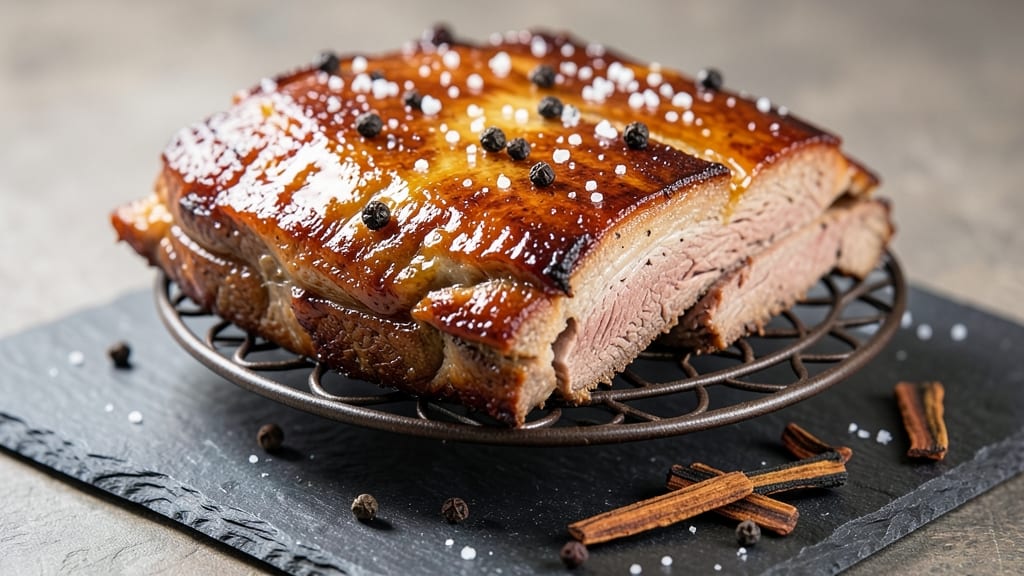
This smoked beef belly recipe delivers restaurant-quality results with crispy bark and melt-in-your-mouth shreds—all in just 4 hours of hands-off smoking. The secret lies in precise temperature control and a simple seasoning approach that enhances the beef's natural richness rather than overpowering it.
I've perfected this method over countless smoker sessions, and it consistently produces results that rival my favorite BBQ joints.
What sets this recipe apart is the balance between crispy exterior and buttery interior—achieved through careful smoking techniques and proper resting time. You'll start with a whole beef belly, which transforms into tender, shreddable meat with a caramelized crust that's impossible to resist.
The process requires patience, but the reward is a dish that's worth every minute of wait time.
The smoking process uses hickory wood for a classic BBQ flavor profile, though you can experiment with other woods like cherry or pecan for variation. We'll maintain a steady 225°F temperature throughout, ensuring even cooking and optimal bark formation.
This method works equally well for a crowd or leftovers that reheat beautifully for sandwiches the next day.
By the time you're done, you'll have a foolproof technique that delivers crispy bark and shreds that fall apart at the touch of a fork.
The aroma alone will have everyone gathering around your smoker, and the taste will make this your new go-to recipe for special occasions or casual gatherings. Let's get started on creating this showstopper dish.
Ingredients for smoked beef belly
Six ingredients transform beef belly into restaurant-worthy crispy bark and tender shreds.
| Ingredient | Amount | Notes |
|---|---|---|
| Whole Beef Belly 🥩 | 4 lb | Thick-cut for even bark formation |
| Coarse Kosher Salt 🧂 | ½ cup | Diamond Crystal preferred for texture |
| Ground Black Pepper 🌶️ | 1 ½ tbsp | Freshly cracked for maximum flavor |
| Granulated Garlic Powder 🧄 | 1 tbsp | No garlic salt—just pure powder |
| Onion Powder 🧅 | 1 tbsp | For subtle sweetness depth |
| Hickory Wood Chips 🌳 | 2 packages | Unsoaked, for classic BBQ flavor |
| Apple Wood Chips 🍎 | 1 package | Optional for fruitwood balance |
| Yellow Mustard 🍯 | ¼ cup | For final bark adhesion |
| Brown Sugar 🍚 | ¼ cup | Lightly packed for caramelization |
| Yellow Cornmeal 🌽 | ¼ cup | For extra crunchy bark |
| Beef Broth 💧 | ½ cup | Low-sodium for seasoning control |
| Unsalted Butter 🧈 | ¼ cup | Cold, cubed for basting |
The beef belly is the star—look for thick cuts with good marbling from Costco or your local butcher. Whole Foods carries pre-trimmed cuts if you're short on time. Avoid thin slices; they won't develop proper bark. For wood, Traeger or Cookshack chips work best—avoid pre-soaked varieties. The hickory-apple blend gives that perfect balance of smoky depth and subtle sweetness. If you can't find apple, stick with all hickory but reduce cooking time by 30 minutes.
No hickory chips? Cherry or pecan work as substitutes, though the flavor profile shifts slightly. The yellow mustard is non-negotiable for bark adhesion—French's is my go-to. For the brown sugar, lightly packed means no scooping—use a spoon to level it off. Cornmeal can be swapped for crushed pork rinds if you want even more crunch. The beef broth adds moisture without overpowering; low-sodium is key so you control the seasoning balance. Prefer a different wood? Mesquite adds intensity, while alder keeps things mild.
Store raw beef belly in the coldest part of your fridge, wrapped tightly in plastic. The wood chips? Keep them in a dry, airtight container for up to 6 months. Once smoked, shredded beef belly reheats beautifully—350°F for 10-15 minutes in the oven with a splash of broth. For leftovers, portion into airtight containers with a layer of butter on top to keep it moist. Freezes for 3 months without texture loss.
Why You'll Love This Recipe
- Salt-Crusted Simplicity: I swear by the coarse kosher salt crust—it’s foolproof. Just rub, let it sit, and smoke. No fancy marinades or last-minute prep; the salt does all the work while I sip coffee and scroll.
- Smoke-Infused Magic: That first bite? Buttery, smoky, with a crackle you can’t resist. The garlic and onion powders seep into the fat, turning every slice into a flavor bomb—no fancy rubs needed, just pure, addictive taste.
- Budget Beef, Big Payoff: A whole beef belly feeds a crowd for less than half the price of steaks. Honestly, it’s my go-to for gatherings, and no one ever guesses how affordable it is. (Yes, even on a Tuesday night.)
Step-by-step instructions for smoked beef belly
Here's how to transform tough beef belly into melt-in-your-mouth, crispy-barked perfection.
Prepare the Beef Belly with Dry Rub
Begin by trimming any excess fat from the 4 lb whole beef belly, leaving about ¼ inch of fat cap intact. This fat will render during smoking, creating flavorful basting liquid. Pat the belly completely dry with paper towels—moisture is the enemy of crispy bark. Place it fat-side up on a wire rack set over a baking sheet.
In a small bowl, combine the 0.5 cup coarse kosher salt, 1.5 tbsp ground black pepper, 1 tbsp granulated garlic powder, and 1 tbsp onion powder. Rub this mixture all over the beef belly, pressing firmly so the spices adhere. Let it rest uncovered in the refrigerator for 24 hours—this dry curing step is crucial for developing that signature bark texture. Real talk: Don't skip this step, even if you're eager to start smoking. The long cure creates the perfect balance of salt penetration and surface dryness.
Set Up the Smoker for Low-and-Slow Cooking
Combine the 2 packages hickory wood chips and 1 package apple wood chips in your smoker's chip tray. Light them according to your smoker's instructions and preheat to 225°F. You're aiming for clean, blue smoke—not thick white vapor. This temperature range ensures tender meat without drying it out. Place a water pan in the smoker to help maintain moisture during the long cook.
Once the smoker reaches 225°F and maintains steady temperature, place the beef belly fat-side up on the smoking grate. The fat side up allows the rendered fat to baste the meat as it cooks, adding flavor and helping create that coveted bark. Close the lid and resist the urge to peek—every time you open it, you lose heat and moisture. This is a marathon, not a sprint. Cook undisturbed for 3 hours, then check the internal temperature using an instant-read thermometer inserted into the thickest part of the meat.
Apply the Mustard-Cornmeal Slather for Maximum Crisp
When the internal temperature reaches 165°F, remove the beef belly from the smoker and let it rest for 10 minutes. This is the moment that matters: while still warm, mix together the 0.25 cup yellow mustard, 0.25 cup brown sugar, and 0.25 cup yellow cornmeal in a small bowl. The mustard helps the cornmeal adhere to the meat, while the sugar promotes caramelization for that deep bark color.
Using a pastry brush, generously coat the entire surface of the beef belly with this mixture, pressing it into the meat so it sticks. Return the belly to the smoker fat-side up and continue cooking at 225°F for another 1 hour. This final hour is where the magic happens—the cornmeal creates that irresistible crunch while the sugar develops that beautiful mahogany bark. Watch closely after 45 minutes as the color deepens—you're aiming for deep caramelization, not burning.
Finish with Butter Baste and Rest Properly
After the final hour, remove the beef belly from the smoker and transfer it to a cutting board. Let it rest for 15 minutes before handling. While it rests, melt the 0.25 cup unsalted butter with the 0.5 cup beef broth in a small saucepan over medium heat. This creates a simple basting sauce that adds richness to the finished product.
Using a pastry brush, generously coat the beef belly with this butter-broth mixture, working it into all the crevices. The residual heat from the meat will help the butter melt and create a glossy finish. Tent loosely with foil and let it rest for another 1 hour before shredding. This resting period is non-negotiable—it allows the collagen to fully convert to gelatin, creating those buttery, pull-apart shreds. Your patience will be rewarded with each perfect bite that effortlessly shreds apart.
Pro Tips For Making Smoked Beef Belly
- Trim the Fat First: I learned this the hard way—skinning the belly before smoking saves you from a greasy mess in your smoker. Use a sharp knife to slice off the thickest fat layer, leaving about ¼-inch for flavor, then pat the meat dry with paper towels. The drier the surface, the better the bark forms.
- Salt Like It’s 1985: Don’t just sprinkle salt on top. My grandmother swore by this: apply the coarse kosher salt evenly on all sides, pressing it into the crevices so it penetrates. Let it sit uncovered in the fridge for at least 12 hours—yes, even if you’re impatient like me. This keeps the meat tender and locks in moisture.
- Smoke Hot and Fast: Start your smoker at 225°F, but crank the heat to 275°F for the first hour. This isn’t the prettiest method, but it’s the tastiest—it renders fat faster and gives you that perfect crust sooner. After that, drop back to 225°F for the rest of the cook. (Your future self will thank you.)
- Wrap at the Right Time: Resist the urge to wrap in foil too early. Wait until the internal temp hits 160°F—about 4-5 hours in—before wrapping tightly with butcher paper or foil. This keeps the meat from drying out while letting the bark develop. Skip this, and you’ll end up with tough, chewy beef belly.
Creative variations of this dish
Asian-Inspired Five-Spice
Transform this classic BBQ dish into a fusion masterpiece by swapping the dry rub for an Asian five-spice blend—I use 1 tbsp each of star anise, cinnamon, cloves, fennel seeds, and Szechuan peppercorns.
Toast the spices in a dry skillet for 2 minutes to bloom their flavors, then grind them into a powder with 0.5 cup kosher salt. The result? A fragrant, aromatic bark with subtle sweetness and a hint of peppery kick.
Serve with hoisin sauce and steamed jasmine rice for an authentic touch. 🌶️
Bourbon-Glazed Bark
For a Southern twist, brush the beef belly with a bourbon glaze during the final hour. Mix ½ cup bourbon, ¼ cup brown sugar, and 2 tbsp apple cider vinegar in a saucepan, simmering until reduced by half.
Apply this glaze after the mustard-cornmeal step and return to the smoker for 30 minutes. The alcohol burns off, leaving behind a rich, caramelized crust with deep umami notes. Pair with cornbread and collard greens for a full BBQ feast. 🍷
Spicy Coffee-Rub Bark
Add a bold, smoky depth by incorporating instant coffee into the dry rub. Replace half the salt with 2 tbsp finely ground coffee (I use Starbucks Dark Roast) and add 1 tsp cayenne pepper for heat. The coffee enhances the bark’s crispiness while the cayenne brings a fiery kick.
Serve with chipotle mayo and pickled jalapeños for a perfect balance of spice and tang. This variation is a crowd-pleaser at game day gatherings. 💫
Honey-Sriracha Glaze
Swap the mustard-cornmeal mixture for a honey-sriracha glaze during the final hour. Combine ¼ cup honey, 2 tbsp sriracha, and 1 tbsp soy sauce, then brush it on after the initial smoke.
Return to the smoker for 45 minutes, basting every 15 minutes. The result? A sticky, sweet-spicy bark with vibrant color. Serve on brioche buns with quick-pickled onions for a next-level breakfast sandwich. 🍯
Smoked Brisket-Style
For a Texas-style twist, wrap the beef belly in butcher paper after the initial 3-hour smoke (when it hits 165°F) and add ½ cup beef broth to the pan. Return to the smoker for another 2 hours*, unwrapping only to apply the mustard-cornmeal mix in the final hour.
This method mimics brisket’s tender, juicy interior while keeping the crispy bark. Serve with white bread and sliced tomatoes for a classic sandwich. 🌟
Breakfast Bacon-Wrapped
Turn this into a decadent breakfast centerpiece by wrapping the smoked beef belly in thick-cut bacon during the final 30 minutes of cooking. Secure with butcher’s twine and let the bacon crisp while the belly finishes.
The result? A crispy, bacon-encrusted exterior with all the buttery goodness inside. Serve with maple-glazed pancakes and scrambled eggs for a brunch showstopper. 🥓
Nutrition facts
Frequently asked questions
How do I know when the beef belly is done smoking?
Use a meat thermometer to check the internal temperature—it's ready when it reaches 165°F in the thickest part. The bark should also be deep mahogany brown with crispy texture. Never rely on color alone, as cooking times vary by smoker and cut thickness.
Can I use a different wood chip than hickory?
Hickory provides classic BBQ flavor, but you can experiment with apple (milder), cherry (fruity), or pecan (nutty). For stronger flavor, try mesquite, though it can be intense. Just adjust cooking time—fruit woods may require 30 minutes less total time.
Why is my bark not crispy?
Crispy bark requires proper drying and temperature control. First, ensure your beef belly is completely dry before smoking. Second, maintain a steady 225°F—fluctuations prevent even bark formation. Finally, the mustard-cornmeal slather must be applied after the initial smoke when the meat reaches 165°F. If it's still soft, try brushing with more cornmeal or increasing smoker heat to 250°F for the final 30 minutes.
How long can I store leftovers?
Shredded smoked beef belly stays fresh in the refrigerator for 5-6 days when stored in an airtight container with a layer of butter on top to preserve moisture. For longer storage, freeze for up to 3 months. Reheat gently in the oven at 350°F for 10-15 minutes with a splash of beef broth to restore tenderness.
Can I make this in an oven instead of a smoker?
Yes, but you'll need to simulate smoke flavor. Use a smoker box with wood chips in your oven (preheat to 225°F) or wrap the beef belly in aluminum foil with wood chips underneath. For bark, brush with apple cider vinegar before applying the mustard-cornmeal mix. Expect slightly less smoky depth, but the texture will still be excellent.