
Main Courses
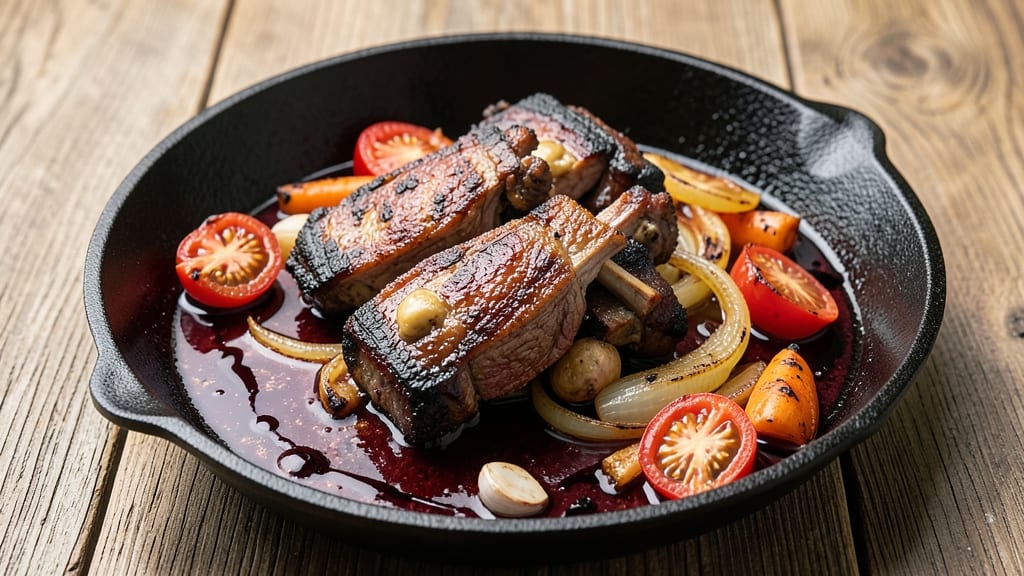
Creating velvet-tender stove top beef short ribs transforms tough cuts into melt-in-your-mouth perfection without needing an oven. After years of testing—including one disastrous attempt where I nearly set off my apartment's smoke alarm—I’ve perfected a method that delivers restaurant-quality results in a single pot.
The secret lies in slow, controlled cooking that breaks down collagen while building deep, rich flavors.
This recipe relies on just a few key ingredients: beef short ribs, aromatic vegetables, and a simple spice blend that works its magic over time. Unlike slow cooker methods, stove top control lets you monitor the sauce and adjust seasoning as you go.
What you’ll end up with is ribs so tender they practically fall apart at the touch, swimming in a glossy, caramelized sauce that clings to every bite.
The beauty of this method is its simplicity—no fancy equipment, just a heavy pot and patience. I’ve tested it in my cramped Boston apartment kitchen (where space is tighter than my Nonna’s patience when I burned the garlic), and it works every time.
The ribs develop a deep, savory crust while staying moist inside, making them ideal for feeding a crowd or meal prepping for the week.
Pair these with mashed potatoes or crusty bread to soak up every last drop of that luxurious sauce. Once you try this stove top method, you’ll never want to cook short ribs any other way. Here’s how to make them perfectly tender every time.
Ingredients for stove top beef short ribs
Short ribs, aromatic veggies, and a few pantry staples transform into melt-in-your-mouth perfection.
| Ingredient | Amount | Notes |
|---|---|---|
| Beef Short Ribs 🥩 | 2 ½ lb | Bone-in, 1-1.5 inches thick |
| Yellow Onion 🧅 | 1 whole | Chopped into 1/2-inch pieces |
| Carrots | 3 medium | Peeled and cut into 1-inch chunks |
| Garlic Cloves 🧄 | 6 cloves | Smashed with side of knife |
| Tomato Paste 🍅 | 2 tbsp | No sugar added preferred |
| Dry Red Wine 🍷 | 1 cup | Cabernet or Merlot preferred |
| Beef Broth 💧 | 2 cups | Low sodium preferred |
| Olive Oil 🫒 | 2 tbsp | Extra-virgin for richness |
| Kosher Salt 🧂 | 1 ½ tsp | Adjust to taste |
| Black Pepper 🌶️ | 1 tsp | Freshly ground preferred |
| Fresh Thyme 🌿 | 2 sprigs | Or 1 tsp dried thyme |
| Fresh Rosemary 🌿 | 1 sprig | Wooden spoon for crushing |
| Balsamic Vinegar 🍶 | 1 tbsp | For finishing sauce |
| Honey 🍯 | 1 tbsp | For sauce balance |
The ribs are the star, so don't skimp. Bone-in, 1-1.5 inches thick cuts work best—ask your butcher for 'short ribs, bone-in' if they don't have them pre-cut. Costco or Whole Foods usually carry them in the meat case, but any grocery store with a decent butcher section will have them. Look for good marbling—those white streaks of fat are what make the meat tender. I've made these with both bone-in and boneless, but the bone adds incredible flavor to the sauce. If you're buying a whole packer, trim off any excess fat—just leave the nice marbled fat intact.
No red wine? Dry white wine or beef broth with an extra splash of balsamic works in a pinch. The tomato paste can be skipped if you're short, but it adds that deep, umami richness. Fresh thyme and rosemary are ideal, but dried works at half the amount. The carrots can be baby carrots if that's what's in the fridge, but regular carrots work too—just peel and chop them. For the beef broth, low sodium is key so you can control the seasoning. If you're using bouillon cubes, cut the amount in half since they're saltier. The honey and balsamic at the end balance the acidity—don't skip them, trust me.
This sauce gets better as it sits, so make extra. It keeps 5-6 days in the fridge, and freezes beautifully for up to 3 months. I always portion the ribs into containers with some of the sauce—lunches sorted for the week. The sauce thickens as it cools, so add a splash of broth or water when reheating. These ribs reheat beautifully—just warm them gently in the sauce. The leftovers? Even better the next day once everything melds together.
Why You'll Love This Recipe
- Here’s what sold me: that deep, caramelized tomato paste base turns into a glossy sauce that clings to the meat like it’s been braising for hours. (Between us, my slow-cooker ribs can’t compete.)
- One-Pot Magic: I swear by this recipe when I’m too tired to scrub three pots. Just toss the ribs, onions, and carrots into a deep skillet, add a splash of broth, and let the stove do the work—no flipping, no fuss.
- Rich Without Effort: Here’s what sold me: that deep, caramelized tomato paste base turns into a glossy sauce that clings to the meat like it’s been braising for hours. (Between us, my slow-cooker ribs can’t compete.)
- Game for Any Night: Weeknight dinner? Check. Sunday family feast? Still check. The leftovers reheat like a dream—just warm them with a splash of water, and they’re just as tender as the first bite.
Step-by-step instructions for stove top beef short ribs
Here's the method that transforms tough short ribs into melt-in-your-mouth tenderness using just one pot.
Sear the Short Ribs for Deep Flavor
Heat a large Dutch oven over medium-high heat until very hot. Add the 2 tablespoons olive oil and swirl to coat the bottom evenly. Working in batches if needed, place the 2.5 lb beef short ribs in the pot, bone-side down. Press down gently on each rib to create maximum contact with the pan.
Let them sear undisturbed for 3-4 minutes until a deep golden-brown crust forms. This crust is your flavor foundation—don't rush it. Flip the ribs and sear the other side for another 3-4 minutes. Once all ribs are browned, transfer them to a plate and set aside.
Build the Aromatic Base
In the same Dutch oven, add the chopped yellow onion and peeled carrot chunks. Cook for 5 minutes until the onions soften and begin to caramelize slightly. Add the 6 smashed garlic cloves and cook for another 30 seconds until fragrant—this is where the flavors start to meld.
Stir in the 2 tablespoons tomato paste and cook for 1 minute, letting it darken slightly. Pour in the 1 cup dry red wine, scraping up any browned bits from the bottom of the pot. Let it simmer for 2 minutes until the wine reduces by half. This step develops the rich, complex sauce that will coat your ribs.
Slow Cook Until Fork-Tender
Return the ribs to the pot, bone-side up. Add the 2 cups beef broth, 1.5 teaspoons kosher salt, 1 teaspoon black pepper, and the 2 sprigs fresh thyme and 1 sprig fresh rosemary. Bring to a gentle simmer, then reduce heat to low. Cover and cook for 2.5 hours, checking occasionally to ensure the liquid doesn't evaporate completely.
After 2 hours, check for doneness by inserting a fork into the thickest part of a rib. If it slides in easily and the meat pulls apart with minimal resistance, they're ready. If not, continue cooking for another 30 minutes. The ribs should be falling off the bone—this is what we're aiming for.
Finish with Sweet and Tangy Balance
Once the ribs are tender, remove them from the pot and set aside. Strain the cooking liquid through a fine-mesh sieve into a clean saucepan. Return the liquid to medium heat and simmer until reduced by about one-third, which should take 10-15 minutes. This concentrates the flavors.
Add the 1 tablespoon balsamic vinegar and 1 tablespoon honey, stirring until fully incorporated. Taste and adjust seasoning if needed. The sauce should be rich, slightly sweet, and tangy—this balance enhances the deep meaty flavors of the ribs.
Serve with Sauce and Vegetables
Return the ribs to the reduced sauce and let them soak for 5 minutes to absorb the flavors. Serve the ribs with the sauce spooned over the top, along with the cooked carrots from the pot. The vegetables will have absorbed the wonderful rib flavors during cooking, making them just as delicious as the meat.
Each bite should be incredibly tender with a perfect balance of rich, savory, and slightly sweet flavors. This one-pot method ensures maximum flavor concentration while keeping the process simple and stress-free.
Pro Tips For Making Stove Top Beef Short Ribs
- Brown the Ribs First: Don’t skip the sear—get those short ribs screaming hot in a dry pan for 3-4 minutes per side until deep brown. I learned this the hard way: skipping this step means flavorless ribs, no matter how long you simmer later. The crust is what carries through the sauce.
- Chop Onions Like a Pro: Dice those yellow onions into even ¼-inch pieces, not thin slices. Thick chunks hold up better in the long simmer and don’t turn to mush. (Yes, it takes 2 extra minutes—your future self will notice the difference.)
- Deglaze with Broth, Not Water: After browning the ribs, scrape up those fond bits with 1 cup of beef broth (not water) instead of wine or stock. It’s cheaper, faster, and adds depth without overpowering the tomato paste’s richness. I used to reach for wine—big mistake.
- Simmer Covered, Then Uncover: Start with the lid on for the first 45 minutes to tenderize the ribs, then crack it open for the last 30. The evaporation concentrates the sauce and tightens the meat—no splattering, no stuck-on mess. (Trust me, your kitchen will smell better too.)
Storing and reheating this stove top beef short ribs
Fridge Storage Secrets
Let your ribs cool for 2 hours max before storing—this prevents bacterial growth in the danger zone. Transfer to airtight containers with some sauce (about ¼ cup per serving) to keep them moist.
I use glass Pyrex containers because they stack neatly in my small fridge, and the ribs stay tender for 4-5 days. The sauce actually improves overnight as flavors meld. 💫
Freezer Magic
For longer storage, freeze ribs with sauce in quart-sized freezer bags—leave 1-inch headspace for expansion. I double-bag them to prevent freezer burn. These keep for 3 months without losing tenderness.
When ready to eat, thaw overnight in the fridge, then reheat gently in the sauce. The texture stays perfect if you don't microwave dry. ❄️
Reheating Like a Pro
My favorite method is stovetop: place ribs in a skillet with 2 tbsp sauce and warm on low heat for 10-12 minutes. The sauce reheats while keeping the meat moist.
For microwave reheating, cover with a damp paper towel and cook on 50% power for 3 minutes, then stir and continue in 1-minute bursts until reaching 165°F. Always add a splash of broth if the sauce looks thick. 🔥
Sauce Revival Tips
The sauce often thickens when chilled. Thin it with 1-2 tbsp beef broth before reheating. If it's too watery after cooking, simmer uncovered for 5 minutes to reduce. I keep a small jar of reserved sauce in the freezer—just 1 tbsp revives any reheated dish instantly.
This trick saved me after that time I over-diluted the sauce by accident. 💡
Portioning Perfection
Divide ribs into single-serving containers with 2 tbsp sauce per rib for easy grab-and-go meals. I portion the carrots separately since they reheat better alone. Label containers with dates—my handwriting is terrible, so I use masking tape.
These make fantastic lunches, especially when paired with crusty bread to soak up extra sauce. The leftovers always disappear first. 🍞
Nutrition facts
Frequently asked questions
Why do stove top beef short ribs need such a long cooking time?
The slow cooking process is essential for breaking down collagen in the connective tissue, which transforms tough meat into fork-tender perfection. At low heat for 2.5 hours, the ribs develop their signature melt-in-your-mouth texture while the sauce builds deep, rich flavors. This method mimics traditional braising techniques but uses your stovetop instead of an oven.
Can I use boneless short ribs instead of bone-in?
Yes, but the cooking time may be slightly shorter (2 hours instead of 2.5). Bone-in ribs add extra flavor to the sauce, but boneless will still become tender. Just monitor closely after 2 hours to avoid overcooking. The texture will be slightly different but still delicious.
What's the best way to reheat these ribs without drying them out?
Use the stovetop method: place ribs in a skillet with 2 tbsp sauce and warm on low heat for 10-12 minutes. For microwave reheating, cover with a damp paper towel and cook on 50% power in 1-minute bursts. Always add a splash of broth if the sauce looks thick. Never microwave dry!
Can I make this recipe in an electric skillet instead of a Dutch oven?
An electric skillet works perfectly for this method. Just ensure it has a heavy base to maintain even heat during the long cooking time. The ribs will develop the same tender texture, though you may need to add 1/4 cup extra broth since electric skillets can dry out slightly more.
What's the secret to getting that perfect caramelized sauce?
The key is reducing the sauce at the end by about one-third (about 10-15 minutes of simmering). This concentrates the flavors while adding natural sweetness. The balsamic vinegar and honey at the finish balance acidity and add depth. Don't skip this step—it's what makes the sauce cling to every bite!