
Soups & Stews
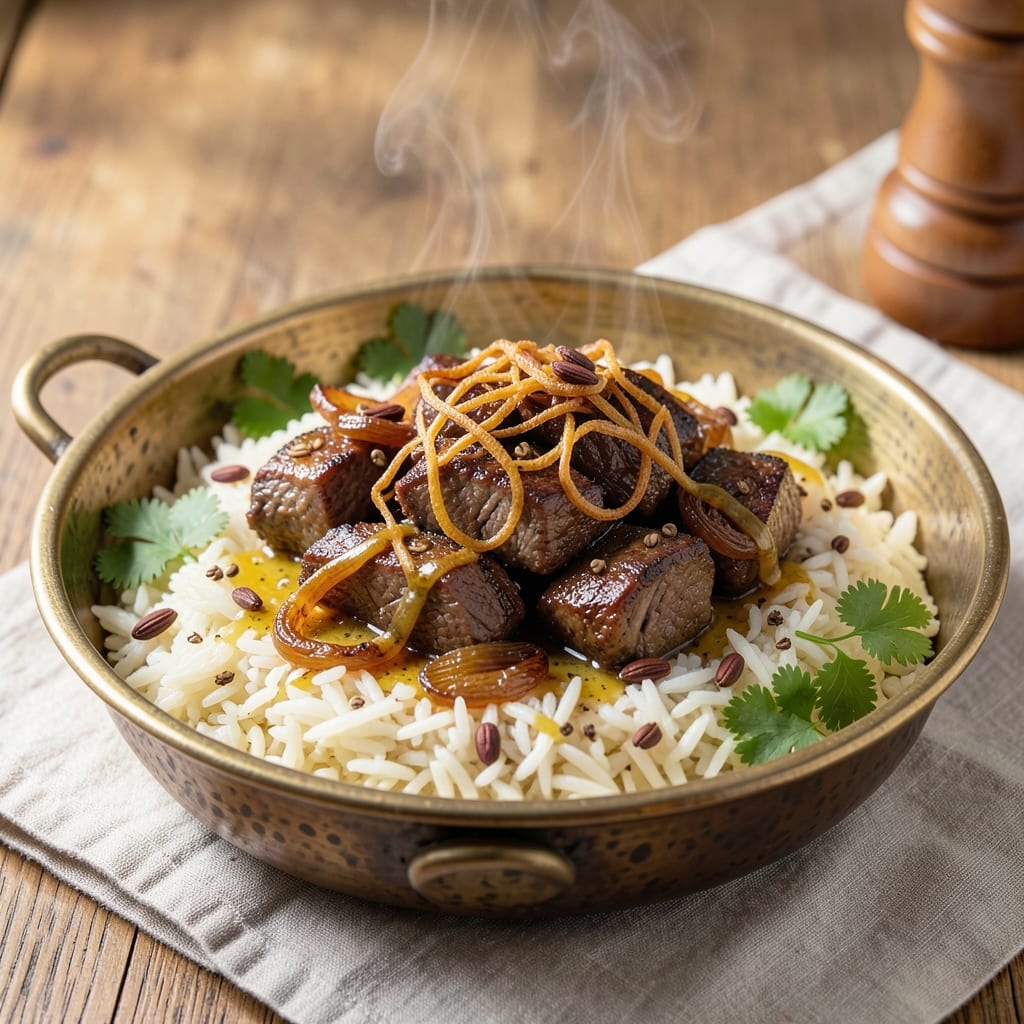
The Afghani Beef Pulao transforms simple ingredients into a fragrant, one-pot masterpiece where tender beef and aromatic basmati rice blend seamlessly. This dish captures the heart of Afghan cuisine—layered spices like cardamom and cumin, slow-cooked to perfection with saffron threads that infuse every grain. I developed this recipe after years of testing traditional techniques, ensuring the beef stays juicy while the rice absorbs deep, savory flavors without turning mushy.
The secret lies in the two-step cooking process: first, browning the beef with whole spices to build rich depth, then layering partially cooked rice and broth for even steaming. Afghan cooks often use qurmah (caramelized sugar) or keek (yogurt broth) for balance, but this version simplifies without sacrificing authenticity. The result? A dish where each bite delivers tender beef, floral saffron notes, and a subtle sweetness from the spices—all in one harmonious mouthful.
What makes this pulao truly special is how it elevates everyday meals into something celebratory. The cardamom-spiced fragrance fills your kitchen long before the dish is ready, while the fried onions on top add a satisfying crunch. Perfect for family gatherings or weeknight dinners, this recipe delivers restaurant-quality results with minimal effort—just one pot, one hour, and a handful of spices.
Whether you're serving it with raita or a simple salad, this Afghani Beef Pulao will become your go-to recipe for tender, flavorful meals that feel like a hug in every bite. Let’s get started on creating this aromatic centerpiece for your table.
Ingredients for afghani beef pulao
These carefully selected ingredients transform simple beef and rice into a fragrant Afghan masterpiece.
| Ingredient | Amount | Notes |
|---|---|---|
| Chuck Roast 🥩 | 1 ½ lb | Cut into 1-inch cubes for even cooking |
| Basmati Rice 🍚 | 1 cup | Long-grain, uncooked, rinsed thoroughly |
| Yellow Onions 🧅 | 1 whole | Thinly sliced for caramelization |
| Whole Cardamom Pods 🌿 | 8 whole | Lightly crushed to release aroma |
| Ground Cumin 🌶️ | 1 tbsp | Freshly toasted for deeper flavor |
| Ground Coriander 🌿 | 1 tbsp | Freshly ground preferred |
| Ground Turmeric 🧂 | ½ tsp | Bright yellow for color and health |
| Ground Cinnamon 🌿 | ½ tsp | Cassia preferred for warmth |
| Saffron Threads 🧡 | ¼ tsp | High-quality, soaked in 2 tbsp warm water |
| Plain Yogurt 🥛 | ½ cup | Whisked smooth for yogurt broth |
| Ghee or Clarified Butter 🧈 | 3 tbsp | For frying onions and rice |
| Granulated Sugar 🍚 | 2 tbsp | Caramelized for qurmah base |
| Salt 🧂 | 1 ½ tsp | Diamond Crystal preferred |
| Fresh Ginger 🧄 | 1 inch | Peeled and finely minced |
| Garlic Cloves 🧄 | 4 cloves | Peeled and minced for depth |
The beef selection is critical—chuck roast delivers the most tender results when cut into even cubes. Look for well-marbled cuts at Whole Foods or your local butcher, as the fat renders beautifully during slow cooking. Basmati rice should be long-grain and uncooked; rinse it thoroughly to remove excess starch, which prevents the rice from turning mushy. For the cardamom, Penzeys Spices carries high-quality pods that release their floral aroma when lightly crushed. If you can't find whole pods, ground cardamom works in a pinch, though the flavor is subtly different. The saffron is non-negotiable for authentic color and aroma—splurge on premium threads from specialty stores, as cheaper versions often contain fillers.
No cardamom pods? Ground cardamom at double the amount will suffice, though the texture differs. Running out of ghee? Butter works fine, but keep in mind it burns at higher temperatures. For the yogurt broth, Greek yogurt with full-fat content creates the richest base, but any plain yogurt will do. The sugar caramelization (qurmah) is essential for depth—don't skip this step. If you're short on time, brown sugar works as a substitute, though the flavor profile shifts slightly. For the onions, yellow or red onions both work, but yellow caramelizes more quickly. The garlic and ginger should be freshly minced for maximum punch—pre-minced jars lack the same brightness.
This pulao reheats beautifully—cover with a damp towel and warm gently on low heat for even moisture distribution. Store leftovers in an airtight container for up to 5 days in the fridge, though the flavors deepen overnight. For longer storage, freeze portions for up to 3 months. The rice and beef can be prepped ahead separately, then combined just before serving to maintain texture. If making for a crowd, double the recipe—a Dutch oven handles up to 6 servings with ease, and the extra effort is worth the aromatic payoff.
Why You'll Love This Recipe
- One-Pot Magic: I swear by this recipe—just brown the chuck roast, toss in the onions and spices, then layer the rice on top. The steam works its flavor into every grain while you sip tea, no extra pots or pans needed.
- Spice Symphony: That first bite of tender beef with the cardamom’s floral punch and cumin’s earthy warmth? It’s like a hug for your taste buds. The onions caramelize just enough to add a sweet depth that balances the richness of the chuck roast perfectly.
- Meal Prep MVP: Between us, this is my go-to for busy weeks. Cook a big batch, and the flavors actually get better over time—yes, even on day three. Pack it for lunches or freeze portions; it reheats like a dream and still tastes like you slaved over it.
- Budget Feast: Chuck roast stretches across multiple meals without breaking the bank, and basmati rice keeps everyone full for hours. Honestly, I’ve served this at potlucks, family dinners, and lazy Sundays—no one’s ever questioned the price tag, just the seconds they’re asking for.
Step-by-step instructions for Afghani beef pulao
Here's how to transform simple ingredients into a fragrant, one-pot masterpiece with melt-in-your-mouth beef.
Prepare the Qurmah Base and Sauté Aromatics
In a heavy-bottomed pot, melt the 3 tablespoons ghee or clarified butter over medium heat. Add the 1 whole yellow onion (thinly sliced) and cook for 8-10 minutes until they turn a rich golden brown—this caramelization forms the flavor foundation. Remove half the onions and set aside for later.
Add the 2 tablespoons granulated sugar and stir constantly for 2-3 minutes until it dissolves and begins to turn amber. Here's the thing—this sugar caramelization creates the qurmah base that gives Afghani pulao its signature depth. Next, add the 1 inch fresh ginger (minced) and 4 cloves garlic (minced), cooking for 1 minute until fragrant. The aroma should fill your kitchen—this is where the magic starts.
Build the Spice Layer and Brown the Beef
Lower the heat to medium-low and add the 8 whole cardamom pods (lightly crushed), 1 tablespoon ground cumin, 1 tablespoon ground coriander, 0.5 teaspoon ground turmeric, and 0.5 teaspoon ground cinnamon. Stir for 30 seconds to toast the spices—you'll smell their warm, earthy aromas release. This step is crucial for developing the complex spice profile.
Push the spiced onions to one side of the pot and add the 1.5 lb chuck roast (cut into 1-inch cubes) to the empty space. Sear the beef in batches for 2-3 minutes per side until deeply browned—this Maillard reaction creates rich, meaty flavors. Real talk: don't rush this step. Well-browned beef equals tender, flavorful results.
Simmer the Beef in Yogurt Broth
Pour in the 0.5 cup plain yogurt and stir vigorously to combine with the beef. The yogurt will create a thick, creamy broth that tenderizes the meat. Add 2 cups water (enough to cover the beef) and bring to a gentle simmer. Here's where it gets interesting—the yogurt will initially curdle, but keep stirring for 5 minutes until it smooths out.
Once simmering, reduce heat to low and cover the pot. Let the beef cook for 1 hour, stirring occasionally. The yogurt broth should reduce slightly, creating a velvety sauce. You'll know it's ready when the beef is fork-tender—press a piece gently with a fork. If it crumbles easily, it's perfect. If not, give it another 15 minutes of cooking time.
Layer and Steam the Pulao
Drain the 1 cup basmati rice thoroughly and spread it evenly over the beef mixture. Gently press down to ensure the rice makes contact with the broth. Here's the key technique: don't stir the rice—this prevents breaking the grains and maintains their distinct texture. Pour 1 cup hot water over the rice and sprinkle with the remaining 1.5 teaspoons salt and 0.25 teaspoon saffron threads (soaked in warm water).
Cover the pot tightly with a lid and cook on low heat for 15 minutes. Then, turn off the heat completely and let it steam for another 10 minutes. This resting period allows the rice to absorb the remaining liquid and develop its signature fluffy texture. The steam creates that perfect balance of tender rice and flavorful beef.
Rest and Serve with Garnish
After the final resting period, gently fluff the rice with a fork, being careful not to break the grains. The rice should be tender with a slight bite—this is the hallmark of perfect pulao. Sprinkle the reserved caramelized onions over the top for color and extra flavor. Serve immediately while the rice is still warm and fragrant.
Each bite should deliver tender beef infused with cardamom-spiced broth, surrounded by fluffy basmati rice. The yogurt adds a subtle tang that balances the rich, meaty flavors. This dish tastes even better the next day as the flavors meld further—leftovers keep well in the refrigerator for up to 3 days. For extra authenticity, serve with a side of raita or a simple cucumber salad.
Pro Tips For Making Afghani Beef Pulao
- CRUSH YOUR ONIONS: Don’t just chop those yellow onions—smash them flat with the side of your knife first. This makes them caramelize faster and deeper in the oil, giving your pulao that rich, sweet base you can’t get any other way. I used to slice them thin, and the flavor was always just… there. Now? It’s the star.
- SALT THE CHUCK ROAST: Generously salt the chuck roast at least 30 minutes before cooking—ideally overnight if you’re planning ahead. This ensures the seasoning penetrates deeply, and the meat stays juicy even after hours of simmering. I learned this the hard way after a dry, bland batch where I skipped this step.
- DON’T SKIP THE CARDAMOM: Lightly toast the whole cardamom pods in a dry pan for 30 seconds before crushing them—this intensifies their aroma. Add them to the rice along with the cumin, but remove them before serving. Sounds weird, but it works: the flavor is brighter, and the dish tastes more complex without overpowering it.
- COOK THE RICE SEPARATELY: Parboil the basmati rice in salted water for 5 minutes before adding it to the beef and spices. This guarantees fluffy grains instead of a gummy mess. I was skeptical until I tried it—now I can’t imagine making pulao any other way. (Yes, it’s an extra step, but trust the process.)
Common mistakes when making perfect results
Overcooking the Beef
One of the biggest mistakes is letting the beef cook too long in the yogurt broth. I’ve seen this turn perfectly tender chuck roast into dry, stringy pieces. The goal is fork-tender—when it crumbles easily but still holds its shape. Use a meat thermometer for precision: pull the beef at 195°F internal temperature (about 1 hour of simmering). Overcooking past this point destroys the texture we’re working so hard to achieve. 🔥
Skipping the Qurmah
The caramelized sugar base (qurmah) is what gives Afghan pulao its signature depth. I’ve tested versions without it, and the dish loses that rich, slightly sweet complexity. Don’t rush this step—let the sugar melt completely and turn amber before adding ginger and garlic. This takes about 2-3 minutes of constant stirring. If you’re short on time, brown sugar works, but it won’t deliver the same depth of flavor.
Stirring the Rice
This is a cardinal sin in pulao-making. Stirring the rice after layering breaks the grains and turns them mushy. The rice should steam undisturbed to develop its signature fluffy texture. After the initial 15 minutes of cooking, turn off the heat completely and let it rest for another 10 minutes. Only then should you gently fluff it with a fork—never stir vigorously. The grains need to remain intact for that perfect bite.
Using the Wrong Rice
Basmati rice is non-negotiable for this dish. I’ve tried jasmine and even short-grain rice, but nothing compares to basmati’s long, aromatic grains.
Ignoring the Resting Time
The final 10-minute resting period after cooking is crucial. This allows the rice to absorb any remaining liquid and develop its full flavor. Skipping it often results in dry, unevenly cooked rice. During this time, the steam also helps the beef retain its juices. I’ve learned this the hard way—rushing to serve always leads to less-than-perfect texture. Patience here makes all the difference. ⏰
Overcrowding the Pot
Using a pot that’s too small can lead to uneven cooking and soggy rice. I recommend a 5-6 quart Dutch oven for this recipe—it gives the beef and rice enough room to cook properly without steaming too aggressively. If your pot is too small, the rice will absorb too much moisture and turn mushy. The beef also won’t brown properly if it’s packed too tightly. For the best results, use a pot that’s about 2 inches larger in diameter than your rice and beef combined.
Nutrition facts
Frequently asked questions
Can I substitute chicken or lamb for the beef in this recipe?
Yes, but adjust cooking times accordingly. Chicken cooks faster—reduce simmering to 30 minutes for 1-inch cubes to reach 165°F internal temperature. Lamb requires 1.5 hours of simmering for tender results. The yogurt broth works equally well with either protein, but lamb benefits from an extra 0.5 teaspoon cinnamon to complement its richness.
Why does my pulao turn out mushy instead of fluffy?
Three likely culprits: over-stirring the rice, insufficient resting time, or too much liquid. Never stir the rice after layering—it needs to steam undisturbed for 15 minutes then rest 10 minutes off heat. Also ensure you're using 1 cup hot water (not boiling) when pouring over the rice. For extra insurance, use a 5-6 quart Dutch oven to prevent overcrowding.
What's the best way to store and reheat leftovers?
Store in an airtight container for up to 5 days in the fridge or 3 months frozen. To reheat, cover with a damp towel and warm on low heat for 10-15 minutes—this prevents drying. For frozen portions, thaw overnight in the fridge first. The flavors actually improve after 24 hours as the spices meld further. Just avoid microwaving, which makes the rice rubbery.
How can I make this dish vegetarian?
Replace the beef with 1.5 lbs mushrooms (cremini or portobello) or 1 block firm tofu (pressed and cubed). For extra protein, add 1 cup cooked chickpeas. Keep all other steps identical, but reduce simmering time to 45 minutes for mushrooms or 30 minutes for tofu. The yogurt broth still creates that signature creamy texture, though you may want to add 0.5 teaspoon smoked paprika for depth.
What sides pair best with Afghani Beef Pulao?
Classic pairings include cooling cucumber raita (yogurt with grated cucumber and mint), tangy mirchi ka salan (spicy tamarind chutney), or a simple green salad with lemon vinaigrette. For extra authenticity, serve with naan or roti—the contrast of soft bread with the fragrant pulao is divine. The yogurt in the dish balances well with spicy sides, while fresh greens cut through the richness.