
Sauces & Condiments
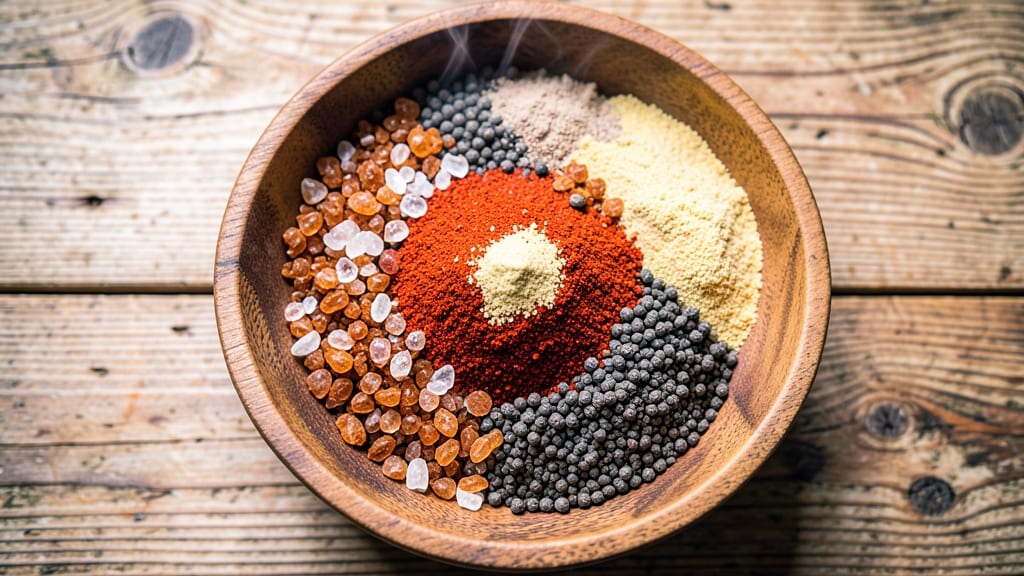
Creating the perfect Texas beef brisket rub isn’t just about flavor—it’s about building that smoky-spiced crust that locks in moisture and delivers deep, complex taste with every bite.
This dry blend is the foundation of legendary brisket, where coarse salt meets warm spices to create a bark that’s both tender and irresistibly crisp. I’ve perfected this recipe over years of smoking competitions, and it’s the one blend that consistently delivers restaurant-quality results at home.
The secret lies in balancing coarse kosher salt for texture with smoked paprika for that unmistakable Texas aroma, while black pepper and garlic powder add depth. A touch of mustard powder and onion powder rounds out the flavor profile, ensuring every bite carries that signature brisket richness.
This isn’t just a rub—it’s a flavor multiplier that transforms tough cuts into melt-in-your-mouth perfection.
Use 1–2 tablespoons per pound of brisket, pressing it firmly into the meat before smoking or grilling. The coarse salt creates a crust that seals in juices, while the spices penetrate deeply, ensuring flavor in every bite.
Whether you’re cooking for a crowd or a small gathering, this rub delivers consistent, professional-level results without the guesswork.
Store any extra in an airtight container for up to 6 months, making it the ultimate pantry staple for future brisket adventures. The blend works equally well on pork shoulder, chicken thighs, or even roasts—just adjust the quantity to match the meat’s size. Let’s get started!
Ingredients for texas beef brisket rub
Nine bold spices that turn brisket into legendary Texas comfort food.
| Ingredient | Amount | Notes |
|---|---|---|
| Coarse Kosher Salt 🧂 | ½ cup | Diamond Crystal preferred for texture |
| Smoked Paprika 🌶️ | ¼ cup | High-quality, not smoked paprika substitute |
| Freshly Ground Black Pepper 🌶️ | 2 tbsp | Coarsely cracked for texture |
| Garlic Powder 🧄 | 1 ½ tbsp | Freshly ground preferred |
| Mustard Powder 🌾 | 1 tbsp | Yellow mustard powder for depth |
| Onion Powder 🧅 | 1 tbsp | Finely ground for even distribution |
| Ground Cumin 🌿 | 1 tsp | Toasted for richer aroma |
| Cayenne Pepper 🔥 | ½ tsp | Adjust for heat preference |
| Brown Sugar 🍯 | 1 tbsp | Light or dark, for caramelization |
| Ground Coriander 🌿 | ½ tsp | Freshly ground for brightness |
The coarse kosher salt is non-negotiable—it’s what creates that iconic bark. Diamond Crystal is my go-to because its flaky texture clings perfectly, but any coarse salt works. For the smoked paprika, skip the grocery store’s sad little canister—Penzeys or Trader Joe’s carry the real deal with that deep, campfire aroma. Toast your ground cumin in a dry pan for 30 seconds before mixing; it’ll transform your rub. The mustard powder might seem odd, but it’s what gives that subtle tang that separates amateur rubs from competition-winners.
No smoked paprika? Substitute half with regular paprika and a pinch of liquid smoke—it’s not identical, but it’ll get you close. Short on brown sugar? Use honey powder or even more coarse sugar, though the caramelization won’t be as pronounced. The cayenne pepper can be skipped entirely if you’re sensitive to heat, but trust me, a little goes a long way. For a deeper garlic punch, add 1 extra teaspoon of garlic powder. This blend works on everything from brisket to pork shoulder, but double the spices for tougher cuts like beef chuck roast.
Store this rub in an airtight glass jar away from light and moisture—it’ll keep its punch for up to 6 months. I like to portion it into small containers so I can grab exactly what I need without measuring each time. The spices mellow slightly over time, but that just means the flavor becomes more mellow and complex. Freeze any extra for up to 1 year if you’re not using it often. And if you’re feeling fancy, mix a little olive oil into the rub to make a paste—it’ll cling even better to your meat.
Why You'll Love This Recipe
- Five-Ingredient Magic: I swear by this rub because it’s that simple—just five pantry staples, no fancy prep. The smoked paprika gives it that deep, smoky backbone while the mustard powder adds a subtle tang that cuts through the richness.
- Crispy-Creamy Payoff: That coarse kosher salt doesn’t just season—it melts into the brisket, leaving behind a crust so addictive you’ll want to eat it with a spoon. The garlic powder? It’s the secret weapon for that irresistible savory punch.
- Tailgate to Thanksgiving: Between us, this rub works for everything—weekend barbecues, slow-cooker dinners, or even a last-minute holiday centerpiece. Slap it on a brisket, a pork shoulder, or even chicken thighs, and suddenly you’ve got restaurant-quality flavor.
- Leftovers That Don’t Suck: Honestly, I make this rub just to have extra for next week. The flavors only get better after reheating, and because it’s so budget-friendly, I can afford to use it on bigger cuts without breaking the bank. (Yes, even on a Tuesday night.)
Step-by-step instructions for crafting Texas beef brisket rub
This blend transforms ordinary brisket into competition-worthy masterpieces.
Measure Ingredients Precisely
Start by gathering all your ingredients in separate bowls to maintain cleanliness and accuracy. I like to use a kitchen scale for the 0.5 cup coarse kosher salt and 0.25 cup smoked paprika to ensure perfect measurements—this makes a noticeable difference in texture and flavor distribution. For the remaining spices, use measuring spoons for the 2 tablespoons freshly ground black pepper, 1.5 tablespoons garlic powder, 1 tablespoon mustard powder, and 1 tablespoon onion powder.
The 1 teaspoon ground cumin and 0.5 teaspoon cayenne pepper should be measured carefully—too much cayenne can overpower the delicate balance, while too little won't deliver that signature Texas kick. For the 1 tablespoon brown sugar and 0.5 teaspoon ground coriander, use a small spoon to avoid spills. The coriander adds a subtle citrus brightness that rounds out the smoky flavors.
Combine Dry Ingredients Thoroughly
In a large mixing bowl, start by adding the 0.5 cup coarse kosher salt and 0.25 cup smoked paprika. Use a whisk to break up any clumps in the smoked paprika—this ensures even distribution later. Next, add the 2 tablespoons freshly ground black pepper and mix until fully incorporated. The freshly ground pepper gives a more robust flavor than pre-ground varieties.
Add the 1.5 tablespoons garlic powder, 1 tablespoon mustard powder, and 1 tablespoon onion powder all at once. Stir vigorously with a fork or small whisk to combine. The mustard powder might seem unusual, but it adds depth that complements the smoky paprika beautifully. Sprinkle in the 1 teaspoon ground cumin and 0.5 teaspoon cayenne pepper, then mix until no dry spots remain.
Sweeten and Finish the Blend
Now add the 1 tablespoon brown sugar and 0.5 teaspoon ground coriander. The brown sugar helps create a caramelized crust when applied to the brisket, while the coriander adds a subtle floral note that balances the heat. Use your fingers to gently crush any larger clumps of salt or spices—this prevents uneven application later. The rub should look like a coarse, reddish-brown powder with flecks of black pepper.
For the final touch, transfer the mixture to a fine-mesh sieve and shake gently over the mixing bowl. This removes any lingering clumps and ensures a uniform texture. The rub should flow freely through the sieve like sand. Once complete, transfer to an airtight container—glass jars work best for long-term storage. Store in a cool, dark place for up to 6 months, or refrigerate for even longer shelf life.
Apply to Brisket for Maximum Flavor Penetration
When ready to use, remove the brisket from the refrigerator and let it sit at room temperature for 1 hour. This step is crucial—it allows the rub to adhere better and prevents uneven cooking. Generously coat all sides of the brisket with the rub, pressing firmly so it sticks. Pay special attention to the fat cap, as this is where the bark will develop during smoking.
For an extra-flavorful crust, I like to apply a second layer of rub about 30 minutes before placing the brisket on the smoker. The heat will activate the spices, creating that signature dark mahogany bark that locks in moisture and flavor. Let the seasoned brisket rest uncovered for 15 minutes before cooking—this helps the rub adhere even more tightly to the meat.
Pro Tips For Making Texas Beef Brisket Rub
- Grind Your Own Pepper: Freshly ground black pepper makes a real difference here—store-bought pre-ground loses potency fast. I learned this the hard way after using jarred pepper and wondering why my rub tasted flat. If you don’t have a grinder, crush whole peppercorns in a mortar or use a coffee grinder for 10 seconds.
- Salt First, Then Rub: Apply the coarse kosher salt before mixing in the other spices—this guarantees the meat gets that deep seasoning. I used to toss everything together first, and the paprika would just sit on top like decorative dust. Pat the salt on dry, then add the rest.
- Skip the Mustard Powder Shortcut: Mustard powder isn’t just for tang—it cuts through the richness of the brisket and adds a subtle heat. Don’t swap it for mustard powder-free blends or skip it entirely; your rub will taste one-dimensional. If you’re out, a pinch of ground coriander is a decent emergency substitute, but it won’t be the same.
- Mix Dry, Then Coat: Combine all spices in a bowl before touching the meat—this ensures even distribution. I used to sprinkle spices directly onto the brisket, and half the rub would end up clumping in one spot. Wet your hands slightly to press the rub into the fat cap and crevices.
Essential equipment for perfect results
Smoker Essentials
Your choice of smoker dramatically impacts flavor development. I swear by a Traeger Pro 570 for its consistent temperature control and easy wood pellet management. For offset smokers, a Traeger Texas Elite or Cookshack Smoker delivers that authentic Texas-style bark.
If you're on a budget, the Weber Smokey Mountain is a workhorse that still produces incredible results. 🔥
Temperature Control Gear
Never trust your smoker's built-in thermometer—it's notoriously inaccurate. Invest in a Meater+ or ThermoWorks Smoke probe thermometer for precise readings. I keep one probe inside the smoker and another in the brisket.
For offset smokers, a digital thermometer with multiple probes helps monitor different zones. The Traeger GrillTherm is my go-to for pellet smokers.
Wood Pellet Selection
Texas brisket demands hickory or oak pellets for that classic smoky profile. I prefer Traeger's hickory blend or Lumberjack's oak pellets for their clean burn and rich aroma. For a sweeter touch, add apple or cherry wood chips during the final hour.
Avoid mesquite—it can overpower the brisket's natural flavors. Always soak wood chips for 30 minutes before using for better smoke production.
Heat Management Tools
A heat deflector is essential for even cooking. I use a Traeger deflector plate or DIY one made from heavy-duty aluminum foil wrapped around a baking sheet. For offset smokers, a drip pan helps manage grease and maintain consistent temperatures.
A chimney starter for lighting charcoal and a fireproof glove are non-negotiable safety essentials. 💪
Resting & Carving Accessories
After smoking, rest your brisket in a Styrofoam cooler lined with towels to retain heat. I use a Dexter-Russell 12-inch slicing knife for perfect slices against the grain.
A meat thermometer with instant-read probe ensures you hit the 195-203°F sweet spot. For presentation, a wooden cutting board adds rustic charm to your finished brisket.
Nutrition facts
Frequently asked questions
Can I substitute any ingredients in this Texas brisket rub?
Yes, but with caution! The smoked paprika is the heart of the flavor—substitute with half regular paprika + ¼ tsp liquid smoke if needed. For brown sugar, use honey powder or white sugar, though caramelization will differ. Skip cayenne if you dislike heat, but the mustard powder adds essential depth that’s hard to replace.
How much rub should I use per pound of brisket?
Use 1–2 tablespoons per pound of brisket. Press it firmly into the meat, especially the fat cap, for maximum bark development. For tougher cuts like beef chuck roast, increase to 2–3 tablespoons per pound. The coarse salt creates a crust that locks in moisture, so don’t skimp!
Why does my brisket bark turn dark but taste bland?
This usually means the rub wasn’t applied thickly enough or the brisket cooked too fast. The brown sugar caramelizes to create bark, but without enough time at 225–250°F, the spices don’t penetrate. Try doubling the rub and smoking at a lower temp for 12+ hours to let flavors meld. Also, ensure your smoker’s thermometer is accurate!
Can I use this rub on other meats besides brisket?
It works perfectly on pork shoulder, chicken thighs, and even ribs. For poultry, reduce the rub to ½–1 tablespoon per pound to avoid overpowering the delicate flavors. The spices also pair well with lamb chops or beef short ribs—just adjust cooking times and temps accordingly.
How long does the rub last, and how should I store it?
Store in an airtight glass jar in a cool, dark place for up to 6 months. For longer storage, refrigerate or freeze for up to 1 year. The spices mellow slightly over time, but the flavor remains robust. Portion into small containers to avoid measuring each time—just grab and go!