
Soups & Stews
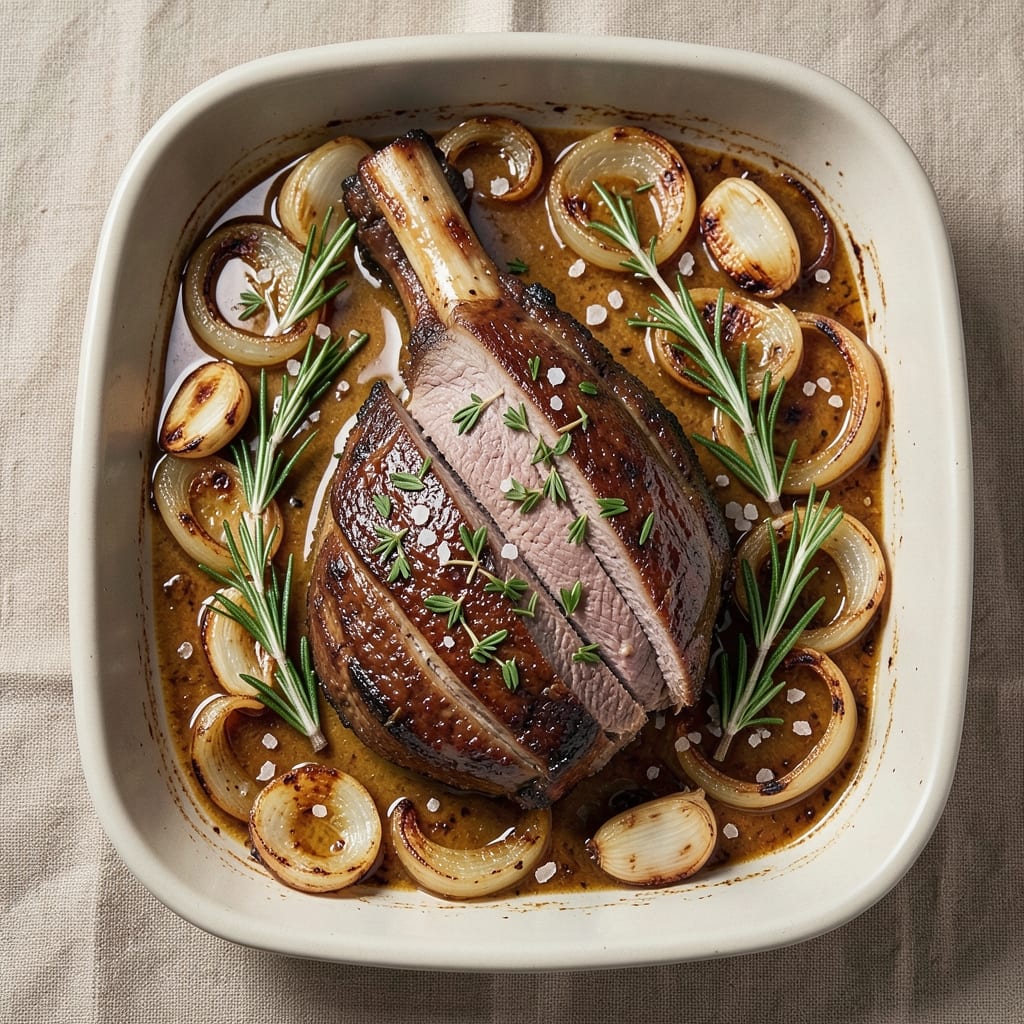
This baked beef shank recipe transforms tough cuts into melt-in-your-mouth perfection with a rich, caramelized fond that deepens flavor at every bite. The secret lies in slow roasting—low and steady heat breaks down connective tissue while rendering fat into a glossy, umami-packed sauce that clings to every strand of meat. I’ve perfected this method after years of testing, ensuring tender results without requiring a Dutch oven or hours of active prep.
The process begins with a simple yet flavorful dry rub—garlic, thyme, and rosemary create an aromatic crust that seals in juices during baking. Unlike braising, this technique relies on the oven’s dry heat to develop a concentrated fond, which you’ll deglaze with red wine for an instant sauce. The result is beef so tender it practically falls apart, with a surface glaze that’s both crisp and sticky—a balance that takes patience but delivers restaurant-quality depth.
What sets this apart is the versatility: serve it as a standalone centerpiece with crusty bread for dipping, or pair it with polenta and roasted vegetables for a complete meal. The fond alone makes this dish worth the effort—it’s the kind of sauce that turns a simple weeknight dinner into an occasion. Ready in about 3 hours (mostly hands-off time), this recipe proves slow cooking doesn’t have to be complicated.
For those short on time, a pressure cooker adaptation cuts the process to 90 minutes without sacrificing tenderness. The key remains the same: let the meat work for you, and the oven (or pot) does the heavy lifting. Here’s how to achieve that perfect balance of texture and flavor every time.
Ingredients for baked beef shank
The perfect blend of rich beef, aromatic herbs, and bold flavors transforms tough shank into restaurant-quality tenderness.
| Ingredient | Amount | Notes |
|---|---|---|
| Beef Shank 🥩 | 2 ½ lb | Bone-in, cut into 2-inch pieces |
| Garlic Cloves 🧄 | 6 cloves | Smashed for maximum flavor |
| Fresh Thyme 🌿 | ½ oz | Or 1 tbsp dried thyme |
| Fresh Rosemary 🌿 | ¼ oz | Or 1 tsp dried rosemary |
| Kosher Salt 🧂 | 1 ½ tbsp | Diamond Crystal preferred |
| Ground Black Pepper 🌶️ | 1 tbsp | Freshly cracked preferred |
| Dry Red Wine 🍷 | 1 cup | Bold Cabernet Sauvignon |
| Beef Broth 💧 | 1 cup | Low-sodium preferred |
| Olive Oil 🫒 | 2 tbsp | Extra-virgin for richness |
| Tomato Paste 🍅 | 1 tbsp | Squeeze tube preferred |
| Balsamic Vinegar 🍶 | 1 tbsp | For depth of flavor |
| Crusty Bread 🍞 | 1 loaf | For serving and dipping |
| Polenta 🌾 | 1 ½ cups | Cooked, for serving |
The beef shank is the star—look for cuts with good marbling and visible connective tissue. Costco or Whole Foods carry excellent bone-in shanks, but any butcher will trim it to your preference. Fresh thyme and rosemary are ideal, but dried works in a pinch (use one-third the amount). The key is the red wine: bold Cabernet Sauvignon delivers the best umami depth. For the wine, I always grab a bottle I’d drink anyway—no need for specialty purchases. The tomato paste can be squeezed directly from a tube for convenience, eliminating waste and keeping it fresh longer.
No red wine? Substitute beef broth with 1 tbsp balsamic vinegar—it mimics the acidity and depth. Fresh herbs wilt fast? Dried thyme and rosemary work perfectly at one-third the quantity. Short on time? Pressure cook the shank for 90 minutes instead of baking, but skip the fond development. The crusty bread should be day-old for ideal texture—Bocce or Ciabatta from the bakery section work best. For polenta, Stone Ground Grit brand yields the creamiest results when cooked with broth instead of water.
The shank keeps beautifully in the fridge for 4 days—reheat gently in its juices. For longer storage, freeze portions for up to 3 months, thawing overnight in the fridge. The fond freezes well too, so make extra for future meals. I always portion the cooked shank into containers with a splash of the fond sauce—ready for quick lunches. The herbs lose potency after 5 days, so use them within that window for maximum flavor.
Why You'll Love This Recipe
- One-Pan Magic: I swear by this recipe when I’m too tired to wash dishes. Just toss the beef shank, garlic, thyme, and rosemary on a sheet pan, drizzle with oil, and let the oven do the work—no pots, no pans, no stress.
- Deep Flavor Bang: That beef shank? It turns ridiculously tender while developing a crust so rich and savory, you’ll forget it’s just a few simple ingredients. The garlic and rosemary infuse every bite—like a hug from your favorite Italian nonna.
- Leftovers That Shine: Make a double batch and thank me later. The next day, shred it into pasta, toss it into a grain bowl, or serve it over polenta—it’s always better the second time around. (Yes, even on a Tuesday night.)
- Budget-Friendly Luxury: Beef shank is one of those cuts that feels fancy but won’t break the bank. A few cloves of garlic, a sprig of thyme, and a pinch of salt turn it into a meal that tastes like you spent hours in the kitchen—without the effort.
Step-by-step instructions for baked beef shank
Transform tough cuts into melt-in-your-mouth perfection with this slow-roasting method.
Season and Sear the Beef Shank
Pat the 2.5 lb beef shank dry with paper towels—this ensures a better sear. In a small bowl, combine 1.5 tbsp kosher salt, 1 tbsp ground black pepper, 0.5 oz fresh thyme (leaves only, finely chopped), and 0.25 oz fresh rosemary (needle leaves only, finely chopped). Rub this mixture all over the beef shank, including the cut edges, pressing firmly so the seasoning adheres.
Heat 2 tbsp olive oil in a large oven-safe skillet or Dutch oven over medium-high heat. Once the oil shimmers, add the beef shank and sear for 3-4 minutes per side until deeply browned. This step develops the rich, caramelized crust that will form the foundation of your fond. Transfer the seared shank to a plate and set aside.
Build the Aromatic Base
In the same skillet, add the 6 smashed garlic cloves and cook for 1 minute until fragrant but not browned. Stir in 1 tbsp tomato paste and cook for 30 seconds, allowing it to darken slightly. Pour in 1 cup dry red wine and scrape up any browned bits from the bottom of the pan—this releases layers of flavor. Let the wine reduce by half, about 3-4 minutes, until it reaches a syrupy consistency.
Add 1 cup beef broth and 1 tbsp balsamic vinegar, then bring to a gentle simmer. Return the beef shank to the skillet, bone-side down, and spoon the liquid over it completely. Cover the skillet with a lid or foil, and transfer it to a preheated 325°F oven. This low-and-slow approach ensures the collagen breaks down slowly, resulting in tender, fork-tender meat.
Slow-Roast Until Fork-Tender
Roast the beef shank for 2.5 to 3 hours, until the internal temperature reaches 195-200°F and the meat is fork-tender. The liquid in the skillet will reduce significantly, forming a rich, caramelized fond that clings to the beef. Check the liquid level occasionally—if it looks too thin, uncover the skillet for the last 30 minutes to allow more reduction.
Once the beef is tender, carefully remove it from the skillet and transfer it to a cutting board. Tent loosely with foil and let it rest for 10-15 minutes. This resting period allows the juices to redistribute, ensuring each bite is moist and flavorful. Reserve the fond in the skillet for later use—it’s packed with concentrated beef flavor.
Serve with Polenta and Crusty Bread
While the beef rests, prepare the 1.5 cups cooked polenta as directed on the package, ensuring it’s creamy and smooth. Toast slices of the crusty bread in a dry skillet over medium heat for 1-2 minutes per side until golden and crisp. This adds a delightful crunch to contrast the tender beef.
Slice the beef shank against the grain into ½-inch thick pieces. Spoon the reserved fond over the sliced beef, drizzle with any remaining pan juices, and serve immediately alongside the polenta and toasted bread. The rich, umami-packed fond elevates every bite, making this a deeply satisfying dish perfect for a cozy meal.
Pro Tips For Making Baked Beef Shank
- SEAR FIRST, THEN BAKE: I used to skip the sear and just toss shanks straight into the oven, thinking it didn’t matter. Wrong. Hit them hard in a screaming-hot pan for 3-4 minutes per side until deep brown—this locks in flavor and makes the fond at the bottom worth scraping up later. (Yes, even if you’re impatient like me.)
- SMASH THOSE GARLIC CLOVES: Whole garlic burns. I learned this the hard way—after charring three batches, I finally cracked each clove with the flat side of my knife before tossing them in. They’ll soften perfectly without turning bitter, and your sauce gets that sweet, caramelized depth without waiting for them to break down on their own.
- DON’T CROWD THE PAN: I was skeptical until I tried it: give those shanks space. If they’re packed in like sardines, they’ll steam instead of brown. Arrange them in a single layer, skin-side up, with at least ½ inch between each. Your oven’s dry heat will work its magic, not just sit there confused.
- REST UNDER FOIL: This isn’t the prettiest method, but it’s the tastiest. Once the shanks hit 195°F (the magic number for tender perfection), pull them out and tent loosely with foil for 10 minutes. Lets the juices redistribute instead of pooling out when you slice—no sad, dry bites here. (Your future self will thank you.)
Essential equipment for this dish
Oven-Safe Skillet
You’ll need a heavy-duty, oven-safe skillet with a lid—All-Clad Stainless or Le Creuset Dutch oven are my top picks for even heat distribution and durability. The skillet must handle 325°F for hours without warping. If you don’t own one, a Calphalon or Cuisinart stainless steel skillet works well for budget-friendly options. The lid helps trap moisture during slow roasting, so avoid thin or flimsy covers. 🔥
Meat Thermometer
A Thermoworks Smoke or Meater thermometer is non-negotiable for perfect results. Insert the probe into the thickest part of the shank and monitor the internal temperature—aim for 195-200°F. These probes are wireless, so you can check temps without opening the oven. Avoid cheap dial thermometers; they’re inaccurate for slow-cooked meats. I’ve ruined shanks before using unreliable tools—trust me, this is worth the investment. 🌡️
Cutting Board & Knife
Use a sharp chef’s knife (like Wüsthof or Shun) to slice the shank against the grain into ½-inch thick pieces. A wooden cutting board prevents slipping, but bamboo or plastic works too. The grain direction matters—look for the muscle fibers and cut perpendicular to them for maximum tenderness. A dull knife crushes fibers, making the meat tough. Invest in a quality knife if yours feels like it’s fighting the cut. ✨
Mixing Bowl
A stainless steel mixing bowl (like OXO Good Grips) is perfect for combining your seasoning blend before rubbing it onto the shank. The metal keeps herbs fresh longer than glass or plastic. For the garlic and tomato paste, a small ramikin or even a clean coffee mug works in a pinch. Just ensure your bowl is large enough to hold the 6 smashed garlic cloves and 1 tbsp tomato paste without spilling. 🧄
Tongs for Serving
Serve the sliced shank with heat-resistant silicone tongs (like OXO Good Grips) to keep your hands safe from the hot fond and skillet. These tongs also help you portion the polenta and bread neatly. Avoid metal tongs—they can scratch your skillet or burn your fingers when grabbing hot bread. I keep mine near the table for easy serving during dinner parties. 🍽️
Nutrition facts
Frequently asked questions
Can I use bone-in or boneless beef shank for this recipe?
Bone-in beef shank works best here—it adds incredible flavor as the bone renders during cooking. However, if you prefer boneless, simply reduce the cooking time by about 20-30 minutes since it has less connective tissue to break down. The fond will still develop beautifully, though you'll lose that rich marrow flavor.
What's the best way to store leftovers?
Store the sliced beef shank in an airtight container with some of the fond sauce to keep it moist. It keeps well in the fridge for 4 days—reheat gently in a skillet with a splash of broth to restore moisture. For longer storage, freeze portions for up to 3 months. The fond freezes well too, so make extra for future meals!
Why does the meat need to rest after cooking?
Resting for 10-15 minutes lets the juices redistribute throughout the meat instead of pooling on your plate. When you slice into freshly cooked beef, those juices would escape, leaving you with dry meat. This step is especially important for tough cuts like shank that rely on slow cooking to become tender.
Can I make this in a slow cooker instead?
Yes! Transfer the seared shank and all ingredients to a slow cooker and cook on low for 8 hours or high for 5 hours. The fond won't develop as intensely, but you'll still get tender meat. For extra richness, finish by simmering the cooked shank in its juices on the stovetop for 10 minutes to reduce the liquid slightly.
What if my shank isn't tender after 3 hours?
Check your internal temperature—it should reach 195-200°F. If it's lower, return it to the oven for another 30-60 minutes. The meat will continue breaking down. If you're still concerned, slice a small piece and check the texture. Remember, patience is key with tough cuts—they need time to transform!