
Main Courses
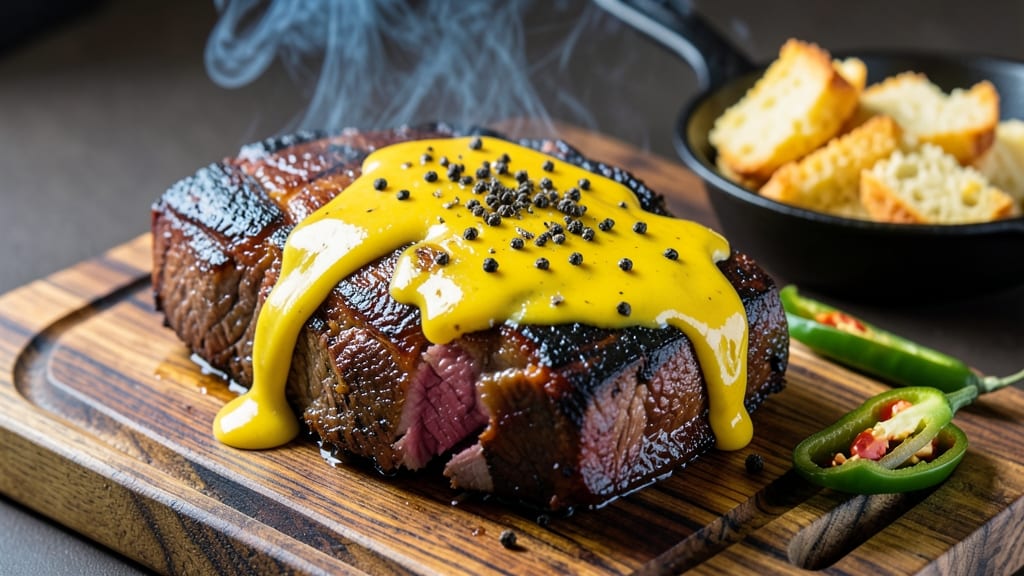
Unlock the secrets of this Texas smoked beef brisket recipe to turn tough cuts into show-stopping, bark-crusted perfection. This recipe delivers restaurant-quality results using precise techniques—from the perfect wood choice to the critical Texas crutch (wrapping) that ensures tender meat every time.
The key lies in patience: low-and-slow smoking until internal temps hit 195–203°F, where collagen dissolves into juicy, fork-tender goodness.
What sets this brisket apart is the balance of technique and tradition. You'll start with a simple yet bold seasoning blend, then smoke the meat for 12–16 hours using oak or pecan wood, maintaining a steady 225°F temperature.
The Texas crutch—wrapping the brisket in butcher paper or foil—locks in moisture while allowing that coveted bark to form. This method guarantees a brisket so tender it practically falls apart at the touch.
By the time you slice against the grain, you'll reveal layers of flavor: smoky, savory, and rich with caramelized crust. The meat should be so tender it pulls apart effortlessly, while the bark remains crisp enough to crack with each bite.
Serve with classic Texas sides like white bread, pickles, and coleslaw for the full experience. This is brisket that demands seconds—no leftovers allowed.
The beauty of this recipe is its flexibility. Use it for weekend gatherings, game day feasts, or even meal prep (though the temptation to eat it all fresh will be strong).
With precise timing and traditional techniques, you'll achieve brisket that rivals the best Texas BBQ pits. Let's get started on the journey to perfect smoked beef.
Ingredients for texas smoked beef brisket
Eight pounds of brisket and a handful of game-changing ingredients transform into Texas-style showstopper.
| Ingredient | Amount | Notes |
|---|---|---|
| Beef Brisket (Packer Cut) 🥩 | 8 lb | Whole packer cut with fat cap intact |
| Yellow Mustard 🍯 | ½ cup | For initial sticky layer |
| Kosher Salt (Diamond Crystal) 🧂 | ½ cup | Coarse grain preferred |
| Black Peppercorns (Freshly Ground) 🌶️ | ¼ cup | Cracked, not pre-ground |
| Garlic Powder 🧄 | 2 tbsp | Freshly ground preferred |
| Onion Powder 🧅 | 2 tbsp | Not onion salt |
| Smoked Paprika 🌶️ | 1 tbsp | For authentic smoky depth |
| Ground Chipotle Powder 🔥 | 1 tbsp | Adjust for heat preference |
| Butcher Paper or Heavy-Duty Aluminum Foil 📄 | 1 sheet | For Texas crutch wrapping |
| Oak or Pecan Wood Chips 🌳 | 2 lb | For authentic Texas smoke |
| Apple Juice or Cider Vinegar 🍎 | 1 cup | For spritzing during smoke |
| Beef Injection Solution (Optional) 💉 | 2 cups | Beef broth + Worcestershire + garlic |
| Yellow Cornmeal 🌽 | ¼ cup | For final bark coating |
The packer cut brisket is non-negotiable—look for a whole cut with that thick fat cap still attached. Local butchers often have better quality than grocery stores, and the fat cap is what creates that legendary bark. If you're buying online, Snake River Farms or US Wellness Meats deliver consistently great briskets. The fat should be white and firm, not yellowed or soft. For the wood, Traeger or Pit Boss oak or pecan chips work perfectly—they're pre-seasoned and ready to smoke right out of the bag.
No butcher paper? Heavy-duty aluminum foil works in a pinch, though purists will argue it doesn't crisp as well. Running out of chipotle powder? Cayenne plus smoked paprika at 1:2 ratio gets you close. The injection solution is optional but worth it—mix 2 cups beef broth, 2 tbsp Worcestershire, and 2 minced garlic cloves for maximum flavor penetration. For the cornmeal, Bob's Red Mill is my go-to—it's fine enough to create that perfect crust without being too powdery.
Store raw brisket in the coldest part of your fridge, wrapped tightly in plastic, for up to 5 days before smoking. The wood chips? Keep them in a sealed container in the freezer for up to 6 months. Once smoked, brisket reheats beautifully—wrap slices in foil and warm in a 275°F oven for 10 minutes. Leftovers? Portion into quart-sized freezer bags with a bit of beef broth to keep them moist for up to 3 months
Why You'll Love This Recipe
- Smoke in Minutes: I swear, the packer cut brisket just needs salt, pepper, and time—no fancy rubs or hours of prep. Toss it on the smoker with that yellow mustard glaze (trust me, it’s the secret), and you’re basically hands-off until the alarm goes off.
- That Crispy-Peppery Magic: The fresh-cracked black pepper and garlic powder? They cling to the meat like a hug, while the mustard gives it that tangy, sticky finish. Honestly, the first bite makes you forget you’re even dieting.
- Leftovers That Save You: This recipe practically begs for seconds—and then thirds. Shred it for tacos, sandwiches, or even breakfast hash the next day. I’ve turned a single brisket into five meals without blinking.
- Budget-Friendly Feast: A packer cut stretches across days, and the ingredients? Salt, pepper, mustard—stuff you already own. Between us, this is how I feed my whole family for under $20 without sacrificing flavor.
Step-by-step instructions for smoking Texas-style brisket
Here's the method that delivers that legendary Texas brisket—crisp bark, melt-in-your-mouth tenderness, and deep smoke flavor every time.
Prep and Season the Brisket for Maximum Flavor
Start by trimming the fat cap on your 8 lb Beef Brisket (Packer Cut) down to about ¼-inch thickness using a sharp boning knife. Leave the fat on the sides and point intact—this protects the meat during the long cook. Pat the surface completely dry with paper towels, then rub with 0.5 cup Yellow Mustard to create a sticky base for the rub that won't fall off.
In a small bowl, combine 0.5 cup Kosher Salt (Diamond Crystal), 0.25 cup Black Peppercorns (Freshly Ground), 2 tbsp Garlic Powder, 2 tbsp Onion Powder, 1 tbsp Smoked Paprika, and 1 tbsp Ground Chipotle Powder. Press this mixture firmly into every surface of the brisket, including the fat cap and cavity. Let it sit uncovered in the refrigerator for 12-24 hours—this dry-brining process ensures deep flavor penetration and that coveted bark.
Inject (Optional) and Set Up Your Smoker
If using, prepare the 2 cups Beef Injection Solution (Optional) by combining beef broth, Worcestershire sauce, and minced garlic. Using a meat injector, pierce the brisket in a grid pattern and inject the solution between the muscle fibers. This step adds moisture and flavor to the center of the meat, but it's optional for those who prefer traditional dry rub only.
Set up your smoker using 2 lb Oak or Pecan Wood Chips for authentic Texas smoke flavor. Preheat to 225°F and let it establish a steady stream of thin blue smoke—this is your signal that it's ready. Place a water pan in the smoker to maintain moisture during the cook. When the temperature stabilizes, place the brisket fat-side up on the grill grates, allowing space between the meat and any other surfaces.
Smoke Low and Slow with Strategic Spritzing
Smoke the brisket undisturbed for 6-8 hours until the internal temperature reaches 165-170°F. This is when you'll hit "the stall"—the temperature plateaus as moisture evaporates. Here's where Texas pitmasters get creative: every 90 minutes, spritz the brisket generously with Apple Juice or Cider Vinegar using a spray bottle. This keeps the surface moist, prevents bark from forming too early, and maintains even cooking.
Real talk: Don't open the smoker during this phase unless absolutely necessary. Each time you peek, you lose 15-20 minutes of cook time and disrupt the delicate smoke environment. If you must check, do it quickly and minimize exposure to direct airflow.
Wrap and Finish for Perfect Tenderness
When the internal temperature hits 165-170°F, it's time for the "Texas crutch." Remove the brisket from the smoker and wrap it tightly in 1 sheet Butcher Paper or Heavy-Duty Aluminum Foil, leaving room for expansion. The paper allows the bark to breathe while trapping steam to break down collagen—this is what transforms tough meat into melt-in-your-mouth perfection.
Return the wrapped brisket to the smoker and continue cooking until the internal temperature reaches 203-205°F (about 4-6 hours). The probe should slide in like butter with no resistance. This final stage ensures the meat is probe-tender and ready for slicing. During this phase, spritz the wrapped brisket every 2 hours to maintain moisture.
Rest, Coat with Cornmeal, and Slice
Remove the brisket from the smoker and let it rest in the butcher paper for 1-2 hours before slicing. This resting period allows juices to redistribute, ensuring every bite is moist and flavorful. While it rests, prepare the final touch: mix 0.25 cup Yellow Cornmeal with 1 tbsp Smoked Paprika and 1 tbsp Garlic Powder in a small bowl.
Unwrap the brisket and generously coat the bark with the cornmeal mixture, pressing it into the surface. This creates that iconic crunchy crust while enhancing the smoky flavor. Slice against the grain into ¼-inch thick pieces and serve immediately. Each slice should have a dark mahogany bark that cracks when you bite into it, revealing tender, juicy meat beneath.
Pro Tips For Making Texas Smoked Beef Brisket
- Trim the Fat Cap: That thick layer of fat on a packer cut isn’t just for looks—it’s your flavor insurance. Trim it down to about ¼-inch thick before smoking. I learned this the hard way when I left mine too thick; it rendered into grease instead of crisping into a savory crust. (Yes, even if you’re impatient like me.)
- Mustard First, Salt Last: Slather that yellow mustard on before you hit the smoker—it’ll caramelize into a sticky, smoky glaze. But here’s the catch: don’t add the final salt rub until after the first hour. The mustard’s acidity needs time to mellow, or you’ll end up with a bitter bite. (Your future self will thank you.)
- Skip the Crowding: I used to pile briskets too close together, thinking it’d cook faster. Wrong. The steam traps heat and turns your smoker into a sad, uneven sauna. Leave at least 2 inches of space between cuts—airflow is non-negotiable for that even bark and tender interior.
- Probe Like a Pro: That internal temp? It’s not just about hitting 203°F—it’s about where you probe. Stick the thermometer into the thickest part of the flat, away from the fat. And for heaven’s sake, don’t pull it early just because the pointy end looks “done.” Patience here means the difference between shredding and fighting a tough, chewy mess.
Flavor customization for this dish
Spice Level Control
Adjust the heat by tweaking the ground chipotle powder in your rub. For a mild brisket, reduce to ½ tbsp or swap for ½ tsp cayenne. If you love heat, increase to 2 tbsp and add 1 tsp crushed red pepper flakes directly to the cornmeal coating.
I often start with 1 tbsp—enough for a subtle smoky kick without overwhelming the meat. 🌶️
Sweet-Smoky Fusion
Add 2 tbsp brown sugar to your dry rub for a caramelized sweetness that pairs beautifully with the smoky flavors. For extra depth, brush the brisket with ½ cup apple cider during the last 2 hours of smoking.
This creates a sticky, glossy bark with a perfect balance of sweet and savory notes. Texas-style brisket purists might frown, but this fusion is a crowd-pleaser at gatherings. 🍎
Herb-Infused Variations
Swap garlic powder for 1 tbsp fresh rosemary and 1 tbsp thyme (finely chopped) mixed into the mustard base. For a Mediterranean twist, add 1 tbsp dried oregano and ½ tsp lemon zest to the rub.
These herbs add bright, aromatic notes that cut through the richness. I love this variation with a white wine reduction on the side. 🌿
Bold Umami Boost
Enhance the depth of flavor by adding 1 tbsp fish sauce or 1 tbsp soy sauce to your injection solution (if using). For a deeper umami punch, sprinkle 1 tsp MSG (or 1 tbsp nutritional yeast) over the brisket before wrapping.
These ingredients add a savory complexity that elevates the dish without overpowering the smoky profile. 💡
Citrus-Zested Bark
Zest 1 lemon or orange and mix it into the cornmeal coating for a bright, citrusy contrast to the smoky meat. The acidity in the zest also helps tenderize the bark slightly.
I recommend using orange zest—it pairs exceptionally well with the oak or pecan smoke. This technique is inspired by Central Texas pitmasters who love to balance bold flavors. 🍊
Spiced Coffee Rub
For a unique twist, replace ½ cup of the salt in your rub with 2 tbsp finely ground coffee (I use dark roast). The coffee adds a deep, earthy note that complements the smokiness.
Pair this variation with a mocha glaze made from reduced coffee and chocolate for a dessert-worthy brisket. This is a great option for those who enjoy coffee-forward flavors. ☕
Nutrition facts
Frequently asked questions
What's the best way to tell when Texas-style brisket is done?
Use a meat thermometer to check the internal temperature—it should reach 203-205°F in the thickest part. The probe should slide in like butter with no resistance. Never rely on time alone; brisket cooks at different rates depending on size and smoker efficiency.
Can I use a regular oven instead of a smoker?
Yes, but you'll need to improvise! Preheat your oven to 225°F and place a water pan on the lower rack. Use a smoker box with wood chips or a smoking gun for authentic flavor. The cook time will be similar, but expect slightly less bark development without proper smoke circulation.
Why does my brisket turn out dry even after wrapping?
Most common causes are overcooking past 205°F or not wrapping at 165-170°F. Also check your smoker temperature—fluctuations above 225°F can dry out the meat. Always rest the brisket for 1-2 hours before slicing to redistribute juices.
What's the difference between butcher paper and foil for wrapping?
Butcher paper creates a better bark while allowing moisture to escape slightly, while foil creates a tighter seal. Paper gives that classic Texas crunch, while foil works better in humid conditions. For best results, use butcher paper—it's the purist's choice.
How far ahead can I prepare this brisket?
You can prep the rub and brisket 1-2 days ahead, but don't smoke it early. For leftovers, store sliced brisket in airtight containers with a bit of beef broth for up to 4 days. Reheat portions in a 275°F oven for 10 minutes covered in foil.