
Soups & Stews
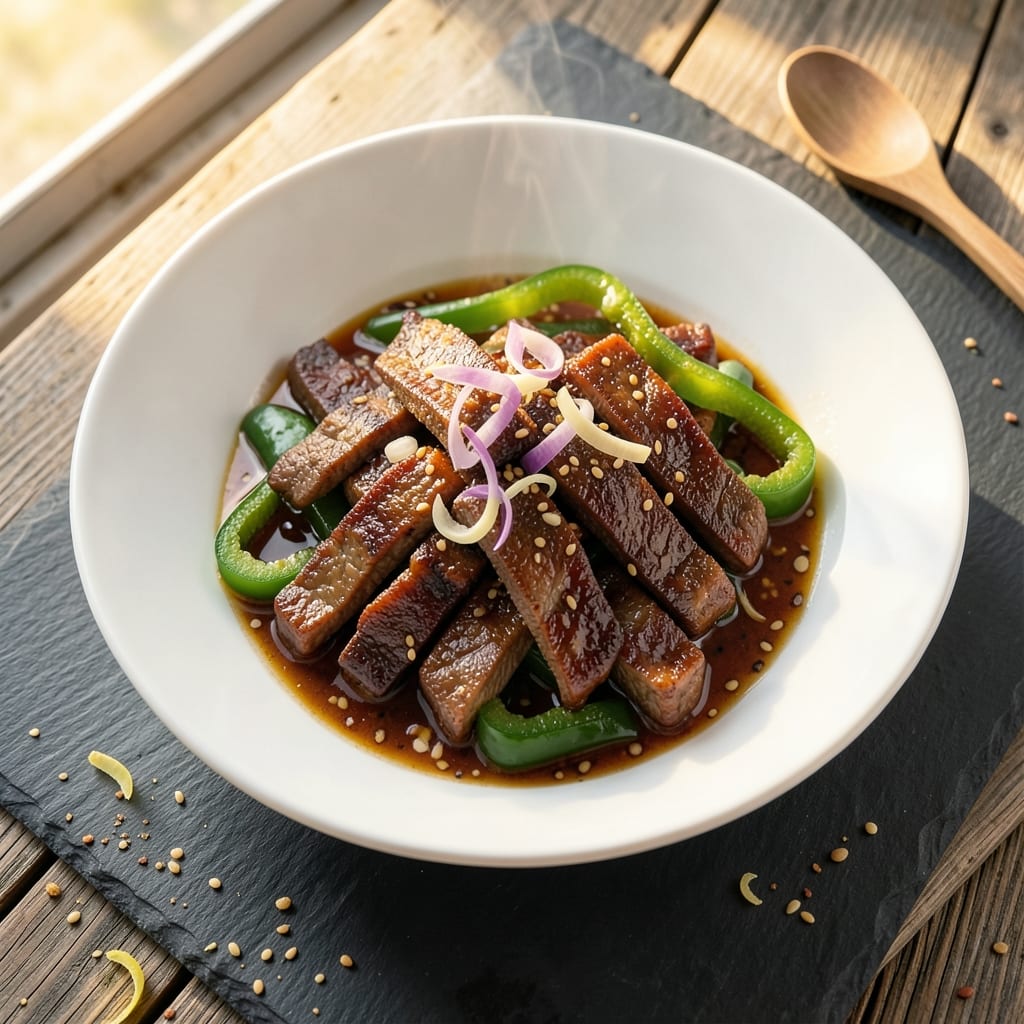
This authentic moo shu beef recipe delivers the restaurant-quality experience you crave—tender, marbled beef stir-fried with crisp scallions, bell peppers, and a velvety hoisin-black bean sauce that swirls with golden scallion oil. The secret lies in proper marinating (soy sauce, Shaoxing wine, and cornstarch) and high-heat stir-frying to achieve that signature wok hei—the smoky, charred aroma that defines Chinese street food.
What sets this apart is the sauce balance: hoisin’s sweetness meets black bean paste’s earthiness, then reduces into a glossy, clinging glaze. The beef must be sliced paper-thin and cooked in batches to maintain its delicate texture, while the vegetables add fresh crunch. Traditional sides like steamed rice and broccoli complete the dish, but modern twists (like gluten-free sauce or extra mushrooms) work too.
By the time you plate it—beef stacked high, sauce pooling beneath, and scallion oil swirled on top—you’ll understand why this dish is a staple in Chinese-American kitchens. The aroma alone will have everyone gathering around the table, and the first bite delivers that perfect harmony of textures and flavors.
Ready to master the technique? We’ll cover every step—from marinating to plating—so your moo shu beef looks and tastes like it came straight from a dim sum parlor. Let’s get started.
Ingredients for authentic moo shu beef
Pantry staples meet wok hei magic—here’s what you’ll need for restaurant-style moo shu beef.
| Ingredient | Amount | Notes |
|---|---|---|
| Flank Steak 🥩 | 1 ½ lb | Thinly sliced against grain |
| Green Bell Pepper 🧅 | 1 whole | Thinly sliced, seeds removed |
| Scallions 🧅 | 1 bunch | White and green parts separated |
| Shaoxing Wine 🍷 | 2 tbsp | For authentic marinade flavor |
| Soy Sauce 🥄 | 3 tbsp | Light soy preferred |
| Cornstarch 🌾 | 2 tbsp | For tenderizing beef |
| Hoisin Sauce 🍶 | ½ cup | High-quality brand recommended |
| Black Bean Paste 🫘 | 2 tbsp | Smooth texture preferred |
| Garlic Cloves 🧄 | 4 cloves | Minced for sauce |
| Sesame Oil 🫒 | 1 tbsp | Toasted for aroma |
| Neutral Oil 🫒 | 3 tbsp | Peanut or vegetable oil |
| Salt 🧂 | 1 tsp | Kosher or sea salt |
| White Pepper 🌶️ | ¼ tsp | Freshly ground |
| Sugar 🍯 | 1 tsp | Balances flavors |
| Steamed White Rice 🍚 | 2 cups | For serving |
The beef is non-negotiable—flank steak delivers that signature tenderness when sliced thin against the grain. Ask your butcher to slice it paper-thin if you’re not comfortable doing it yourself. For the scallions, grab a full bunch (white and green parts separated)—the whites go in the sauce, the greens get chopped for garnish. Shaoxing wine is the secret weapon here; Trader Joe’s carries a decent bottle, but any Chinese market will have better options. Pro tip: if you can’t find Shaoxing, dry sherry works in a pinch, though it won’t be exactly authentic.
No hoisin sauce? Substitute 3 tbsp soy sauce + 1 tbsp honey + 1 tsp sesame paste—it’s not the same, but it’ll get you close. Black bean paste can be tricky to find outside Asian markets, but Lee Kum Kee makes a solid jarred version. The cornstarch is crucial for that signature texture—don’t skip it! For the oil, stick with neutral (peanut or vegetable) for frying, then finish with toasted sesame oil for that wok hei aroma. And if you’re feeling fancy, grab a bag of Thai basil at the same time—it’s perfect for garnish.
Prep ahead like a pro: marinate the beef for at least 30 minutes (up to 4 hours in the fridge). The sauce keeps for 5 days in the fridge, and the beef can be pre-sliced and stored separately for 2 days. For leftovers, reheat gently in a skillet with a splash of water to prevent drying. And trust me—double the sauce if you’re serving a crowd; everyone wants seconds.
Why You'll Love This Recipe
- One-Pan Magic: I swear by this—just sear the steak, toss in the peppers and scallions, and let the Shaoxing wine and soy sauce work their sauce magic. No chopping boards full of mess, no extra pans. That deep caramelized crust on the beef? Happens while you stir-fry everything else.
- Umami Bomb: The moment the soy sauce and Shaoxing wine hit the hot pan, your kitchen smells like a dim sum parlor. That salty-sweet-savory punch? It’s the kind of flavor that makes people lean in closer, asking, “What’s in this?” (Spoiler: mostly just good stuff.)
- Leftovers That Don’t Suck: Between us, most stir-fries turn into sad, dry meals the next day. Not this one. The sauce clings to the beef and peppers, so reheating it is basically making it better—like a second chance at restaurant-quality takeout. Pack it for lunch or freeze it; it’s just as good cold.
- Weeknight Hero: Flank steak is cheap, and this recipe uses it smart—sliced thin, marinated briefly, then cooked fast. I’ve made this on Tuesdays after work, for date nights, and even as a “fancy” dish for my mom’s visit. No stress, no fuss, just reliable, crave-worthy food when you need it.
Step-by-step instructions for authentic moo shu beef
Here's how to create that signature swirl and velvety sauce that makes this dish unforgettable.
Prepare the Flank Steak for Maximum Tenderization
Slice the 1.5 lb flank steak thinly against the grain into ¼-inch thick strips. I like to cut it at a slight angle for even cooking. Place the sliced steak in a bowl and add the 2 tbsp cornstarch, 1 tsp salt, and 0.25 tsp white pepper. Toss gently to coat evenly—this creates a delicate crust that locks in moisture during cooking.
Next, add the 2 tbsp Shaoxing wine and 3 tbsp soy sauce to the bowl. The wine adds depth while the soy sauce enhances umami. Let the steak marinate for 15 minutes at room temperature. This brief marinating time is crucial—too long and the cornstarch will get gummy, too short and the flavors won't penetrate.
Create the Signature Sauce with Black Bean Paste and Hoisin
In a small bowl, combine the 0.5 cup hoisin sauce, 2 tbsp black bean paste, 1 tsp sugar, and 4 cloves minced garlic. Mix until smooth and set aside. This sauce base is where the authentic flavor lives—the black bean paste provides that signature nutty depth while the hoisin adds natural sweetness that balances the savory elements.
In a separate small bowl, whisk together 1 tbsp sesame oil with 1 tablespoon water. This creates the scallion oil swirl we'll add at the end. Keep this mixture separate until the very last moment—adding it too early will make the oil turn rancid from the heat.
Stir-Fry the Vegetables and Beef to Perfection
Heat 3 tbsp neutral oil in a wok or large skillet over high heat until shimmering. Add the 1 whole green bell pepper (sliced) and white parts of 1 bunch scallions (cut into 2-inch pieces). Stir-fry for 2-3 minutes until the peppers just begin to soften—you want them to stay slightly crisp for texture contrast.
Push the vegetables to one side of the wok and add the marinated steak strips. Cook undisturbed for 1-2 minutes until they develop a golden crust. Here's the thing—don't stir too soon. The steak needs that initial contact with the hot surface to create the perfect sear. Once lightly browned, stir and cook for another 1-2 minutes until fully cooked through.
Combine and Finish with the Signature Swirl
Return the vegetables to the wok and pour in the sauce mixture. Stir everything together and cook for 1-2 minutes until the sauce thickens slightly and coats the beef and vegetables evenly. The sauce should be glossy but not too thick—it should cling rather than pool. If it's too thick, add 1-2 tablespoons water to loosen it.
Here's where the magic happens: Remove the wok from heat and quickly pour in the sesame oil mixture. Immediately tilt the wok and use a spatula to create that signature swirl pattern through the beef and vegetables. This dramatic presentation isn't just for show—it distributes the fragrant sesame oil throughout the dish for that final aromatic punch.
Serve Over Steamed Rice with Fresh Scallions
Transfer the moo shu beef to a serving platter and top with the green parts of the scallions (cut into 1-inch pieces). Serve immediately over the 2 cups steamed white rice while still hot. The rice should be fluffy and slightly warm to complement the bold flavors of the beef and sauce.
For that authentic restaurant experience, serve family-style in the center of the table with extra scallions on the side. The contrast of the crisp scallions against the tender beef and velvety sauce is what makes this dish truly special. Each bite should deliver perfect texture contrast—tender beef, slightly crisp vegetables, and that glossy sauce that clings to every strand of rice.
Pro Tips For Making Authentic Moo Shu Beef
- Slice Thin, Slice Fast: I learned this the hard way—thin, even slices (about ⅛-inch thick) cook perfectly in the stir-fry. Use a sharp knife and work with the grain to avoid tough, chewy beef. If you’re impatient like me, freeze the meat for 20 minutes first—it tightens the fibers and makes slicing cleaner.
- Marinate Just Long Enough: Skip soaking the beef for hours—15-20 minutes in the sauce (soy, Shaoxing wine, cornstarch slurry) is plenty. Any longer, and the meat turns mushy when stir-fried. Toss the bell peppers and scallions in the same marinade for 10 minutes max—they’ll stay crisp, not soggy.
- High Heat, No Crowding: Crank the wok or pan to screaming hot before adding the beef. Let it sear in batches without stirring for 10 seconds—this builds the crust that holds the sauce. I used to rush this and ended up with bland, sticky beef. (Yes, even if you’re impatient like me.)
- Deglaze with Wine First: Pour in the Shaoxing wine before adding the soy sauce to the pan. Let it bubble for 30 seconds to cook off the alcohol—this deepens the flavor instead of leaving a harsh aftertaste. Then add the soy sauce and cornstarch slurry. Sounds weird, but it works: the wine’s aroma stays intact.
Storing and reheating this dish
Fridge Storage Tips
Store leftover moo shu beef in an airtight container with a splash of neutral oil (about 1 tbsp) to prevent drying. I like using glass containers because they keep the dish fresh longer and don’t absorb odors. Keep it refrigerated for up to 3 days—the flavors actually deepen over time, especially the sauce. Just be sure to reheat gently to preserve that signature texture. 🍚
Freezer Prep
For longer storage, freeze the beef and sauce separately in single-serving portions. I recommend using silicone molds or heavy-duty freezer bags—this makes reheating a breeze. Label with the date, as it stays best for 2 months. When ready to eat, thaw overnight in the fridge and reheat using the stovetop method below. Never microwave—it ruins the delicate sauce consistency. ❄️
Stovetop Reheat
My preferred method is reheating in a wok or skillet over medium-low heat with 1 tbsp water or beef broth. Add the beef and sauce together, cover, and heat for 3-4 minutes, stirring occasionally. The moisture prevents the sauce from drying out while the low heat keeps the cornstarch coating intact. If the sauce thickens too much, add another splash of water. 🔥
Microwave Hack
For quick reheats, use the microwave on 50% power for 1-2 minutes in 20-second bursts, stirring between each. Cover with a damp paper towel to trap steam and prevent splattering. This method works best for single servings—just be prepared for slightly softer textures compared to stovetop reheating. 💡
Reviving Sauce
If your reheated sauce looks too thick, thin it with 1 tsp water or Shaoxing wine while warming. The sauce should coat the back of a spoon but remain glossy. For extra flavor, add a pinch of white pepper or a splash of sesame oil at the end. This trick brings back that restaurant-quality shine. ✨
Plating Leftovers
Reheat the beef and sauce separately, then assemble fresh for the best presentation. Top with extra scallions and a drizzle of toasted sesame oil for that authentic touch. Serve over steamed rice or egg noodles to soak up all that delicious sauce. The key is keeping everything hot and vibrant—just like it came straight from the wok. 🌟
Nutrition facts
Frequently asked questions
Why does my moo shu beef turn out tough instead of tender?
The key is slicing against the grain and marinating for only 15 minutes with cornstarch. Over-marinating makes the beef mushy, while slicing with the grain creates chewy strands. Also, use a wok or cast-iron skillet for high-heat cooking—this prevents overcooking the delicate strips.
Can I substitute flank steak with another cut?
Flank steak is ideal for its marbling and tenderness, but sirloin or ribeye work in a pinch. Avoid tougher cuts like chuck—they won't tenderize properly. For extra safety, slice them thinner than ¼-inch and cook for just 1-2 minutes total.
What's the secret to getting that perfect sauce swirl?
The swirl comes from mixing 1 tbsp sesame oil with 1 tbsp water and adding it off-heat. Immediately tilt the wok and use a spatula to create the pattern—this distributes the oil evenly. Pro tip: Keep the sauce slightly thin (add water if needed) so it flows smoothly.
Is moo shu beef gluten-free?
Traditional recipes contain gluten from hoisin and soy sauce. For a gluten-free version, use tamari (gluten-free soy sauce) and a gluten-free hoisin substitute (like 3 tbsp coconut aminos + 1 tbsp honey). Also check black bean paste labels—some contain wheat.
How do I make this dish ahead of time?
Marinate the beef and prep the sauce 1 day ahead, storing separately in the fridge. For the full dish, cook the beef and sauce 2 hours before serving, then reheat gently in a skillet with 1 tbsp water to revive the texture. Keep the scallion oil separate until serving.